 English
 Lietuvių
 Latviešu
 Eesti
 Polski
 Русский
 Українська
 Deutsch
 Nederlands
 Čeština
 Slovenčina
 Svenska
 Norsk
 Dansk
 Suomi


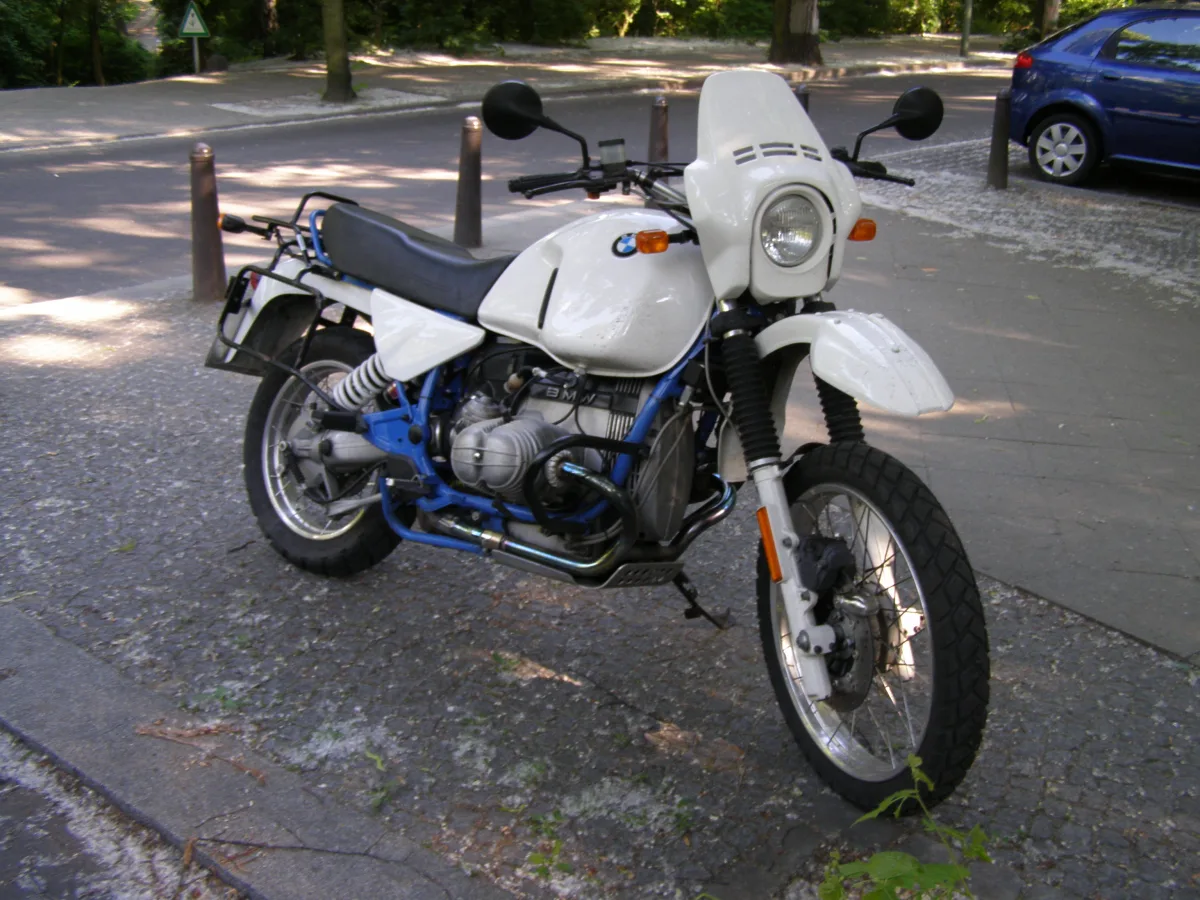
BMW R 80 GS: classic enduro, generations and what to check
BMW R 80 GS — the legendary enduro motorcycle produced from 1980–1996 with a boxer engine. We look at the generations, engine and what to check when buying used.






R 80 GS in brief
The R 80 GS was one of the first adventure enduro motorcycles, laying the foundation for the entire GS family. It's particularly prized for its simple construction, reliability and collectible value.
Early R 80 GS versions are famous for their victories in the Paris-Dakar Rally, making the model a legend. Today, it's a classic motorcycle sought after by enthusiasts.
Generations and versions
The first generation was the R 80 GS (1980–1987), followed by the R 80 GS with an improved rear suspension. There was also a more basic Basic version offered.
Since names and equipment vary by year, check the exact version by the engine number and documents.
Engine and gearbox
The R 80 GS is powered by an air- and oil-cooled boxer twin engine of around 800 cc, producing about 50 hp. The engine is known for its robustness and simple design.
The gearbox is manual, with power transmitted via a driveshaft. Carburetors require regular tuning.
What to check when buying a used R 80 GS
Inspect the frame and tank for corrosion, as well as the driveshaft, final drive and rear suspension springs. Listen to the engine when cold and hot, check carburetor synchronization and valve adjustment.
Check the electrics, brakes, tyres and suspension. Many examples of this age have been restored or modified, so check what's been changed and ensure the paperwork matches the numbers.


Versions and trims
Names and equipment vary by market and year; here we outline the main versions.
R 80 G/S
1980–1987The first generation and legendary original.
- Approximately 800 cm³ boxer engine
- Rear-wheel drive
- Collector's item
R 80 GS
1987–1996An improved version with better suspension.
- Approximately 800 cm³ boxer engine, around 50 hp
- Improved rear suspension
- Suitable for long journeys
R 80 GS Basic
Later yearsA more basic version.
- Base trim
- Same engine
- Cheaper
Comparing R 80 GS versions
| R 80 G/S | R 80 GS | R 80 GS Basic | |
|---|---|---|---|
| Who it's for | For collectors | For touring and daily use | For everyday use |
| Engine | Around 800 cc, around 50 hp | Around 800 cc, around 50 hp | Around 800 cc |
| Gearbox | Shaft drive | Shaft drive | Shaft drive |
| Suspension | Early model | Enhanced | More basic |
| Price in the used market (relatively) | €€€ | €€ | € |
If you're after a classic, opt for a better-condition R 80 GS. Early G/S models are the most prized by collectors, while later versions are better for everyday use.
Pros
- Simple and reliable construction
- Legendary GS history
- Shaft drive — no chain maintenance
- Increasing collector value
Cons
- Very old model — many examples are worn out
- Modest power by today's standards
- Some parts are pricey
Frequently asked questions
How does the R 80 G/S differ from the R 80 GS?
The G/S is the early version that was later refined (e.g., the rear suspension). The G/S is more prized by collectors.
Is the R 80 GS suitable for long journeys?
Yes, if the example is in good condition. It's reliable, but its power is modest by today's standards.
Is the R 80 GS difficult to maintain?
The construction is simple, but due to its age, attention is needed for corrosion, electrics, and carburettors.
Updated 2026-10-21 · Trim levels and equipment vary by market and model year — check the equipment of the specific car. · Translated automatically


