 English
 Lietuvių
 Latviešu
 Eesti
 Polski
 Русский
 Українська
 Deutsch
 Nederlands
 Čeština
 Slovenčina
 Svenska
 Norsk
 Dansk
 Suomi


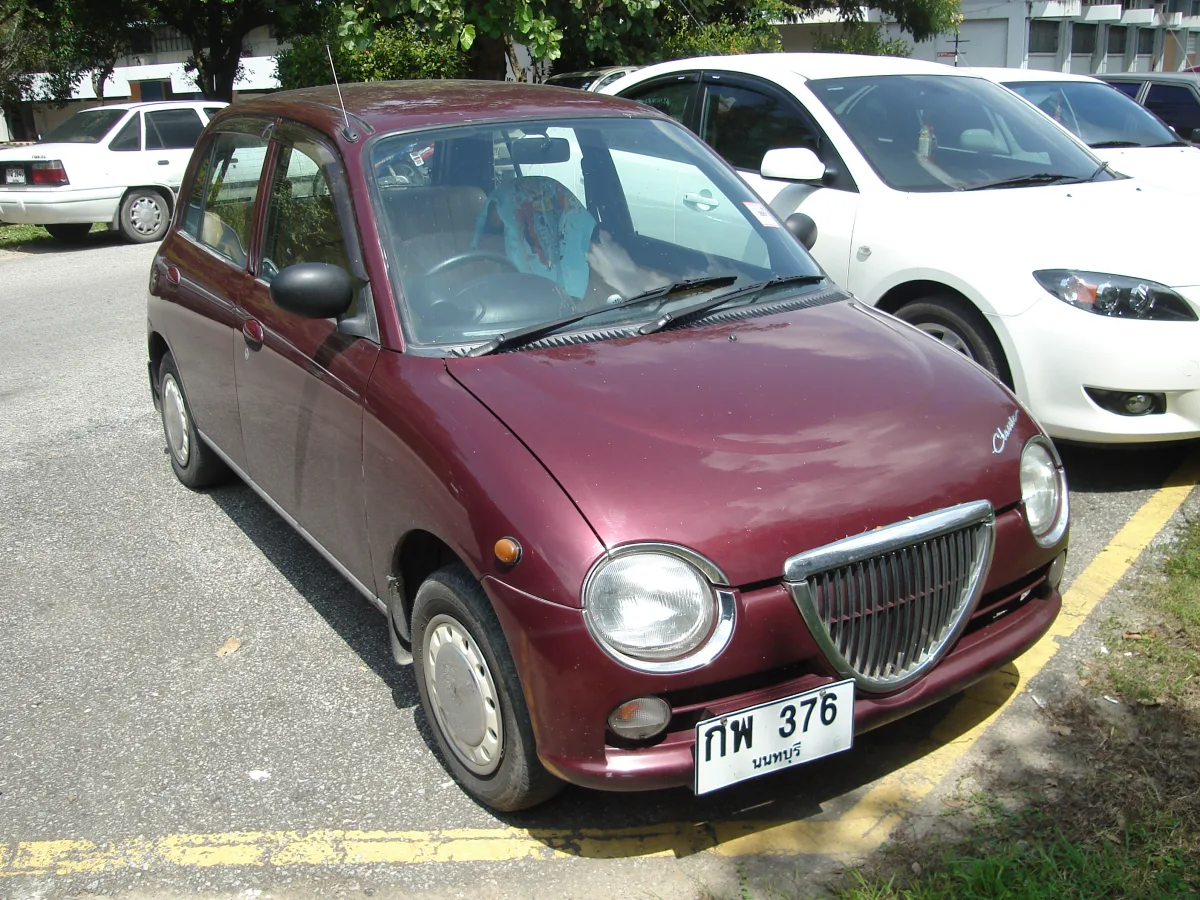
Daihatsu Opti: retro-style microcar and what to check
The Daihatsu Opti is a small, five-door microcar (kei class) produced in Japan during the 1990s, distinguished by its rounded retro styling. It's quite rare in Lithuania. We'll look at its features, engine, trims, and what to check before buying.






Opti in brief
The Opti was designed as a small, friendly, and economical city car. It features a rounded body shape, round headlights, and a relatively high seating position, making it easy to get in and out of.
The model is considered a retro-style kei class car that has its own following. In Lithuania, it usually appears as a single import from Japan or other Asian countries.
Which trim to choose
The Opti was offered in several trims that differed in equipment and appearance. The retro-style 'Classic' trim stands out with its chrome details and is one of the most sought-after.
Since these cars are old, the most important criterion is condition and lack of rust, not the trim level. Pay attention to the engine and gearbox operation as well.
Engine and gearbox
The Opti had a 660 cm³ three-cylinder petrol engine with modest power, suitable mainly for city driving. Check the exact power and trim according to the car's documents.
The gearbox is manual or automatic, with most models being front-wheel drive. All-wheel-drive versions are also available.
What to check when buying a used Opti
Since the car is very old, first inspect the body for rust — look at the sills, wheel arches, floor, and door sills. Repairing a specific body can be tricky, as parts are scarce.
Check the service history of the transmission, cooling system, and oil leaks. The gearbox should engage smoothly, and the clutch should not slip.
Ensure the documents and history of imported cars from Japan or Asia are verified, and before purchasing, confirm how such a car can be registered and insured in Lithuania.


Trim levels
Trim names vary by market and year; we list the most commonly mentioned versions.
Opti
1992–2002Base model.
- 660 cm³ engine
- Basic trim
- Front-wheel drive
Opti Classic
Later yearsRetro-style model with chrome details.
- Often — chrome grilles
- Often — additional trim details
- Often — retro styling accents
Opti 4WD
1992–2002Full four-wheel-drive version.
- Full four-wheel drive
- Often — extra winter kit
- Higher fuel consumption
Comparing versions
| Opti | Classic | 4WD | |
|---|---|---|---|
| Who it suits | For everyday city driving | For retro enthusiasts | For winter |
| Alloy wheels (usually) | 12–13 inch | 12–13 inch | 12–13 inch |
| Interior | Basic | Basic | Basic |
| Engine | 0.66 litres | 0.66 litres | 0.66 litres |
| Price in the used market (relatively) | € | €€ | €€ |
For a second city car or retro car enthusiasts, the Opti is a good choice if you find a well-maintained example. Not comfortable for daily long-distance travel.
Pros
- Small, easy to park
- Retro style and distinctive character
- Economical engine
- Simple manual transmission
Cons
- Very rare in Lithuania, hard to find parts
- Low power and comfort
- Old car — risk of corrosion
Frequently asked questions
What is a 'kei' class car?
This is a Japanese-made class of small cars with limited dimensions and around a 660 cm³ engine.
Is the Opti suitable for daily use?
In the city — yes, but on highways and longer journeys it's uncomfortable due to low power.
Is the Opti available in Lithuania?
Officially, no, but you might come across the odd imported example. Before buying, check the availability of parts and servicing.
Updated 2026-10-21 · Trim levels and equipment vary by market and model year — check the equipment of the specific car. · Translated automatically


