 English
 Lietuvių
 Latviešu
 Eesti
 Polski
 Русский
 Українська
 Deutsch
 Nederlands
 Čeština
 Slovenčina
 Svenska
 Norsk
 Dansk
 Suomi


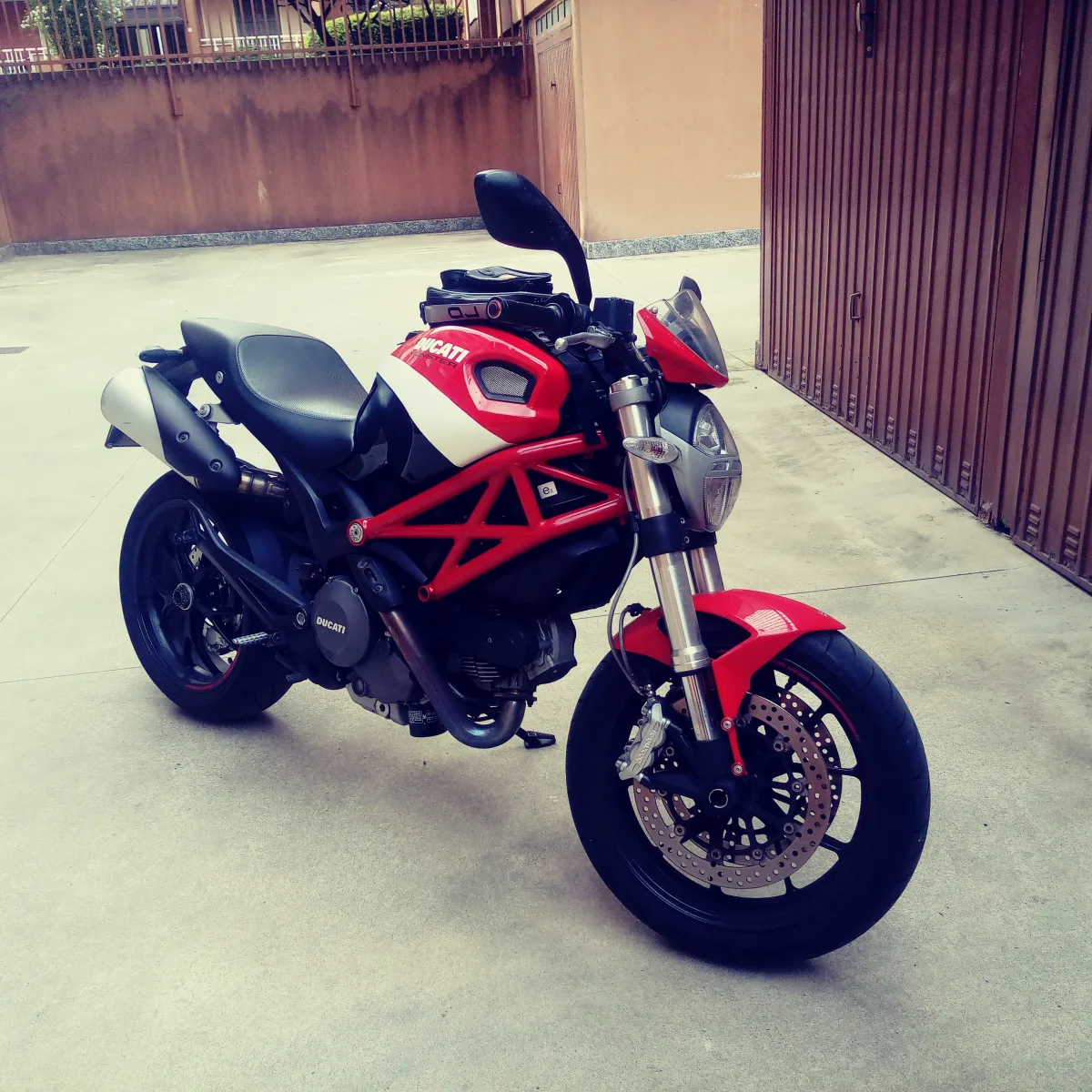
Ducati Monster: naked motorcycle since 1993, generations and what to check
Ducati Monster — the iconic naked bike from the Italian manufacturer since 1993. We look at the generations, engines, and what to check when buying used.






Monster in brief
The Monster debuted in 1993 as a simple, lightweight, and handsome motorcycle with a distinctive tubular frame. It quickly became a popular and easily recognisable model.
Over time, the Monster family expanded: various engines and versions were offered. Therefore, it's important to know which specific generation and engine when looking at the used market.
Generations — what's the difference
Early Monsters (1993–around 2008) have air-cooled Desmodue twin-cylinder engines, e.g., 600, 750, 900, and others. They're straightforward but require regular maintenance.
Later models (e.g., 696, 796, 821, 1100, 1200) have different engines and equipment. In 2021, a completely new generation with a 937 cm³ engine, different frame design, and modern electronic aids was introduced.
Engines and gearbox
The engine is a V-twin with desmodromic valve control. Early models are air-cooled, later ones are liquid and air-cooled; the newest is a 937 cm³, around 110 hp.
The gearbox is a 6-speed manual (5-speed on early models), with drive to the rear wheel via chain. Newer motorcycles come with ABS and electronic aids.
What to check when buying a used Monster
The most important thing is the service history: Desmodromic engines need regular valve adjustments, and earlier models also require timing belt changes. Ask when these were last done.
Check the frame for corrosion and deformations, the chain, sprockets, and brakes. Check the electrics, as they can be problematic in older Ducatis.
Many Monsters have been modified (exhaust system, handling), so check that any changes comply with the documentation.


Trims
Names and equipment vary by market and year; we list the versions most commonly found in Europe.
Monster (ankstyvieji)
1993–2008Air-cooled 'Desmodue' models.
- Simple construction
- Classic design
- Regular maintenance required
Monster 696/796
Later yearsMid-range power versions.
- Often comes with ABS
- Lightweight construction
- Lower power than 1100 or 1200 versions
Monster 821/1200
from 2014Larger versions.
- More powerful engine
- Modern electronics
- Improved suspension
Monster (nauja)
from 2021New generation with a 937 cm³ engine.
- New chassis and styling
- Modern electronics
- Lighter construction
Monster generations compared
| Ankstyvieji | 821/1200 | Nauja | |
|---|---|---|---|
| Who it's for | For enthusiasts | A balanced choice | Latest technology |
| Years | 1993–2008 | from 2014 | from 2021 |
| Price in the used market (relatively) | Budget-friendly | Mid-range | High-end |
Most buyers will favour the 821 or 1200 versions for their power and features. Earlier Monsters are worth considering if classic style is important.
Pros
- Distinctive design
- Light and agile
- Unique V-twin engine note
- Choice of different generations
Cons
- Maintenance is pricier than for Japanese bikes
- Early models can be finicky with electrics
- Plenty of modified bikes around
Frequently asked questions
Is the Monster suitable for beginners?
Lower-power versions (e.g., 696) might be okay, but caution is needed. Larger models are more powerful.
Why is Ducati servicing more expensive?
Desmodromic engines require specific valve adjustments that take more time.
What's the difference between the Monster 821 and 1200?
The 1200 has a larger engine and more power, while the 821 is lighter and easier to handle.
Updated 2026-10-21 · Trim levels and equipment vary by market and model year — check the equipment of the specific car. · Translated automatically


