 English
 Lietuvių
 Latviešu
 Eesti
 Polski
 Русский
 Українська
 Deutsch
 Nederlands
 Čeština
 Slovenčina
 Svenska
 Norsk
 Dansk
 Suomi


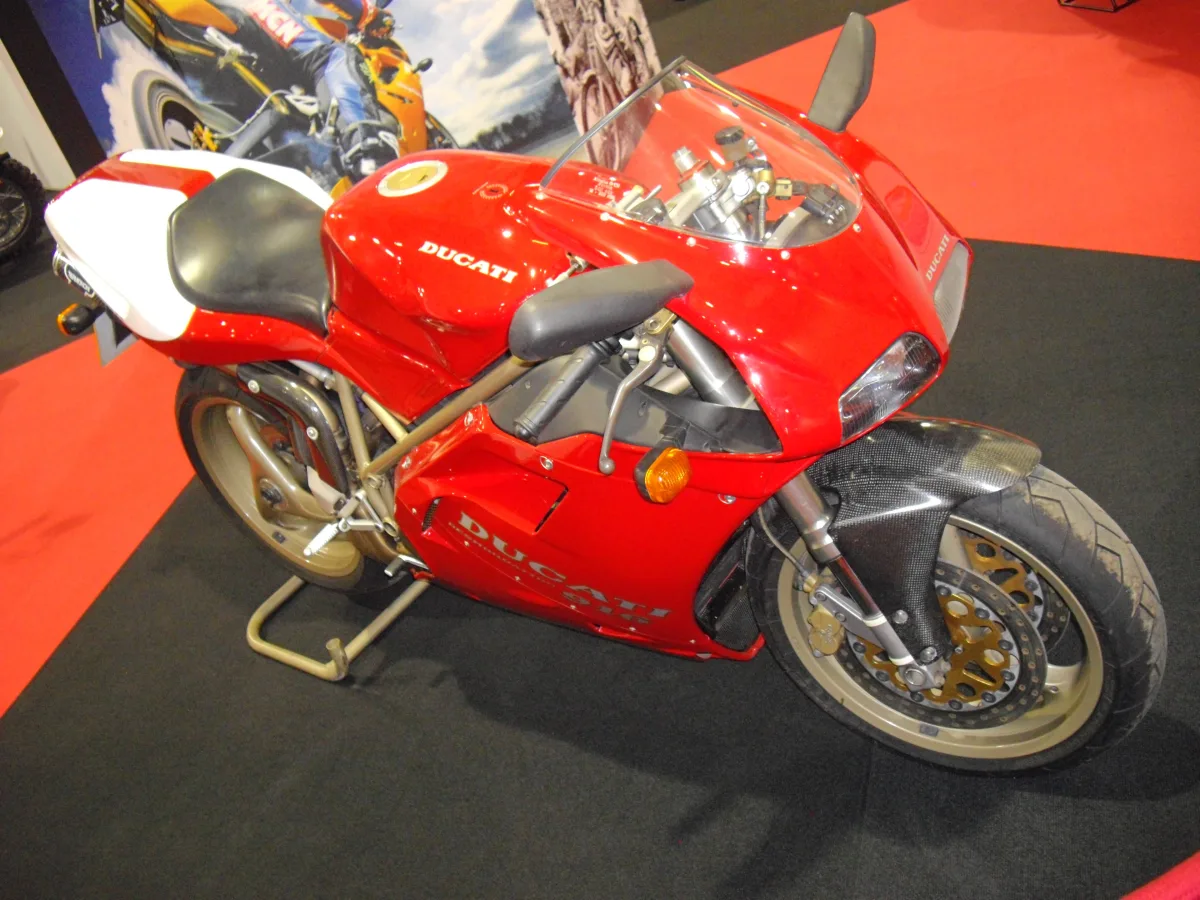
Ducati 916: generations, engine and what to check when buying used
Ducati 916 — a sports bike manufactured from 1994–1998, considered one of the most beautiful of all time. We look at the generations, tech specs and what to check when buying a used collectible motorcycle.






916 in brief
The Ducati 916 was introduced in 1994 and became a legend thanks to its Massimo Tamburini-designed looks, single-sided swingarm and lightweight construction. It won numerous races and was long regarded as the benchmark for sports bikes.
This is now a collectible motorcycle. The key things to check when buying are authenticity, mechanical condition and history, rather than everyday usability.
Generations — what's the difference?
There are several versions: 916 Biposto (two-seater), 916 Monoposto (single-seater), 916 SP, SPS and limited editions, such as the Senna. Differences can be seen in the engine, suspension and trim.
Production ended in 1998, with the 996 taking over. Due to its collectible value, it's worth checking that it's a genuine 916 and not a converted or different model.
Engine and gearbox
The engine is a liquid-cooled 'L'-shaped twin-cylinder, 916 cm³ capacity, with desmodromic valve control and electronic fuel injection. Power is around 109 hp, with more in higher-spec versions.
The gearbox is a six-speed manual, with drive to the rear wheel via a chain. The bike is aimed at experienced riders and requires an A category licence.
What to check when buying a used 916
Check the authenticity: frame and engine numbers, paperwork and version (SP, SPS, Senna). Collectible models are often faked or modified.
Check if the 'Desmo' service has been done and if the timing belts have been changed. This era of Ducati requires frequent maintenance, and its history is very important.
Inspect the electrical system, wiring, voltage regulator, exhaust, and frame. Due to its age, many parts may not be original — assess if this is reflected in the price.


Trim levels and versions
Names and equipment vary by market and year; we list the versions most commonly found in Europe.
916 Biposto
1994–1998Two-seater version.
- 916 cm³ engine
- Two seats
- Classic Tamburini design
916 Monoposto
1994–1998Single-seater version.
- Single seat
- A more sporty look
- Often — more expensive
916 SP / SPS
1994–1998Sportier versions.
- Often — more power
- Better suspension
- Rarer and more expensive
916 Senna
Limited editionsCollector's editions
- Limited run
- Special paintwork
- High collector's value
Version comparison
| Biposto | Monoposto | SP / SPS | |
|---|---|---|---|
| Who it's for | Classic car enthusiasts | Collectors | Track and collection enthusiasts |
| Year | 1994–1998 | 1994–1998 | 1994–1998 |
| Engine | 916 cm³, around 109 hp | 916 cm³, around 109 hp | 916 cm³, more power |
| Price in the used market (relatively) | €€ | €€ | €€€ |
Most collectors will appreciate a well-preserved 916 Biposto or Monoposto. The SP and SPS are valued as rarer and more sporty.
Pros
- Iconic design
- Characterful two-cylinder engine
- Collector's item
- Sporty drive
Cons
- Expensive maintenance and parts
- Uncomfortable seating
- Authenticity needs checking
Frequently asked questions
How does the 916 differ from the 996?
The 996 has a larger engine and improvements, while the 916 is the original, legendary version.
Is the 916 suitable for daily driving?
No, it's not sporty, not comfortable and requires frequent servicing.
What's key when buying a 916?
Authenticity, service history, frame numbers and whether the motorcycle has been modified.
Updated 2026-10-21 · Trim levels and equipment vary by market and model year — check the equipment of the specific car. · Translated automatically


