 English
 Lietuvių
 Latviešu
 Eesti
 Polski
 Русский
 Українська
 Deutsch
 Nederlands
 Čeština
 Slovenčina
 Svenska
 Norsk
 Dansk
 Suomi


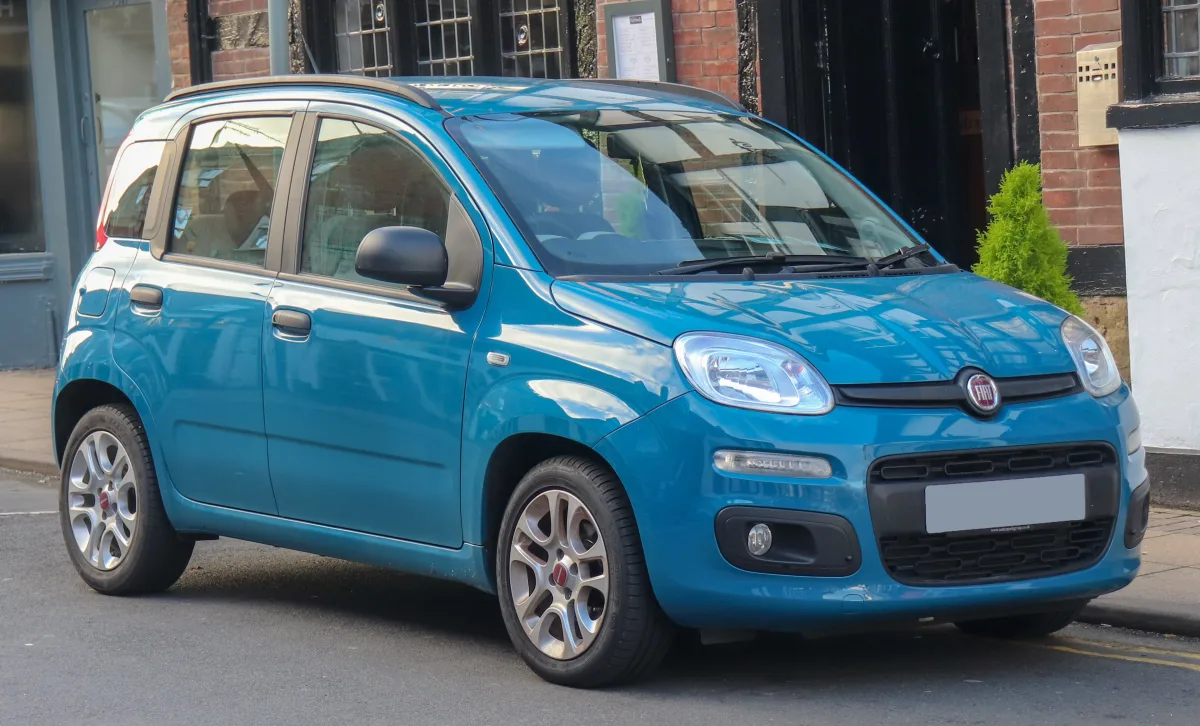
Fiat Panda: II and III generations, engines and trims
Fiat Panda is one of Europe's most iconic city cars, produced since 1980. We look at what sets apart the most common II and III generations on the used market, which engines are the most popular, what makes the 4x4 and Cross versions stand out, and what to check when buying used.






Panda in brief
The Panda is a small, tall five-door hatchback where four people can sit more comfortably than its dimensions suggest. The car is praised for its simple design, easy city driving, low running costs, and affordable spare parts.
The Panda's standout feature is the all-wheel-drive versions, the Panda 4x4 and Panda Cross. These are among the few cars of this size with genuine all-wheel drive, making them popular in rural areas, hilly regions, and places where winter roads are poorly maintained.
In 2024, Fiat introduced a new, larger model, the Grande Panda, but this is a separate car—the III generation Panda was not immediately discontinued.
II and III generations—what's the difference
The II generation (2003–2012) is boxy, highly practical, and today is one of the cheapest ways to get a reliable city car. Most are quite old, so the key is the body condition and rust, not the trim level.
The III generation (from late 2011) features smoother lines, is slightly larger, safer, and quieter. This is the most popular generation on the used market. Cars updated in 2020 received a mild-hybrid engine, a slightly refreshed exterior, and interior.
It's worth noting that due to its aging design and lack of advanced safety features, the third-generation Panda scored zero stars in the 2018 Euro NCAP retest. If safety is your top priority, it might be worth considering newer competitors.
Engines and transmissions
The third-gen is most commonly found with a 1.2-litre petrol engine (around 69hp) — simple and reliable. There was also a two-cylinder 0.9 TwinAir (around 65–85hp), a 1.3 MultiJet diesel (around 75–95hp), and from 2020, a 1.0-litre mild hybrid (around 70hp). In some markets, factory-fitted LPG or CNG kits were available.
The second-gen usually comes with 1.1 and 1.2-litre petrol engines and a 1.3 MultiJet diesel; the sportiest is the 1.4-litre petrol Panda 100HP.
Most cars come with a manual gearbox (5 or 6 speeds). The automated manual Dualogic box is less common — it shifts slowly and jerkily, and its mechanism can fail.
What to check when buying a used Panda
On second-gen cars, closely inspect the sills, underbody, wheel arches, and boot floor for rust. Check that the electric power steering works — failures aren't uncommon for this generation.
TwinAir engines are sensitive to oil quality and level — ask about its change history. For diesel cars that have done a lot of urban miles, check the diesel particulate filter (DPF). Test the Dualogic box by moving off and driving slowly.
In 4x4 and Cross versions, check that there's no grinding on corners and that the rear differential isn't noisy. For all cars, inspect the ride based on service records and technical inspections, and check the suspension for worn-out bushes.


Trim Levels
Names and equipment vary by market and year; we list the most common third-generation trims and versions found in Europe.
Pop
Third GenerationThe base trim is basic and the most affordable.
- Steel wheels
- Basic sound system
- Often — no air conditioning
Easy
Third GenerationThe most popular choice — essential comforts for a modest price.
- Air conditioning
- Often — Bluetooth connectivity
- Electrically operated front windows
Lounge
Third GenerationHigher trim with more comfort features.
- Light-alloy wheels
- Often — automatic climate control
- Often — fog lights and a better sound system
City Cross
Third GenerationOff-road styling with front-wheel drive.
- Plastic body protection elements and a higher stance
- Roof rails
- Often — lightweight alloy wheels
4x4 ir Cross
Second and third generationsAll-wheel-drive versions for tougher terrain.
- All-wheel drive and higher ground clearance
- Body protection elements
- Cross — even higher ground clearance and reinforced protection
Comparison of third-generation versions
| Easy | Lounge | City Cross | 4x4 / Cross | |
|---|---|---|---|---|
| Who it's for | Ideal for city driving and a tight budget | More comfort in the city | Off-road styling | Winters and poor roads |
| Alloy wheels (usually) | 14–15 inch | 15 inch, steel | 15 inch | 15 inch |
| Gearbox | Front-wheel drive | Front-wheel drive | Front-wheel drive | Four-wheel drive |
| Engine | 1.2, 1.0 hybrid | 1.2, 0.9 TwinAir | 1.2, 1.0 hybrid | 0.9 TwinAir, 1.3 MultiJet |
| Price in the used market (relatively) | € | € | €€ | €€€ |
For most buyers, the best choice is the Easy or Lounge with the 1.2 petrol engine: simple and cheap to maintain. 4x4 or Cross versions are only worth considering if you really need all-wheel drive.
Pros
- Cheap to service and maintain
- Easy to drive and park in the city
- Spacious interior, more than you'd expect from the dimensions
- All-wheel drive is rarely found in a small car like this
Cons
- Poor passive safety according to newer ratings
- Noisy and not very comfortable on the motorway
- The Dualogic gearbox is slow and not always reliable
Frequently asked questions
Which Panda generation is best to buy used?
For most buyers, the best choice is the third-generation Panda with the 1.2 petrol engine: it's safer, quieter and newer than the second generation. The second generation is fine if your budget is very tight, but then it's essential to thoroughly check the condition.
Is the Fiat Panda 4x4 suitable for off-roading?
The Panda 4x4 and Cross handle snow, mud and rough tracks well, and thanks to their light weight, they often go where larger SUVs get stuck. However, they don't have a reduction gear, so they're not really suited to serious off-roading.
Is it worth buying a Panda with the TwinAir engine?
The TwinAir engine is impressive and flexible, but real-world fuel consumption is often higher than the 1.2 engine's, and it's more sensitive to oil maintenance. If simplicity and low running costs are most important, the 1.2 petrol engine is usually the more sensible choice.
What's the difference between the Panda and Grande Panda?
The Grande Panda is the newer, larger model launched in 2024, featuring different technology, including an electric version. The standard Panda is a smaller city car, with its third generation having been produced since the end of 2011.
Updated 2026-10-09 · Trim levels and equipment vary by market and model year — check the equipment of the specific car. · Translated automatically


