 English
 Lietuvių
 Latviešu
 Eesti
 Polski
 Русский
 Українська
 Deutsch
 Nederlands
 Čeština
 Slovenčina
 Svenska
 Norsk
 Dansk
 Suomi


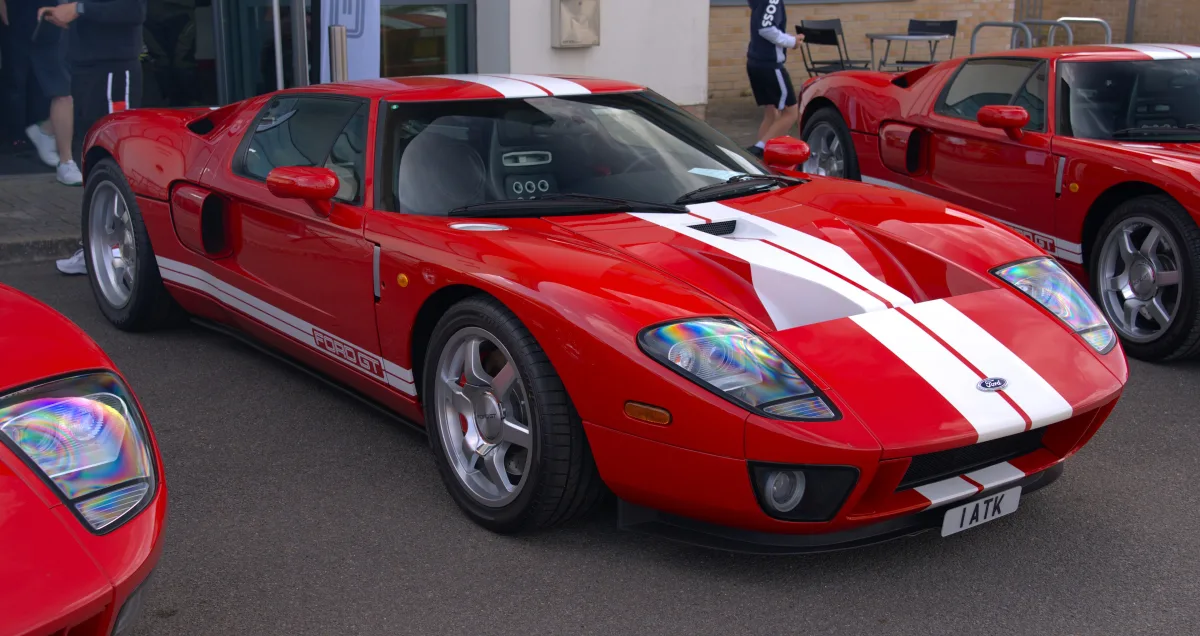
Ford GT: two generations, engines and what the buyer should know
The Ford GT is a rare American supercar produced in two generations: 2005–2006 with a supercharged V8 and 2017–2022 with a twin-turbo V6. We look at their differences, versions and what the buyer should know.






Ford GT in brief
The Ford GT was created as a continuation of the 1960s GT40 race car. Both generations feature a mid-engine layout, rear-wheel drive and a two-seater cabin.
This isn't a daily driver, but a collector's item. Around four thousand units of the first generation were produced, far fewer of the second, so the supply in the used market is very limited.
First and second generation — what's the difference
The first generation (2005–2006) has an aluminium chassis, a 5.4-litre V8 engine with a supercharger (around 550 hp) and a 6-speed manual gearbox. It's considered simpler and more classic, with a mechanical feel.
The second generation (2017–2022) has a carbon fibre body, a 3.5-litre twin-turbo EcoBoost V6 (around 650 hp) and a 7-speed dual-clutch automatic gearbox. It's technologically more modern, with active aerodynamics.
Engines and gearboxes
The first generation's 5.4 V8 is based on Ford's modular engine family and is often considered reliable. The second generation's 3.5 EcoBoost V6 was developed specifically for this model.
Both versions require specialist servicing, as regular garages rarely have the necessary experience. The most important thing is to have a comprehensive service manual.
What to check when buying a Ford GT
First things first — documentation and provenance: the full series number, service history, and proof of mileage. These cars are often kept in collections and driven sparingly, so this needs to be clearly proven.
Assess the age of the tyres, condition of the brakes, alignment of the body panels, and suspension components. An independent inspection by a specialist is recommended.


Trim levels
The Ford GT doesn't come in many trims, so we'll outline the main generations and special editions.
GT (I karta)
2005–2006The base model of the first generation.
- 5.4-litre V8 with a supercharger, around 550 bhp
- 6-speed manual transmission
- Aluminium construction
Heritage Edition
2006Special first-gen edition with a unique look.
- Styling inspired by the historic GT40 race car colour scheme
- Same tech as the base GT
- Limited run
GT (II karta)
2017–2022The modern version with a carbon fibre body.
- 3.5-litre twin-turbo V6, around 650 hp
- Seven-speed dual-clutch gearbox
- Active aerodynamics
Carbon Series
Second generationThe rarer version with visible carbon fibre.
- More visible carbon fibre
- The same technology
- Very limited numbers
Comparing the versions
| GT (2005) | Heritage Edition | GT (2017) | |
|---|---|---|---|
| Who it's for | For the classic car enthusiast | For the collector | For the fan of modern dynamics |
| Engine | 5.4 V8 with a supercharger | 5.4 V8 with a supercharger | 3.5 V6 with twin turbos |
| Power | Around 550 bhp | Around 550 bhp | Around 650 bhp |
| Gearbox | Manual | Manual | Dual-clutch automatic |
| Price in the used market (relatively) | €€€ | €€€ | €€€ |
The first generation appeals more to classic car enthusiasts, the second to those who value modern technology and dynamics.
Pros
- A very rare and collectible model
- Distinctive styling
- Powerful and dynamic technology
- Heritage from the GT40
Cons
- Very expensive maintenance
- Limited supply and few specialists
- Not suitable for daily use
Frequently asked questions
Is the Ford GT a true supercar?
Yes, both generations are considered rare, high-performance models with mid-engine layouts.
How many were made?
Around four thousand of the first generation, far fewer of the second. Check reliable sources for exact numbers.
Is the GT suitable for daily driving?
Practically not: cramped interior, high running costs and a high value.
Updated 2026-10-14 · Trim levels and equipment vary by market and model year — check the equipment of the specific car. · Translated automatically


