 English
 Lietuvių
 Latviešu
 Eesti
 Polski
 Русский
 Українська
 Deutsch
 Nederlands
 Čeština
 Slovenčina
 Svenska
 Norsk
 Dansk
 Suomi


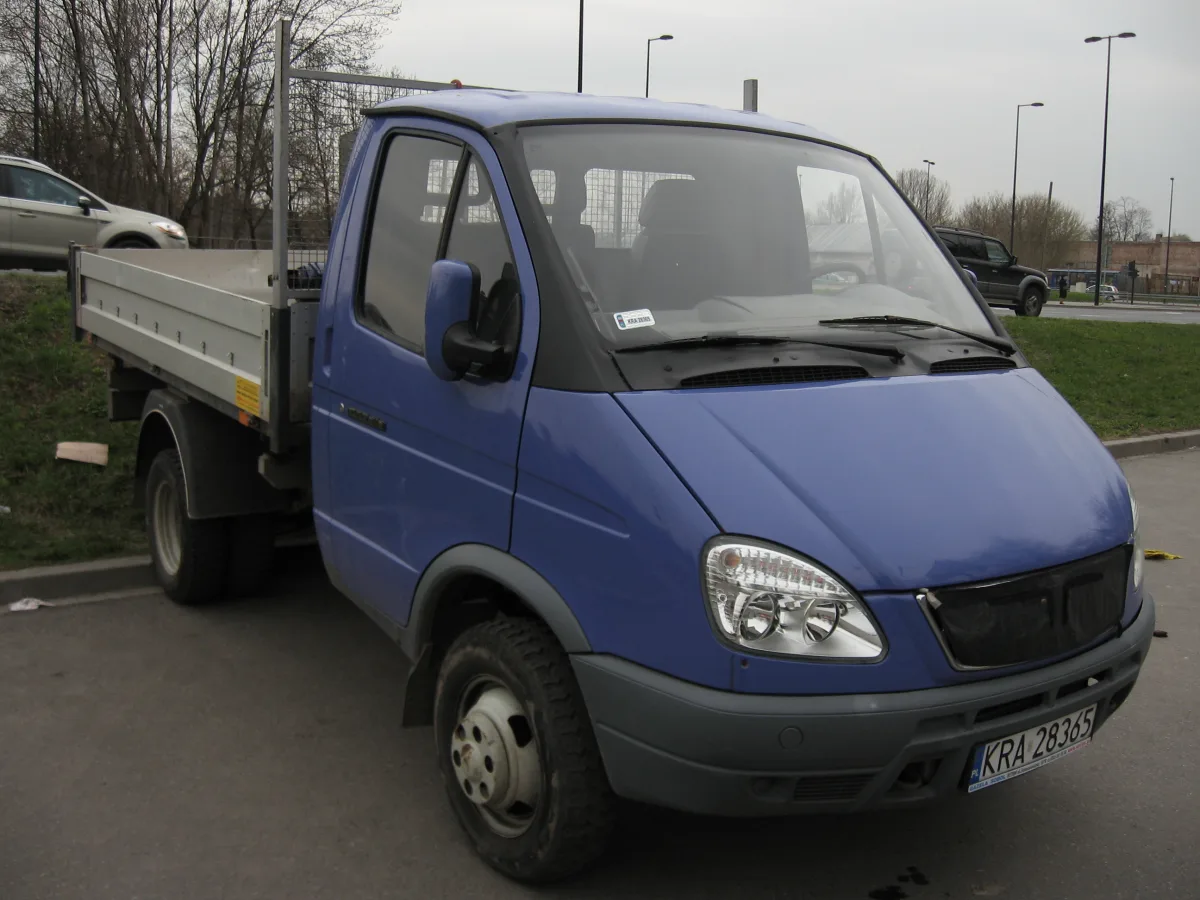
GAZ GAZelle: a light commercial vehicle, variants and what to know when buying used
GAZ GAZelle — a Russian light commercial vehicle, produced since 1994. In this article, we review the main body variants, engines, and what to check when buying a used GAZelle in Lithuania.






GAZelle in brief
GAZelle — the light commercial vehicle from the Gorky Automobile Plant (GAZ), produced since 1994. It offers a simple, robust design suited for cargo and passenger transport.
Over the years, several variants have been produced: the original GAZelle series, the later GAZelle Business (since 2010) and GAZelle Next (since 2013). The first two variants are most commonly found in the used market.
Body variants
The most common variants are the flatbed truck (GAZ-3302) with an open or tented body, van (GAZ-2705), and passenger minibus (GAZ-3221). The latter was previously widely used as a route minibus.
Additionally, there are other applications — insulated, refrigerated, and special-purpose bodies. Before buying, determine your needs, as the body type often dictates the price.
Engines and transmission
The GAZelle typically comes with a petrol engine, with a capacity of around 2.3–2.9 litres and power usually around 100–110 HP. Often, vehicles are also fitted with gas equipment, as it reduces fuel costs.
Later GAZelle Business versions are available with the Cummins ISF 2.8-litre diesel engine, which offers around 120 hp. The gearbox is usually manual, and the rear wheels are typically driven.
What to check when buying a used GAZelle
As this is a workhorse, often used intensively, the most important thing is the condition of the body and chassis. Inspect the cabin, sills, floor, and chassis for corrosion and previous repairs.
Check the engine for oil leaks or damage, and the gas equipment for proper installation and documentation. Test the clutch, gearbox, and brakes.
Also, evaluate the suspension and wheel bearings: commercial vehicles often work with a full load, so wear and tear can be significant.


Trim levels
Names and equipment vary by market and year; we list the versions most commonly found in Europe.
GAZ-3302 (bortinis)
From 1994 onwardsOpen or tent-covered cargo variant.
- Open cargo bed, often with a tent
- Simple design
- Often used for transporting goods
GAZ-2705 (furgonas)
From 1994 onwardsEnclosed cargo van.
- Enclosed cargo compartment
- Convenient for small businesses
- Often — gas equipment
GAZ-3221 (mikroautobusas)
From 1994 onwardsPassenger version with extra seats.
- Passenger compartment
- Often used as a route vehicle
- Simple, sturdy construction
Comparing variants
| Bortinis | Furgonas | Mikroautobusas | |
|---|---|---|---|
| Who it's for | For construction and cargo | For small businesses | For passenger transport |
| Body | Open or with a canopy | Enclosed | Passenger |
| Price in the used market (relatively) | € | € | € |
Choose according to your needs — all variants are technically similar. The most important thing is a body with as little corrosion as possible and a well-maintained engine.
Pros
- A simple and cheap-to-fix construction
- Many body variants
- Often affordable price
- Suitable for small businesses
Cons
- Body and chassis corrosion
- Cozy comfort and safety features
- Often heavily used
Frequently asked questions
Who is the GAZelle suitable for?
For small businesses, cargo vans, and passenger transport. It's a simple, workhorse vehicle.
How does the GAZelle Next differ from the old GAZelle?
The GAZelle Next (from 2013) is a newer generation with a different cabin and more modern technology, although its purpose is similar.
What is the main risk with a used GAZelle?
Body and chassis corrosion and wear due to heavy use. Inspect the underside carefully and check the service history.
Updated 2026-10-21 · Trim levels and equipment vary by market and model year — check the equipment of the specific car. · Translated automatically


