 English
 Lietuvių
 Latviešu
 Eesti
 Polski
 Русский
 Українська
 Deutsch
 Nederlands
 Čeština
 Slovenčina
 Svenska
 Norsk
 Dansk
 Suomi


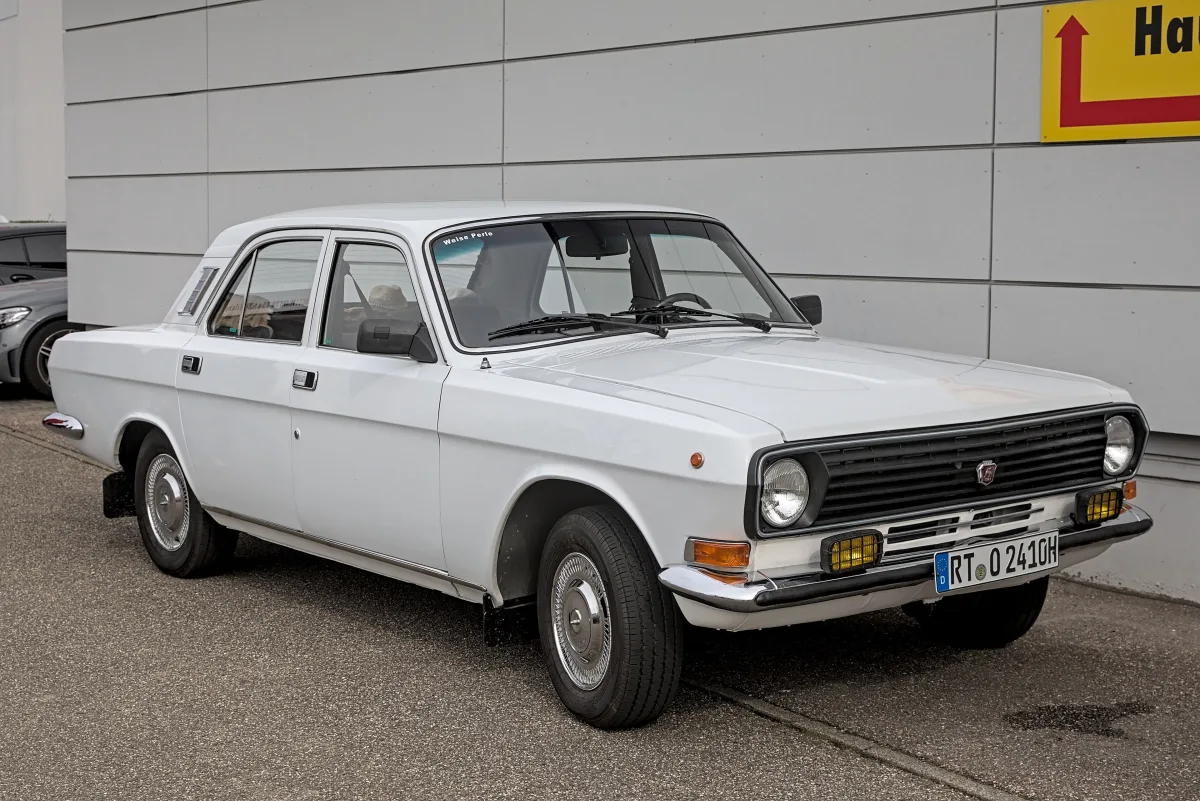
GAZ-24 Volga: Soviet classic and what to know before buying
The GAZ-24 Volga is a Soviet four-door saloon car produced from 1970 to 1992 (as the GAZ-24 until 1985, then as the updated GAZ-24-10). In this article, we review its versions, technology, and what to check when buying this classic car.






GAZ-24 at a glance
The GAZ-24 is a mid-size car from the Gorky Automobile Plant (GAZ), replacing the older Volga M21. It was produced for a decade and became one of the most recognizable Soviet cars, often used by government institutions, as taxis, and as family cars.
Today, it's a classic car sought after by collectors and enthusiasts of Soviet technology. For many, it evokes nostalgia, and some buy it for its simple, easy-to-understand construction.
Versions and generations
The GAZ-24 saloon (1970–1985) is the main version. From 1972, the estate (GAZ-24-02) was also produced, often used as an ambulance or for other purposes.
In 1985, the updated GAZ-24-10 was introduced, featuring a revised front with new grilles, headlights, and other minor changes, produced until 1992. Technically, it is very similar to its predecessor.
Engine and transmission
Most commonly found is the 2.4-litre four-cylinder petrol engine, with around 95 hp. It's of simple construction, so repairs are usually inexpensive.
Manual gearbox with four speeds, and rear-wheel drive. The ride is smooth, but by today's standards the car is slow, and the braking and steering require some getting used to.
What to check when buying a GAZ-24
The most important thing is body corrosion. Check the sills, wings, door sills, boot floor, and mounting points. A well-maintained body is the biggest advantage, as repairs are the most expensive.
Check the engine condition, whether it's leaking oil or burning it, as well as the gearbox, brakes, and suspension. Many cars have been restored or modified, so it's worth finding out what and how has been changed.
Check the documents and whether the car is original, as this affects its value to collectors. Parts need to be sourced from specialist suppliers or clubs.


Trim levels
Names and equipment vary by market and year; we list the main versions.
GAZ-24 sedanas
1970–1985The main and most popular version.
- Approximately 2.4-litre petrol engine
- Four-speed manual gearbox
- Classic Soviet styling
GAZ-24-02 universalas
From 1972Estate body with greater load capacity.
- Larger boot
- Same tech as the sedan
- Rarer version
GAZ-24-10
1985–1992Refreshed version with a revised front end.
- Redesigned front end and taillights
- Often — a refreshed interior
- Considered the later, more modern version
Comparing the versions
| Sedanas | Universalas | GAZ-24-10 | |
|---|---|---|---|
| Who it's for | For classic car enthusiasts | For more practical use | For fans of later versions |
| Body | Sedanas | Universalas | Sedanas |
| Price in the used market (relatively) | €€ | €€ | €€ |
The ideal original sedan for many buyers in good condition. The estate is rarer and more practical, while the GAZ-24-10 is a later, updated version.
Pros
- Simple and easy-to-understand construction
- Spacious interior
- Recognizable classic styling
- Often affordable price
Cons
- Risk of corrosion
- Slow and outdated driving by today's standards
- Parts need to be sourced from specialists
Frequently asked questions
Is the GAZ-24 suitable for daily use?
It can be, if the car is in good condition, but it's slow, lacks modern safety features and is often used as a classic or weekend car.
How does the GAZ-24-10 differ from the GAZ-24?
The GAZ-24-10 is an updated version with a revised front end, grilles and a few other details. Technically, it's very similar.
What is the main risk with the GAZ-24?
Body corrosion and old age. Before buying, thoroughly inspect the underside and check if the car hasn't been in an accident.
Updated 2026-10-21 · Trim levels and equipment vary by market and model year — check the equipment of the specific car. · Translated automatically


