 English
 Lietuvių
 Latviešu
 Eesti
 Polski
 Русский
 Українська
 Deutsch
 Nederlands
 Čeština
 Slovenčina
 Svenska
 Norsk
 Dansk
 Suomi


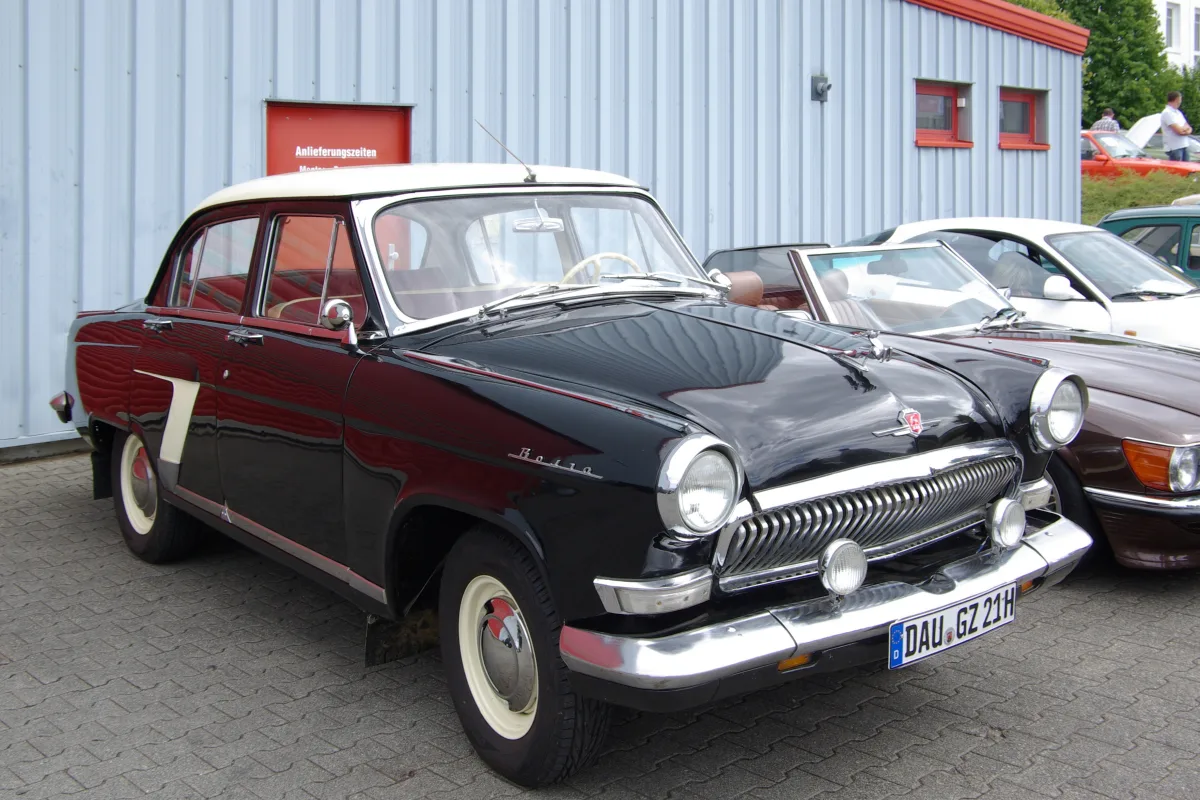
GAZ-21 Volga: Soviet classic and what to know when buying
GAZ-21 Volga — the Soviet sedan produced from 1956–1970 and became one of the most iconic cars of that era. We look at its generations, engine, and key points to know for collectors.






GAZ-21 at a glance
The Volga was the Soviet Union's prestige mid-size car, widely used as a taxi, official car, and family vehicle. Its design was influenced by American trends of the time, with a chrome-laden body.
Today, it's a collector's car, with value depending on condition, originality, and version.
Generations
The GAZ-21 underwent several changes during production — first, second, and third series cars differ in front grilles, chrome details, and some technical specs.
Besides the sedan, a station wagon (GAZ-22) was also produced, so you'll find various body styles on the market.
Engine and transmission
The Volga had a 2.4-litre four-cylinder petrol engine, with around 65–75 hp, depending on the series. The engine is simple and unpretentious.
The transmission is usually manual, with rear-wheel drive. Due to its modest power and hefty weight, the car drives smoothly, not sportily.
What to check when buying a GAZ-21
The main risk is corrosion. Thoroughly inspect the sills, floor, wings, door bottoms, and boot. Bodywork repairs are complex and expensive.
Check that the original core components — engine, gearbox, chrome parts and interior trim — are in place. For collectible cars, documented history is key.
Finding parts is usually not too difficult, as the model is popular among enthusiasts, but original body and interior parts might take longer to source.


Trim levels
Names and equipment vary by market and year; we list the versions most commonly found in Europe.
GAZ-21 (I serija)
1956–1958The earliest cars.
- 2.4-litre petrol engine
- Distinctive front grille
- Lots of chrome details
GAZ-21 (II serija)
1958–1962Updated version.
- 2.4-litre petrol engine
- Changed grille and some details
- Often — improved technology
GAZ-21 (III serija)
1962–1970The final and most modern series.
- 2.4-litre petrol engine, slightly more powerful
- Refreshed front end
- Often — a more comfortable interior
Generation comparison
| I serija | II serija | III serija | |
|---|---|---|---|
| Time period | 1956–1958 | 1958–1962 | 1962–1970 |
| Who it's for | For collectors seeking the early version | For those seeking the refreshed version | For those seeking the latest version |
| Price in the used market (relatively) | €€€ | €€ | €€ |
Early series are most prized by collectors, but the key thing is the car's condition and authenticity.
Pros
- Historic Soviet classic car
- Simple and unpretentious technology
- Spacious interior
- Distinctive styling
Cons
- Risk of corrosion
- Limited performance and safety features
- Searching for original body parts
Frequently asked questions
What engines did the GAZ-21 have?
A 2.4-litre four-cylinder petrol engine with around 65–75 hp.
Did the GAZ-21 have an estate version?
Yes, the GAZ-22 estate was produced.
How many series did the GAZ-21 have?
Usually, three series are distinguished: 1956–1958, 1958–1962 and 1962–1970.
Updated 2026-10-19 · Trim levels and equipment vary by market and model year — check the equipment of the specific car. · Translated automatically


