 English
 Lietuvių
 Latviešu
 Eesti
 Polski
 Русский
 Українська
 Deutsch
 Nederlands
 Čeština
 Slovenčina
 Svenska
 Norsk
 Dansk
 Suomi


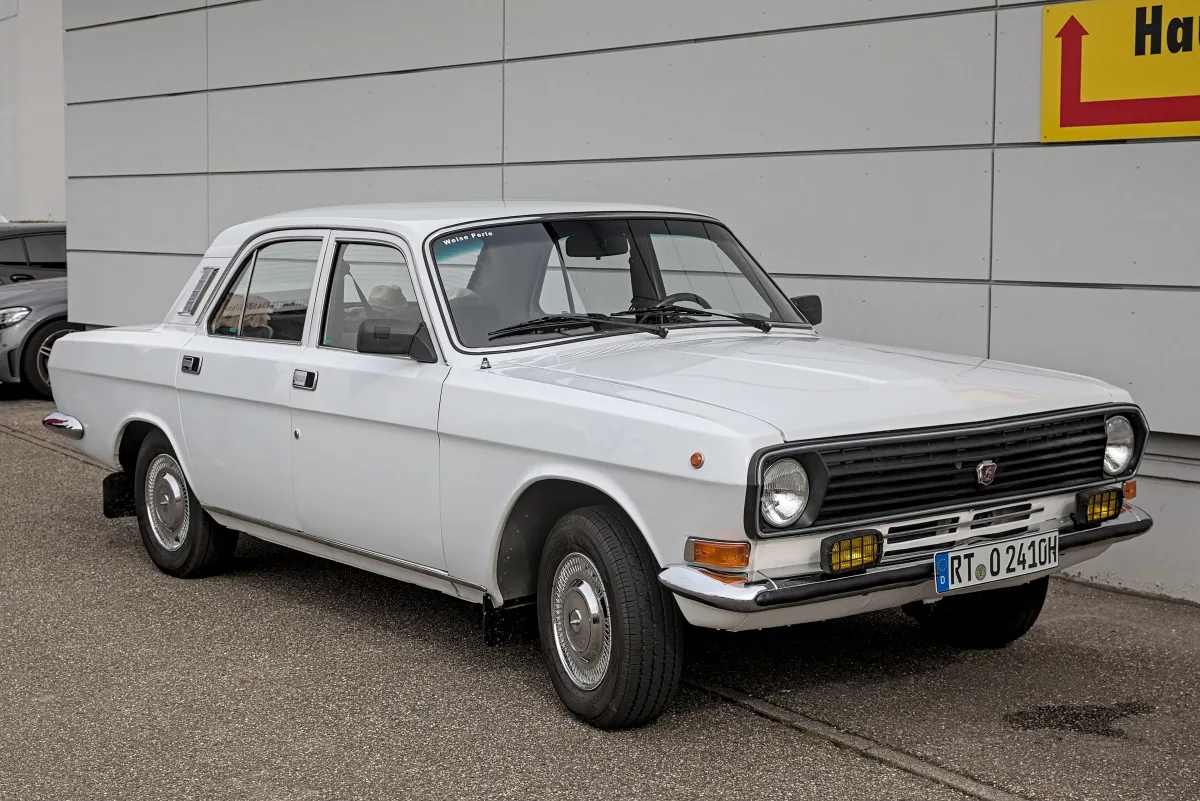
GAZ Volga: GAZ-21, GAZ-24, GAZ-3102 and GAZ-3110
GAZ Volga — sedans and estates of Soviet and later Russian origin, produced from 1956 to 2009. We look at the most famous generations, their engines, and what to know when hunting for a used Volga in Lithuania.






Volga in brief
The “Volga” was once one of the most famous Soviet cars — a large, spacious saloon driven by government officials, taxi drivers, and ordinary family men. Over time, several model generations came and went, but the core idea of a spacious car with rear-wheel drive remained.
Today, the Volga is mostly bought as a rare classic car or collector’s item. Besides that, some are still used daily, as the car is simple and easy to maintain.
Which one to choose
GAZ-21 (1956–1970) — the oldest and most collectible Volga with a distinctive shape, nicknamed the “deer” due to its hood emblem. Such cars are now true classics, so their prices depend on condition and originality.
GAZ-24 (from 1968) — the most popular classic Volga with a more angular design. GAZ-3102 (1982–2009) and GAZ-3110 (1997–2004) — later models that are more practical for daily use, with the final versions produced until 2009.
Engines and gearboxes
Classic Volgas used four-cylinder petrol engines, around 2.4 litres in capacity (in the GAZ-24 version — around 95 hp). Later models featured other engines, including 2.3-litre petrol units.
Gearboxes are manual, and rear-wheel drive provides a classic driving feel. Older Volgas don't drive fast, but they are simple and sturdy.
What to check when buying a used Volga
First, inspect the body — look for dents, the floor, wheel arches, fenders, and the boot floor. Corrosion is the main issue, and body repairs can often cost more than the Volga itself.
Check the condition of the engine and gearbox, suspension, steering mechanism, and brakes. Many parts are simple, but finding original details for the oldest versions can be tricky.
Before buying, check the documents and the car's history. Some examples were used as taxis or company cars, so it's worth looking into their past.


Trim levels
Names and equipment vary by market and year; we list the most commonly found trims in Europe.
GAZ-21
1956–1970The oldest and most collectible Volga.
- Classic, rounded lines
- Often features chromed details
- Usually a manual gearbox
GAZ-24
From 1968The most popular classic Volga.
- Angular body lines
- Approximately 95 AG four-cylinder engine
- Spacious interior
GAZ-3102
1982–2009A more luxurious version with better equipment.
- Often — better interior trim
- Often — a more modern chassis
- Often — a more powerful engine
GAZ-3110
1997–2004Updated Volga for daily use.
- Refreshed body
- Often — a more modern engine
- Often — better comfort features
Comparison of versions
| GAZ-21 | GAZ-24 | GAZ-3102 | GAZ-3110 | |
|---|---|---|---|---|
| Who it's for | For collectors | For classic enthusiasts | For more practical use | For everyday use |
| Engine | Around 2.4 litres | Around 2.4 litres | Varies by version | Varies by version |
| Interior | Classic | Basic | Luxurious | More modern |
| Price in the used market (relatively) | €€€ | €€ | € | € |
Collectors will love the GAZ-21, while classic car enthusiasts will appreciate the GAZ-24. If you need something more practical, consider the GAZ-3102 or GAZ-3110.
Pros
- Spacious interior and robust build
- Simple, easy-to-maintain technology
- Classic, distinctive look
- Many parts are common and easy to find
Cons
- Rust and bodywork can be expensive
- High fuel consumption and modest power
- Basic safety features by today's standards
Frequently asked questions
How does the GAZ-21 differ from the GAZ-24?
The GAZ-21 is the older, more rounded Volga, while the GAZ-24 is the later, boxier and slightly more modern model.
Is the Volga reliable?
The construction is simple and sturdy, but reliability depends on the specific car's condition, especially the bodywork and mechanical upkeep.
Is the Volga suitable for daily use?
Later versions might be okay, but remember the older safety standards, higher running costs and need for repairs.
Updated 2026-10-19 · Trim levels and equipment vary by market and model year — check the equipment of the specific car. · Translated automatically


