 English
 Lietuvių
 Latviešu
 Eesti
 Polski
 Русский
 Українська
 Deutsch
 Nederlands
 Čeština
 Slovenčina
 Svenska
 Norsk
 Dansk
 Suomi


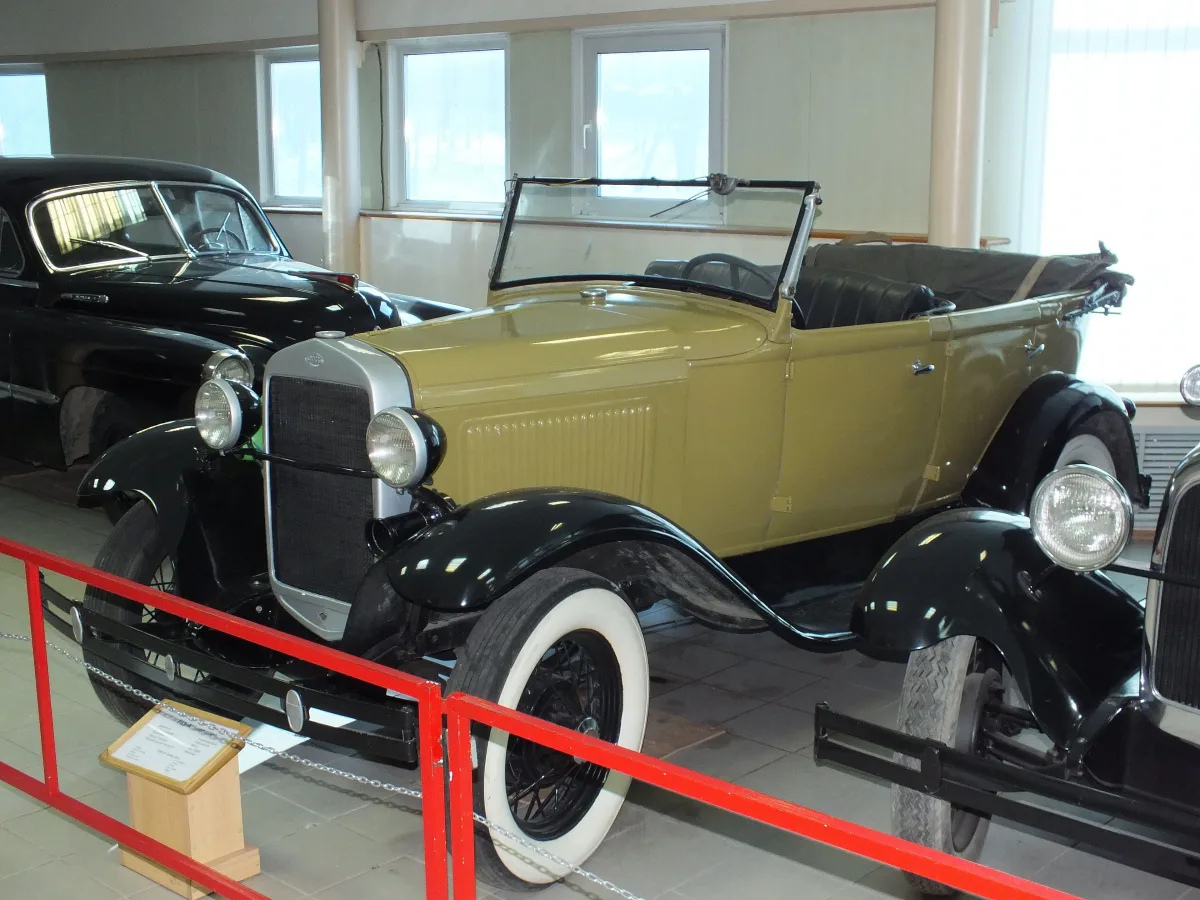
GAZ-A: 1932–1936 Soviet Ford A variant
GAZ-A — the first light car produced at the Gorky Automobile Plant, based on the American Ford A license. We explain what makes it special, its technology, and what to know if one appears in the collector's market.






GAZ-A in brief
The GAZ-A was produced from 1932 to 1936 and was based on the Ford Model A license, making it very similar to its American predecessor, though adapted for Soviet production and road conditions.
Today, the GAZ-A is a collector's item — you can see it in museums, retro events, and in the hands of collectors. Such cars rarely appear in listings, and each example is valued individually.
GAZ-A vs Ford A — what's the difference
Technically, the GAZ-A was close to the Ford A, but it was produced in Gorky using parts from local suppliers and adapted body production. As a result, there can be minor differences between the cars, and parts compatibility isn't always perfect.
The main body style — an open 'phaeton' with a folding roof. Alongside it, there were cargo variants, such as the GAZ-4, but in the light car segment, the GAZ-A is best known as a phaeton.
Engine and transmission
The GAZ-A had a four-cylinder petrol engine with a capacity of around 3.3 litres and an output of about 40 hp. This was the standard for the early 1930s: simple, reliable, but slow.
Manual gearbox with three speeds, rear-wheel drive. Brakes and suspension are basic, suited to roads of the time, so driving such a car today requires caution.
What to know if you're considering a GAZ-A
First, establish the provenance: is the car original, restored, or just similar to the GAZ-A. Due to its resemblance to the Ford A, there might be mixed parts or replicas, so it's worth consulting a specialist.
Inspect the body frame (often wooden), chassis, engine, and running gear. Much depends on the quality of the restoration, as shoddy work can cost a lot down the line.
Parts need to be sourced through clubs and specialist dealers. Ensure you have all the documents and that the car can be legally registered and used in your country.


Variants
The GAZ-A didn't have modern trim levels — we outline the main body styles.
GAZ-A faetonas
1932–1936Open body with folding roof.
- Open phaeton body
- Folding roof
- Four-cylinder engine
GAZ-4
according to the sourceA pickup-style cargo body variant, based on the GAZ-A.
- Cargo body
- The same basic technology
- Less commonly encountered
Atkurtas / restauruotas
nowMost surviving cars have been restored.
- Restored bodywork
- Often — replaced parts
- Value depends on condition
Comparing variants
| Faetonas | GAZ-4 | Restauruotas | |
|---|---|---|---|
| Who it suits | For collectors and shows | For enthusiasts of rarer variants | For those who want a ready-to-go car |
| Body | Convertible | Cargo | Depends on the car |
| Engine | Around 3.3 litres, around 40 hp | Around 3.3 litres, around 40 hp | Around 3.3 litres, around 40 hp |
| Price in the used market (relatively) | High-end | High-end | High-end |
The GAZ-A is only worth considering for collectors and classic car enthusiasts. Before buying, check the provenance, documents, and restoration quality.
Pros
- A significant part of Soviet automotive industry history
- Simple and easy-to-understand mechanics
- Rare collectible car
- Similar to the Ford A, so finding parts might be easier
Cons
- Very rare, few specialists
- Slow and not suited to modern driving
- Difficult to verify provenance and originality
Frequently asked questions
Is the GAZ-A a copy of the Ford A?
It was produced under Ford A licence, so their technology is similar, but it is a separate car, built in Gorky.
What engine did the GAZ-A have?
A four-cylinder petrol engine, around 3.3 litres in capacity and approximately 40 hp.
Is the GAZ-A suitable for daily use?
No. It's a collector's car, more suited to shows and the occasional spin.
Updated 2026-10-21 · Trim levels and equipment vary by market and model year — check the equipment of the specific car. · Translated automatically


