 English
 Lietuvių
 Latviešu
 Eesti
 Polski
 Русский
 Українська
 Deutsch
 Nederlands
 Čeština
 Slovenčina
 Svenska
 Norsk
 Dansk
 Suomi


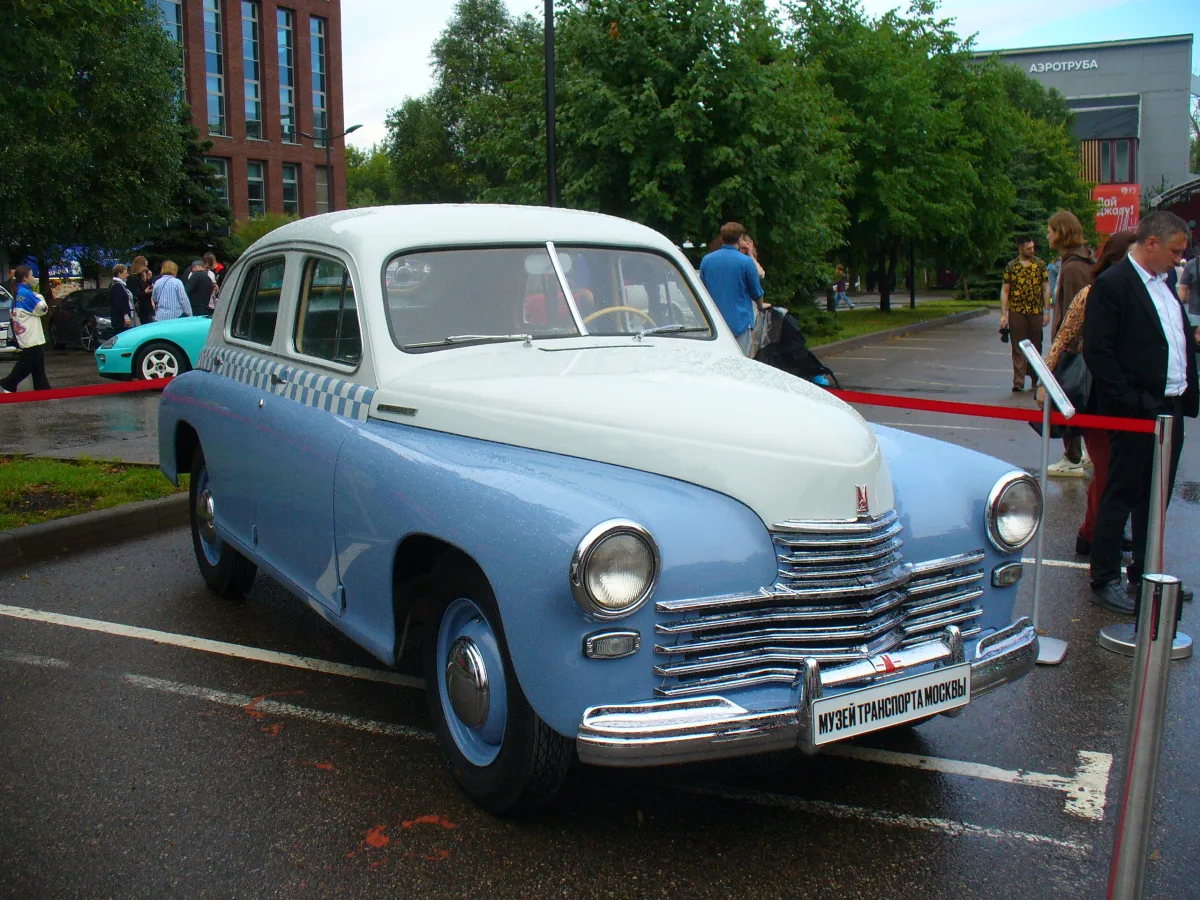
GAZ-M20 Pobeda: the Soviet classic, versions and what to know before buying
The GAZ-M20 Pobeda is a Soviet passenger car produced from 1946 to 1958 at the Gorky Automobile Plant and became one of the first mass-produced cars in the USSR with a unitary body. In this article, we'll look at its versions, technology, and what you need to know if you're considering buying this classic car.






Pobeda in brief
The name 'Pobeda' means 'victory'. The car was designed at the end of World War II and started production in 1946. Its sloping rear and unitary body were modern for the Soviet market of that time.
The Pobeda was produced until 1958. Today, it is valued as a historic car, often seen at classic car shows and in collections. Under license, this model was also produced in Poland by FSO, who named it the Warszawa.
Which version to choose
First-series cars (up to 1955) are known for their original design and older technology. This is the most collectible version if the original body and interior are intact.
The later M-20V version (around 1955–1958) features an updated grille design and improvements. Rare modifications include the convertible and the all-wheel-drive M-72, which used the Pobeda body with off-road technology.
Engine and transmission
The Pobeda has a four-cylinder, approximately 2.1-litre petrol engine with around 50 horsepower. It's simple, reliable, and easy to maintain, but by today's standards, it's quite slow.
Gearbox — manual, three-speed, with a shift lever on the steering column. Operation requires getting used to, and the brakes are relatively weak compared to modern standards.
What to check when buying a used Pobeda
The main issue — rust. Inspect the sills, floor, wheel arches, door bottoms, and front panel. A unibody is harder to restore than a body-on-frame, so rust spots can be costly.
Check the condition of the engine and gearbox, electrical system, brakes, and steering mechanism. Many cars have been restored, so look for originality and what parts have been replaced. Documents should match the body and engine numbers.


Trim levels
Names and equipment vary by market and year; we list the most commonly found trims in Europe.
M-20
1946–1955First series Pobeda with its original look.
- Approximately 2.1-litre engine, around 50 hp
- Three-speed manual gearbox
- Original early headlight design
M-20V
Around 1955–1958Later, updated series.
- Updated front end
- Minor technical improvements
- Easier to find than the early model
Kabrioletas
A rare variantConvertible version
- Fabric sunroof
- Very rare
- Highly valued by collectors
M-72
1955–1958All-wheel-drive version, based on the Pobeda
- All-wheel drive
- Higher ride height
- A rare variant
Comparing Pobeda versions
| M-20 | M-20V | Kabrioletas | M-72 | |
|---|---|---|---|---|
| Who it's for | For collectors | For enthusiasts | For car enthusiasts | For road trippers |
| Body style | Saloon | Saloon | Convertible | Saloon |
| Transmission | Rear-wheel drive | Rear-wheel drive | Rear-wheel drive | All-wheel drive |
| Rare | Average | Less common | Large | Large |
| Price in the used market (relatively) | Mid-range | Mid-range | High-end | High-end |
Most buyers' best bet is a solid-bodied M-20 or M-20V. The cabriolet and M-72 are for collectors, as they are rare and expensive.
Pros
- Historical significance and unique styling
- Simple, easily serviced technology
- An eye-catching show and event car
- A robust body and spacious interior for its time
Cons
- Very slow by today's standards
- Weak brakes and basic comfort
- Risk of rust and expensive restoration
Frequently asked questions
What does 'Pobeda' mean?
In Russian, it means 'victory'. The name is linked to World War II, after which the car was created.
Is the Pobeda suitable for daily use?
Rarely: it's slow, has weak brakes, and little modern comfort. It's usually used for shows, events, and as a collector's item.
What makes the Pobeda special?
It's one of the first Soviet cars with a unitary body. It was also produced in Poland under license as the FSO Warszawa.
Updated 2026-10-19 · Trim levels and equipment vary by market and model year — check the equipment of the specific car. · Translated automatically


