 English
 Lietuvių
 Latviešu
 Eesti
 Polski
 Русский
 Українська
 Deutsch
 Nederlands
 Čeština
 Slovenčina
 Svenska
 Norsk
 Dansk
 Suomi


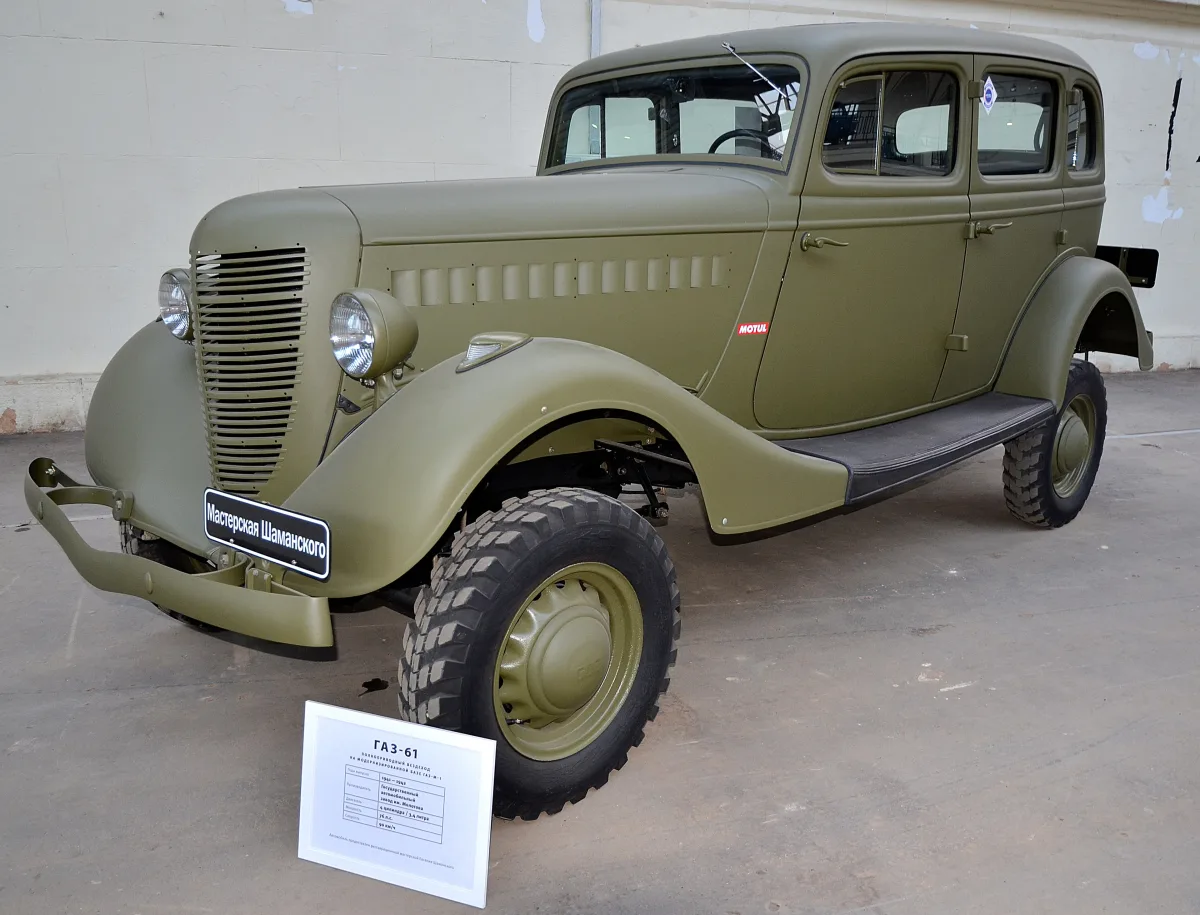
GAZ-61: pre-war Soviet all-wheel-drive phaeton
GAZ-61 — a light all-wheel-drive car created at the end of the 1930s, one of the first of its type in the USSR. In this article, we briefly look at its history, technology, and why it's now a museum piece.






GAZ-61 in brief
The GAZ-61 was built at the Gorky Automobile Plant as a high-clearance light car for leaders and military personnel. It was based on the contemporary GAZ light car but received an all-wheel-drive system.
This car was produced in very small numbers, so only a few examples remain. Most of them are now kept in museums or private collections.
What makes it special
Its standout feature is the all-wheel-drive system, which was a rare solution for light cars at the time. High ground clearance and robust wheels allowed it to tackle rough roads.
The body was a four-door design with front fenders and separate running boards. During the war, similar technology was often used as a staff car.
Engine and tech
The GAZ-61 had a six-cylinder petrol engine with a displacement of around 3.5 litres. Its power was modest by today's standards, but it was sufficient for a light car.
The gearbox is manual, with a reducer. The design is simple and serviceable, but parts are almost non-existent, so they are often made individually.
What to check if you happen to buy one
First and foremost, authenticity. Replicas and modified versions of this model are more common than originals, so proper documentation and a specialist's opinion are essential.
Check the frame, body, and axles, as rust and previous repairs can seriously affect the value here.
Pay attention to the condition of the engine, gearbox, and differential, and whether the car can be registered as a classic.


Trim levels
Names and equipment vary by market and year; we list the versions most commonly found in Europe.
GAZ-61
Late 1930s – early 1940sThe sole main variant was a four-door all-wheel-drive light car.
- All-wheel drive
- Six-cylinder engine, around 3.5 litres
- High ground clearance and robust wheels
Comparing originals and replicas
| Originalas | Restauruotas originalas | Replika | |
|---|---|---|---|
| Who it suits | For the museum, collection | For shows, events | For events and fun |
| The most important thing to check | Documents and Provenance | How many original parts remain | Originality |
| Price in the used market (relatively) | €€€ | €€€ | €€ |
The GAZ-61 is a rarity where documents and expert opinion are crucial when buying. The price and historical value are highest for a genuine original.
Pros
- All-wheel drive was already available in the 1940s
- High historical value
- Distinctive retro styling
- Simple mechanics
Cons
- Very few examples available
- Many replicas and restorations
- Parts are almost non-existent
Frequently asked questions
Was the GAZ-61 always all-wheel drive?
Yes, this was one of the first Soviet front-wheel-drive cars.
Is it possible to find an original GAZ-61?
It's very difficult: only a few examples remain, mostly in museums and collections.
How to tell an original from a replica?
According to factory documents, numbers, and an expert's opinion, not just appearance.
Updated 2026-10-19 · Trim levels and equipment vary by market and model year — check the equipment of the specific car. · Translated automatically


