 English
 Lietuvių
 Latviešu
 Eesti
 Polski
 Русский
 Українська
 Deutsch
 Nederlands
 Čeština
 Slovenčina
 Svenska
 Norsk
 Dansk
 Suomi


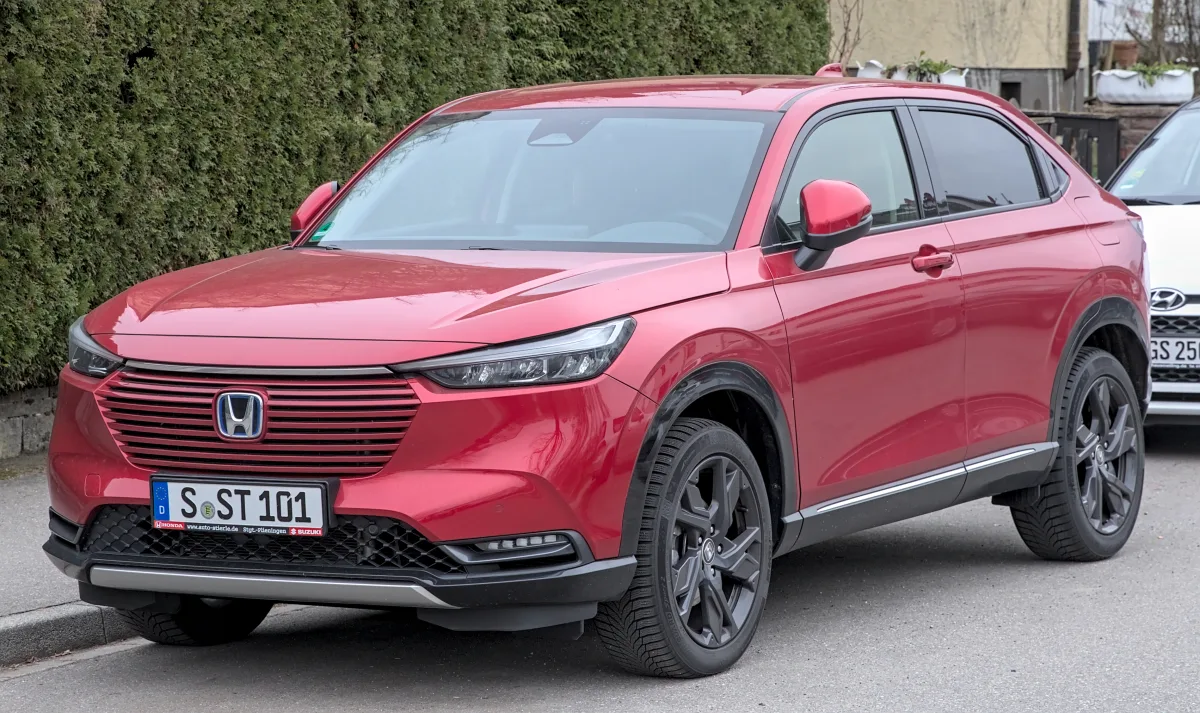
Honda HR-V: II and III generations, engines and trims
Honda HR-V — a compact SUV, praised for its spacious interior, reliability and frugal engines. We look at how the II and III generations differ, which engines you'll find, how the trims vary and what to check when buying a used HR-V.






HR-V in brief
The first HR-V (1999–2006) was a small, rather unusual-looking SUV, offered with three and five doors. After a long hiatus, the model returned in 2015 — now a five-door compact SUV built on the Honda Jazz platform.
The HR-V stands out because it packs plenty of people and stuff into a small body. The rear 'Magic Seats' allow you to lift the seat bases and carry tall items, and the boot is one of the most practical in its class. In Europe, the II and III generation HR-Vs come with front-wheel drive.
II and III generation — how they differ
The II generation (Europe 2015–2021) — the most popular in the used market. It's spacious, simple and economical, offered with petrol and diesel engines. Common criticisms include a firm ride, a noisy cabin on the motorway and a slow-moving infotainment system. Facelifted cars (from 2018–2019) got a slightly revised look and improved equipment.
The III generation (from 2021) is offered in Europe only as a hybrid e:HEV. It's more modern, quieter in the city and better equipped, while the body is lower and has a sportier, coupe-like shape. As a result, the boot and headroom in the rear are slightly smaller than in the II generation.
If space and a lower price are your top priorities, go for the second generation. If you do a lot of city driving and want more modern features and lower fuel consumption, opt for the third generation.
Engines and transmissions
The second generation most commonly features the 1.5 i-VTEC petrol engine (around 130 hp) and the 1.6 i-DTEC diesel (around 120 hp). From 2019, a more powerful version with the 1.5 VTEC Turbo engine (around 180 hp) was also offered.
Second-generation petrol engines are paired with a 6-speed manual or a CVT automatic transmission. The diesel HR-V is usually found with a manual gearbox.
The third-generation HR-V has a 1.5-litre petrol engine and electric motor hybrid system, e:HEV (around 130 hp). The electric motor does most of the work, making it particularly economical in the city. There are no conventional gears, and the engine can get noisy when accelerating quickly.
What to check when buying a used HR-V
In a second-generation model with a CVT transmission, ensure the car accelerates smoothly without juddering or unusual noises, and ask if the transmission fluid has been changed. For the diesel variant that has done a lot of city driving, check the diesel particulate filter (DPF) and the catalytic converter.
Check the multimedia system's operation: in the second generation, it's often slow and can be glitchy, so ask if the software has been updated. Test the 'Magic Seats' mechanism too — the seats should fold and secure easily.
In a third-generation model, check that the hybrid system operates without error messages and review the service history. Inspect all cars for rust according to technical inspection and service records, and the body for painted-over details.


Trims
Names and equipment vary by market and year; we list the most commonly found trims in Europe.
Comfort
Second generationThe base second-generation trim is simple and practical.
- Often fitted with light-alloy wheels
- Air conditioning and cruise control
- A more basic infotainment system
Elegance
Second generationThe most popular second-generation choice.
- Automatic climate control
- A touchscreen infotainment display
- Often includes parking sensors and a rear-view camera
Executive
Second generationThe top second-generation trim with the most equipment.
- Often includes a leather interior and panoramic sunroof
- Often includes LED headlights and navigation
- Often — easy access and start-up
Elegance
Third generationThe base trim of the third generation, which already comes with plenty of modern kit.
- LED headlights
- Adaptive cruise control and other driver assistance systems
- Apple CarPlay and Android Auto
Advance
Third generationMore comfort and convenience features.
- Often — heated steering wheel
- Often — electrically operated boot lid
- More in-cabin comfort features
Advance Style
Third generationThe top-spec version with distinctive styling and the most kit.
- Often — two-tone body
- Distinctive interior trim
- Often — better sound system
Comparison of third-gen trims
| Elegance | Advance | Advance Style | |
|---|---|---|---|
| Who it suits | For daily driving | For comfort | For style and features |
| Common wheels | 17–18 inch | 18 inch | 18 inch |
| Front headlights | LED | LED | LED |
| Interior | Standard | More comfort features | Distinctive trim |
| Price in the used market (relatively) | € | €€ | €€€ |
Most buyers will be happy with the Elegance or Advance trims — the tech is the same across the board. The Advance Style is worth considering if looks matter and you want the most kit.
Pros
- The cabin is spacious and the 'Magic Seats' are practical
- The engines are frugal, especially the third-gen hybrid in the city
- It's got a solid reputation for reliability
- Easy to get in and out of
Cons
- The second-gen infotainment is slow and outdated
- Not all-wheel drive versions are available
- The third-gen hybrid is noisy when accelerating quickly
Frequently asked questions
Which HR-V generation is best to buy used?
If space and a lower price are key, the refreshed second-gen (2019–2021) with the 1.5 i-VTEC engine is the best bet. If you do a lot of city driving and budget allows, consider the third-gen hybrid.
Does the HR-V have all-wheel drive?
In Europe, the second and third-gen HR-Vs come with front-wheel drive only. All-wheel drive was offered on some first-gen models.
Does the HR-V e:HEV need charging?
The HR-V e:HEV is a conventional hybrid — the battery charges while driving and braking, so there's no need for plug-in charging.
Is the CVT gearbox reliable?
A well-maintained Honda CVT gearbox usually lasts a long time. The key is to change its oil on schedule, and during a test drive, the car should accelerate smoothly and without any unusual noises.
Updated 2026-10-09 · Trim levels and equipment vary by market and model year — check the equipment of the specific car. · Translated automatically


