 English
 Lietuvių
 Latviešu
 Eesti
 Polski
 Русский
 Українська
 Deutsch
 Nederlands
 Čeština
 Slovenčina
 Svenska
 Norsk
 Dansk
 Suomi


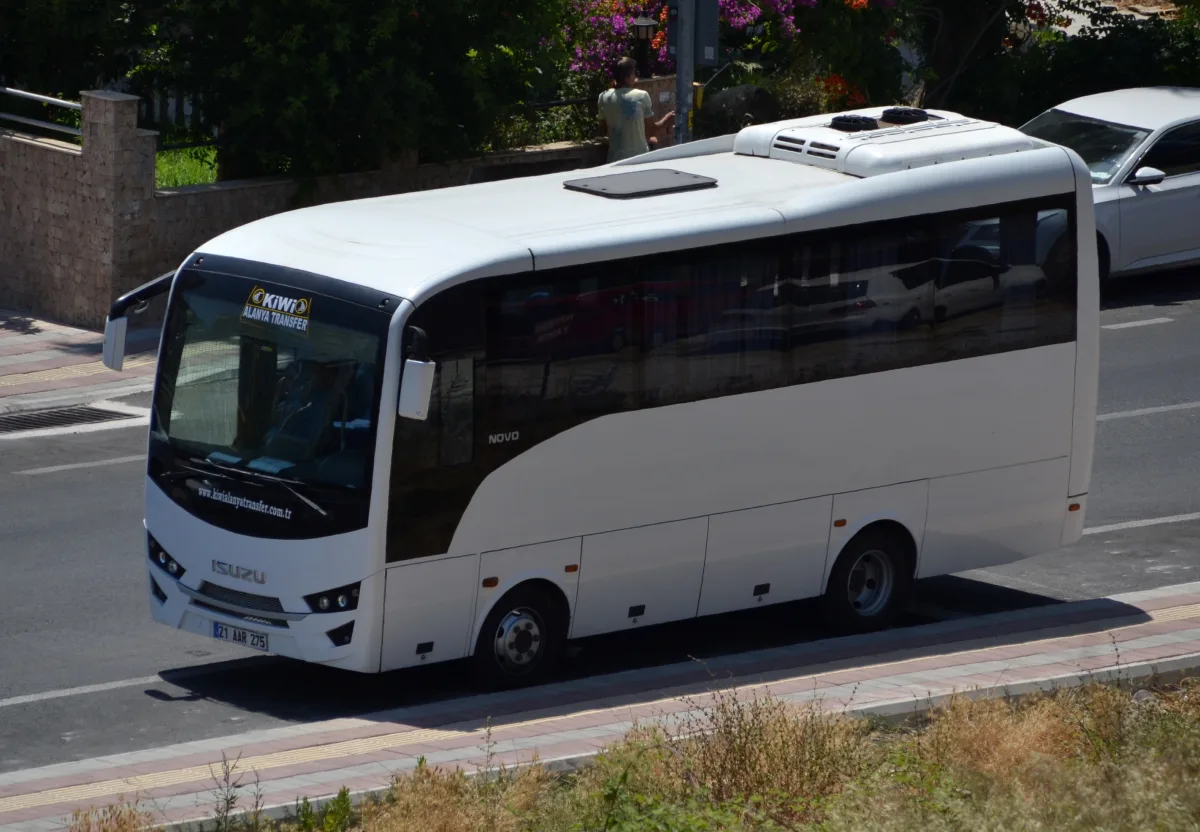
Isuzu Novo: a mid-sized bus, engines and versions
The Isuzu Novo is a mid-sized bus manufactured in Turkey, introduced in 2007 and used for tourist, staff, and urban/suburban routes. We look at the versions, engines, and what to check when buying used.






Novo in brief
The Novo is a midibus produced by Anadolu Isuzu, filling the gap between minibuses and large 12m buses. It's ideal for operators who need more comfort than a minibus offers but don't require a full-sized bus.
Thanks to its smaller dimensions, the Novo maneuvers more easily in narrow streets and is more economical to run. In Europe, it's particularly popular among tourism, hotel, and staff transport providers.
Versions and purpose
The Novo is produced in several versions: the Novo Citi for urban/suburban routes and the Novo Lux for tourist trips. They differ in seating arrangement, number of doors, and interior trim.
Later, electric versions of the Novo were introduced (e.g., Novo Volt), but in the Lithuanian used market, diesel examples are most commonly found.
Engines and gearboxes
The Novo is fitted with a four-cylinder Isuzu diesel engine, roughly 5 litres in capacity. Depending on the year, it meets Euro 3–6 standards.
The gearbox is usually manual (sometimes automatic). Proper maintenance of the clutch and gearbox determines how long these vehicles last in intensive service.
What to check when buying a used Novo
Check the engine oil levels, turbocharger condition, exhaust system, and suspension. Due to frequent stops in urban traffic, door mechanisms and brakes can wear out quickly.
Look for corrosion around the doors and sills in the body, check the suspension, climate control system, and sunroofs. Inside, inspect the seats and lighting.


Versions and trims
Names and equipment vary by market and production year; we list the versions most commonly found in Europe.
Novo Citi
from 2007City and suburban version with more space for standing passengers.
- Often — two doors
- Often — more standing room
- Simpler interior trim
Novo Lux
from 2007Touring version with a more comfortable interior.
- Often — softer seats
- Often — climate control
- Often — separate boot compartment
Novo su automatine pavarų dėže
depends on the yearMore comfort for the driver in city driving.
- Often — automatic transmission
- Less driver fatigue
- Often — pricier maintenance
Novo Volt
later yearsElectric version for city routes.
- Electric drivetrain
- Often — fast charging access
- Often — lower running costs
Comparing newer versions
| Novo Citi | Novo Lux | Novo Volt | |
|---|---|---|---|
| Who it's for | For city and suburban routes | For touring trips | City routes with electric drivetrain |
| Interior quality | More standing room | More comfortable seating | Similar to the Citi |
| Gearbox | Isuzu diesel | Isuzu diesel | Electric motor |
| Price in the used market (relatively) | Budget-friendly | Mid-range | Premium |
The Novo Citi is ideal for daily routes, the Novo Lux for touring trips. The electric Novo Volt is worth considering only if you have charging infrastructure.
Pros
- Smaller bus, easy to manoeuvre
- Economical operation
- Wide range of applications
- Affordable in the used market
Cons
- Less comfort than in larger buses
- Smaller boot space
- Component selection is narrower than Mercedes-Benz or Setra
Frequently asked questions
Who is the Isuzu Novo best suited to?
The Novo is best suited to small and medium-sized groups, staff transport, hotels and city transport where a 12m coach isn't necessary.
Is the Novo suitable for long journeys?
The Novo Lux version can handle long journeys, but comfort and boot space are less than in larger tourist coaches.
Is there an electric Novo?
Yes, an electric version (Novo Volt) has been introduced, mainly for city routes. It's still rare in the Lithuanian used market.
Updated 2026-10-21 · Trim levels and equipment vary by market and model year — check the equipment of the specific car. · Translated automatically


