 English
 Lietuvių
 Latviešu
 Eesti
 Polski
 Русский
 Українська
 Deutsch
 Nederlands
 Čeština
 Slovenčina
 Svenska
 Norsk
 Dansk
 Suomi


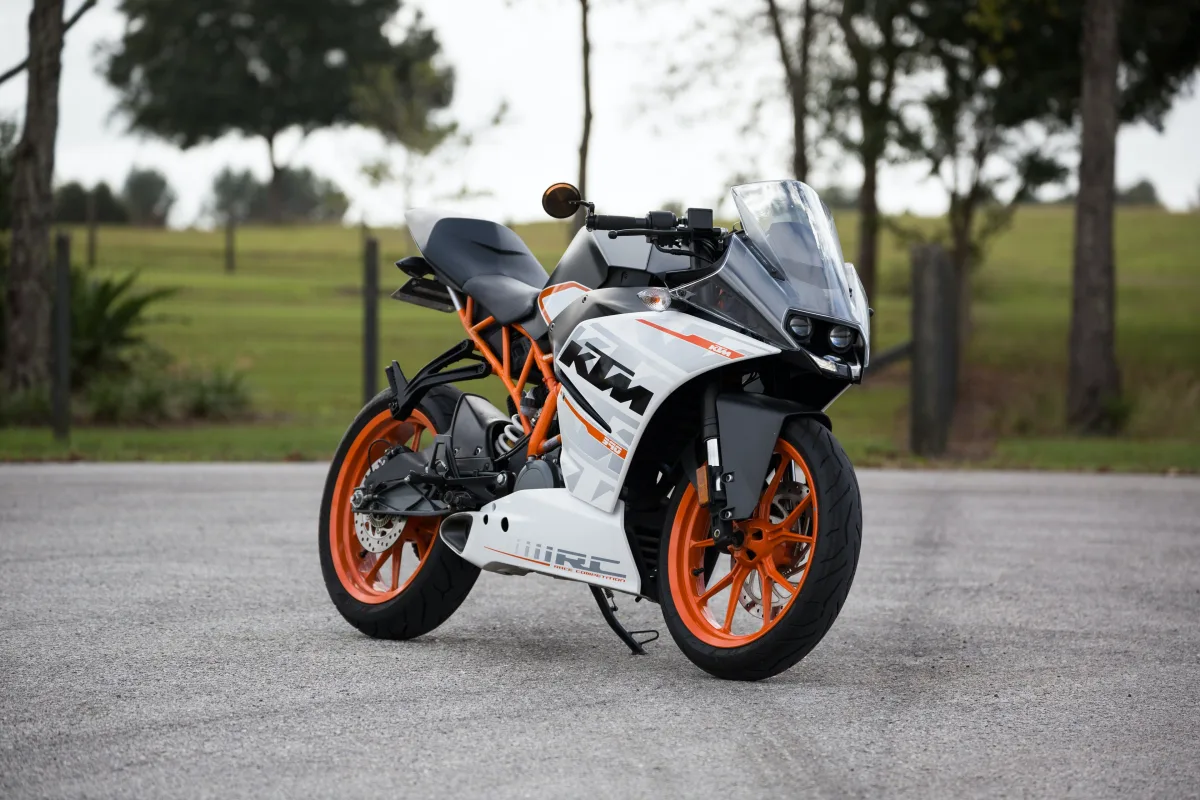
KTM RC 390: a sporty motorcycle for the A2 category, generations and what to check
KTM RC 390 — a lightweight sporty motorcycle with a single-cylinder engine, tailored for the A2 category and those who enjoy dynamic riding. We look at two generations, the tech, and what to check when buying a used RC 390.






RC 390 in brief
The RC 390 debuted in 2014 as an accessible sporty motorcycle with true KTM character: lightweight, lively, and fast enough. It's ideal for those who want sporty riding without the high power and cost.
Due to its power limits, it fits the A2 category, making it a popular choice for young riders. However, it's a sporty motorcycle, so the riding position is quite low and may not be comfortable for everyone on long journeys.
Generations — what's the difference
The first generation (2014–2021) features a roughly 373 cm³ engine, a steel trellis frame, and simpler electronics. Later versions of this generation received improvements: a slipper clutch, ABS with a switch-off option, and other changes.
The second generation (from 2022) comes with a new frame, updated engine, TFT screen, several riding modes, traction control, and cornering ABS. It's more modern but pricier in the used market.
Engine and transmission
The engine is a liquid-cooled, single-cylinder, roughly 373 cm³, with around 44 hp (around 32 kW). This power fits within A2 limits.
The transmission is a 6-speed manual, with the drive to the rear wheel via a chain. Newer versions often come with a quickshifter as an option.
What to check when buying a used RC 390
Since this is a sports bike, check if it hasn't been used on the track or crashed. Inspect the fairing, footpegs, handlebars, and controls.
Check the chain, sprockets, brakes, tyres, and engine operation. A single-cylinder engine should run smoothly without unusual noises, and the cooling fan should kick in.
Request the service history: KTM engines need regular oil changes and maintenance intervals. Sports bikes are often ridden hard.


Trim levels and versions
Names and equipment vary by market and year; below are the main versions.
RC 390 I karta
2014–2021The first generation with simpler technology.
- Approximately 373 cm³ single-cylinder engine
- ABS and slipper clutch (in later versions)
- Often comes with a sporty riding position
RC 390 II karta
From 2022Updated generation with modern electronics.
- New frame and engine updates
- TFT screen, riding modes, traction control
- Often comes with cornering ABS
RC 390 comparison
| I karta | II karta | |
|---|---|---|
| Who it's for | Ideal for budget-conscious sports bike beginners | For those who value modern electronics |
| Engine | Around 373 cc, around 44 hp | Around 373 cc, around 44 hp |
| Price in the used market (relatively) | Mid-range | High-end |
The first generation is great for a limited budget and beginners in sports riding. The second generation is worth choosing if modern electronics and more comfortable handling are important.
Pros
- Light and dynamic
- Fits within A2 category limits
- Sporty looks and good handling
- Relatively affordable for a sports bike
Cons
- Sporty riding position is uncomfortable on long journeys
- The single-cylinder engine vibrates at high revs
- Often driven aggressively
Frequently asked questions
Is the RC 390 suitable for an A2 licence?
Yes, the power fits within A2 limits. Still, check the specific motorcycle's documents and regulations.
Is the RC 390 suitable for a beginner?
It's lightweight and fairly manageable, but it's a sporty motorcycle with a distinct character. Beginners should cautiously build up their experience.
How does the second generation differ from the first?
The second generation has a new frame, updated engine, TFT screen, several modes, and more electronics. The first generation is simpler and more affordable.
Updated 2026-10-21 · Trim levels and equipment vary by market and model year — check the equipment of the specific car. · Translated automatically


