 English
 Lietuvių
 Latviešu
 Eesti
 Polski
 Русский
 Українська
 Deutsch
 Nederlands
 Čeština
 Slovenčina
 Svenska
 Norsk
 Dansk
 Suomi


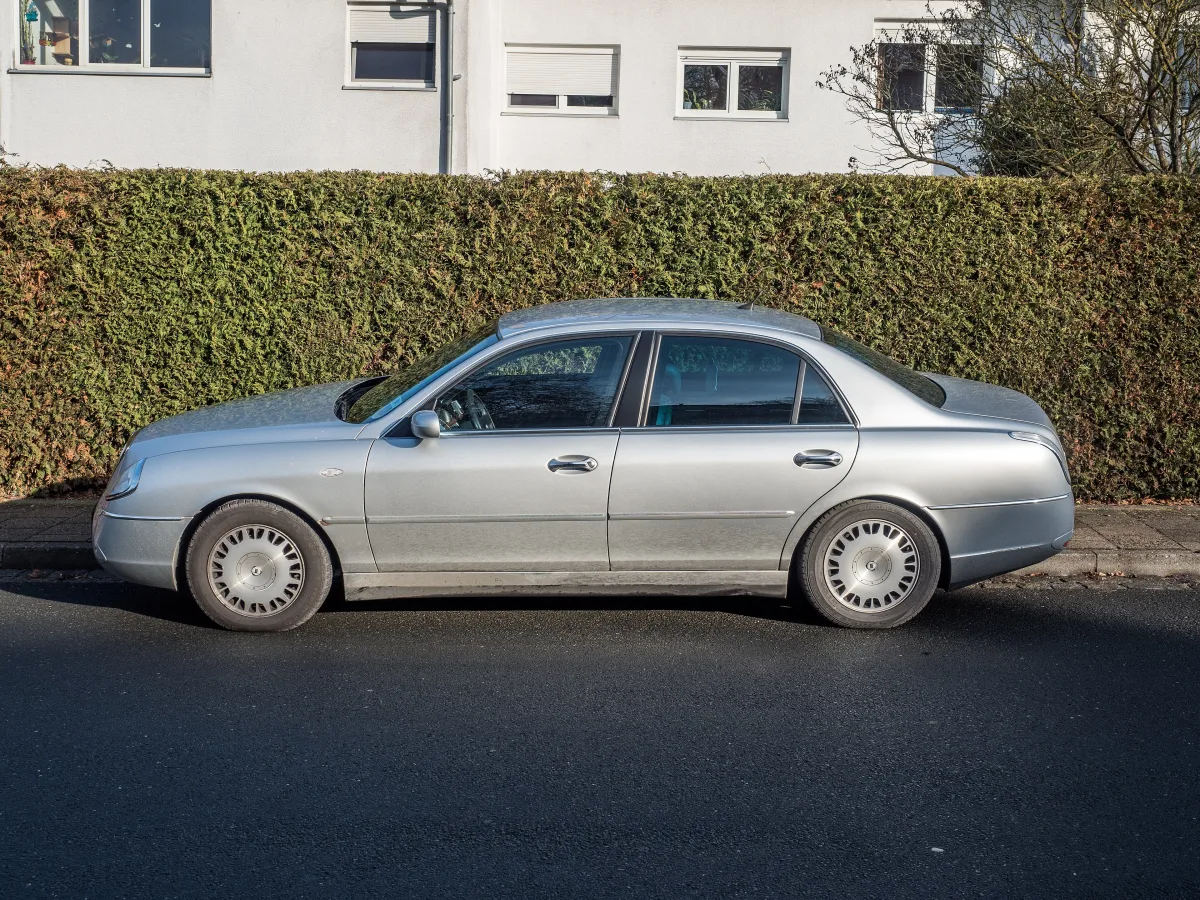
Lancia Thesis: an Italian luxury sedan, engines and what the buyer should know
Lancia Thesis (2002–2009) — the Lancia flagship, a front-wheel-drive luxury sedan with a distinctive, 'classic' appearance and a rich interior. We look at the engines, trim levels and what to check before buying a used Thesis.






Thesis in brief
The Thesis was Lancia's answer to luxury German sedans — large, spacious, incredibly comfortable, with top-tier materials and equipment. Its design stands out deliberately: vertical grille styling and refined lines hark back to classic Lancia models.
The Thesis is rare and affordable on the used market. It's a luxury car for a modest price, but it requires meticulous maintenance, and repairs can be expensive.
Why the model is rare
The Thesis was produced in one generation from 2002–2009 and sold in relatively small numbers. As a result, the supply of used cars is limited, and finding parts and specialists can take time.
When choosing, the engine, trim level and service history are more important than the year of manufacture. It's crucial that the car is well-maintained and that the electrical systems work flawlessly.
Engines and transmissions
The Thesis offers 2.0-litre turbo petrol, 2.4-litre petrol and 3.0-litre V6 engines, as well as 2.4-litre JTD diesel engines. Power outputs range from around 150 to over 200 hp.
The transmission is manual or automatic, depending on the engine. The diesel engine is often chosen for its economy, while the V6 is favoured for its comfort and quietness.
What to check when buying a used Thesis
First, check the electrical equipment and suspension: the car has a lot of electronics, so the diagnostic and service history is very valuable. Test all the interior functions, lights, and seat adjustments.
Check the engine and gearbox operation, oil and coolant leaks. In diesel cars — cold start, smoke, and fuel system.
Inspect the body for corrosion and signs of accidents, check the brakes and suspension. Ask for a full service history.


Versions
Names and equipment vary by market and year; we list the most commonly encountered names in Europe.
2.0 Turbo
2002–2009Petrol version with a 2.0-litre turbo engine.
- Around 185 hp
- Dynamic driving
- Higher fuel consumption
3.0 V6
2002–2009The most powerful petrol version with a V6.
- Around 215 hp
- Quiet and comfortable engine
- High fuel consumption
2.4 JTD
2002–2009Diesel version with a 2.4-litre turbodiesel.
- Lower fuel consumption
- Good pulling power
- Important service history
Engine comparison
| 2.0 Turbo | 3.0 V6 | 2.4 JTD | |
|---|---|---|---|
| Who it's for | For dynamic driving | For comfort and quiet | For long distances |
| Approximate power | 185 HP | 215 HP | Around 150–175 HP |
| Fuel economy | Large | Largest | Most affordable |
| Price in the used market (relatively) | € | € | €€ |
Most buyers opt for the 2.4 JTD diesel due to its running costs. V6 and turbo models are chosen for comfort and dynamics, but only with a well-maintained service history.
Pros
- Luxurious, spacious and quiet interior
- Distinctive Italian styling
- Generous equipment
- Price in the used market is low
Cons
- Electronics and suspension repairs can be expensive
- Choice of parts and services is very limited
- High fuel consumption in petrol versions
Frequently asked questions
Is the Thesis reliable?
It depends largely on the specific car's maintenance. The key factors are the condition of the electrical equipment and suspension, as well as the service history.
Is the Thesis suitable for daily use?
Yes, if the car has been well-maintained. It's a comfortable sedan, but due to its complex features, it requires more attention during upkeep.
Which engine is the best?
For most, the 2.4 JTD diesel is ideal for fuel efficiency. The V6 and turbo options are best for comfort and power, but they come at a higher running cost.
Updated 2026-10-19 · Trim levels and equipment vary by market and model year — check the equipment of the specific car. · Translated automatically


