 English
 Lietuvių
 Latviešu
 Eesti
 Polski
 Русский
 Українська
 Deutsch
 Nederlands
 Čeština
 Slovenčina
 Svenska
 Norsk
 Dansk
 Suomi


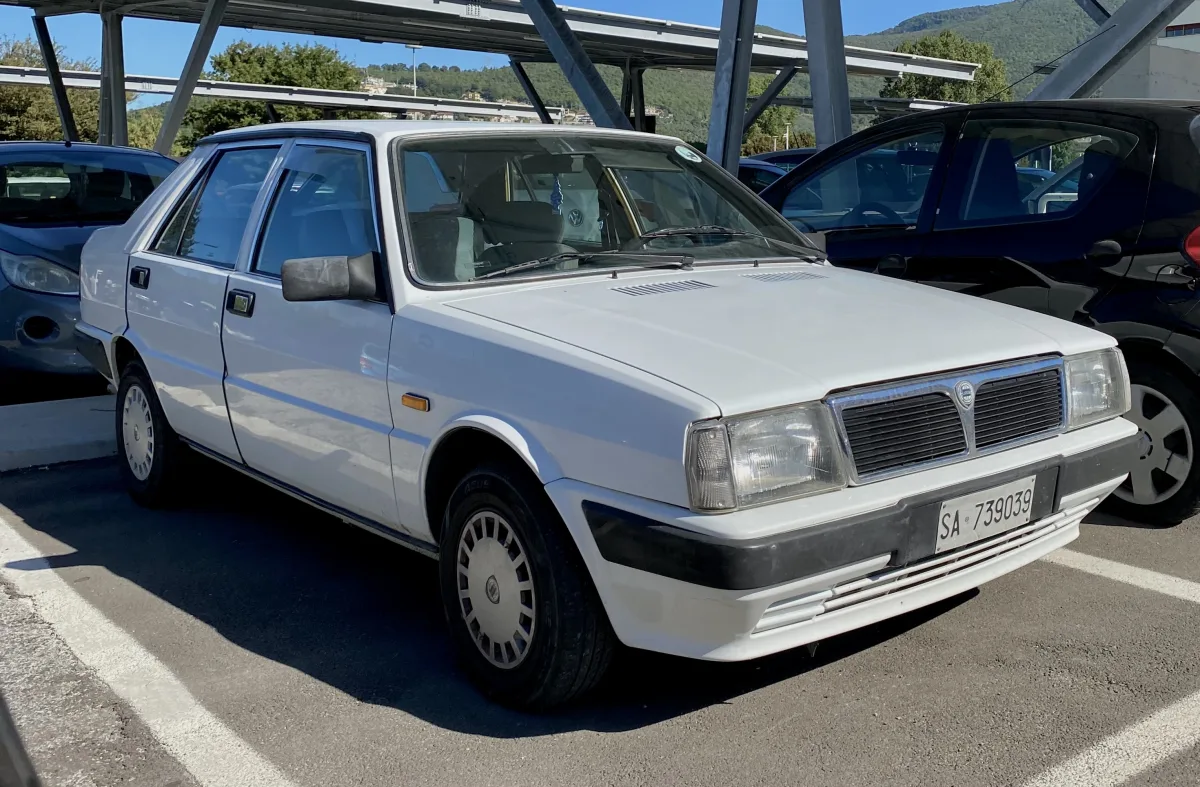
Lancia Prisma: a sedan based on the Delta, engines and what to check
The Lancia Prisma is a compact 4-door sedan produced from 1982 to 1989, built on the Lancia Delta platform. We'll look at the engines, four-wheel-drive versions, and what to check when buying this rare classic car.






Prisma in brief
The Lancia Prisma is the sedan version of the Lancia Delta: the same technology, but with a separate boot and a more elegant look. It has 4 doors, front-wheel drive, and a higher-class interior trim that Lancia was known for.
Today, the Prisma is considered a rare retro car. Supply in Lithuania is limited, and the price is mostly determined by its condition and specific version.
Versions and differences
The Prisma was offered with several petrol engines, and higher-end versions featured better equipment and interior trim. Around 1986, the series was updated with a refreshed look and a slightly modernized interior.
The most interesting are the four-wheel-drive versions — the Prisma 4WD and Integrale, built on the same technology as the rally Delta models. They are rare and highly valued by collectors.
Engines and gearboxes
Prisma engines are 4-cylinder petrol units, roughly from 1.3 to 1.6 litres, and sportier versions have larger capacities. Check the specific details in the car's documents.
The gearbox is a 5-speed manual. Standard drive is front-wheel, while the 4WD and Integrale versions have four-wheel drive.
What to check when buying a used Prisma
The main issue is body corrosion: sills, arches, door bottoms, floors, and the front end. Italian cars from that era are quite susceptible to rust, so opt for the best-preserved examples.
Check the engine oil leaks, timing belt, and electrical components. In 4WD and Integrale versions, inspect the full-time four-wheel-drive hubs. Some parts are hard to find, so consult with a specialist in classic Lancias.


Trim levels
Names and equipment vary by market and year; we list the most common trims found in Europe.
Prisma 1,3
1982–1989The base version with a 1.3-litre petrol engine.
- 1.3-litre petrol engine
- Front-wheel drive
- 5-speed manual gearbox
Prisma 1,5 / 1,6
1982–1989More powerful versions with 1.5 and 1.6-litre engines.
- 1.5 or 1.6-litre petrol engine
- Front-wheel drive
- Often features a better interior finish
Prisma 4WD
circa 1986–1989Version with full-time four-wheel drive.
- Full-time four-wheel drive
- Petrol engine
- Often — better equipment
Prisma Integrale
about 1987–1989A sportier all-wheel-drive version.
- Full-time four-wheel drive
- More powerful petrol engine
- Sportier looks
Comparison of Prisma versions
| 1,3 | 1,5 / 1,6 | 4WD / Integrale | |
|---|---|---|---|
| Who it suits | A straightforward, affordable car | For most buyers | For collectors |
| Engine | 1.3-litre petrol | 1.5–1.6-litre petrol | More powerful petrol |
| Gearbox | Front-wheel drive | Front-wheel drive | Four-wheel drive |
| Price in the used market (relatively) | € | € | €€€ |
Most buyers will opt for the 1.5 or 1.6-litre version in good condition. 4WD and Integrale are collector's choices.
Pros
- An elegant sedan design with Lancia trim
- Technically related to the Delta
- Rare four-wheel-drive versions
- Well-equipped interior
Cons
- Body corrosion in older cars
- Limited availability in Lithuania
- Spare parts are hard to come by
Frequently asked questions
Is the Prisma the Delta sedan?
Yes, the Prisma was built on the Delta platform and is its saloon version.
Does the Prisma come with four-wheel drive?
Yes, Prisma 4WD and Integrale versions with four-wheel drive were offered.
What body styles did the Prisma come in?
The Prisma was only produced as a four-door saloon.
Updated 2026-10-19 · Trim levels and equipment vary by market and model year — check the equipment of the specific car. · Translated automatically


