 English
 Lietuvių
 Latviešu
 Eesti
 Polski
 Русский
 Українська
 Deutsch
 Nederlands
 Čeština
 Slovenčina
 Svenska
 Norsk
 Dansk
 Suomi


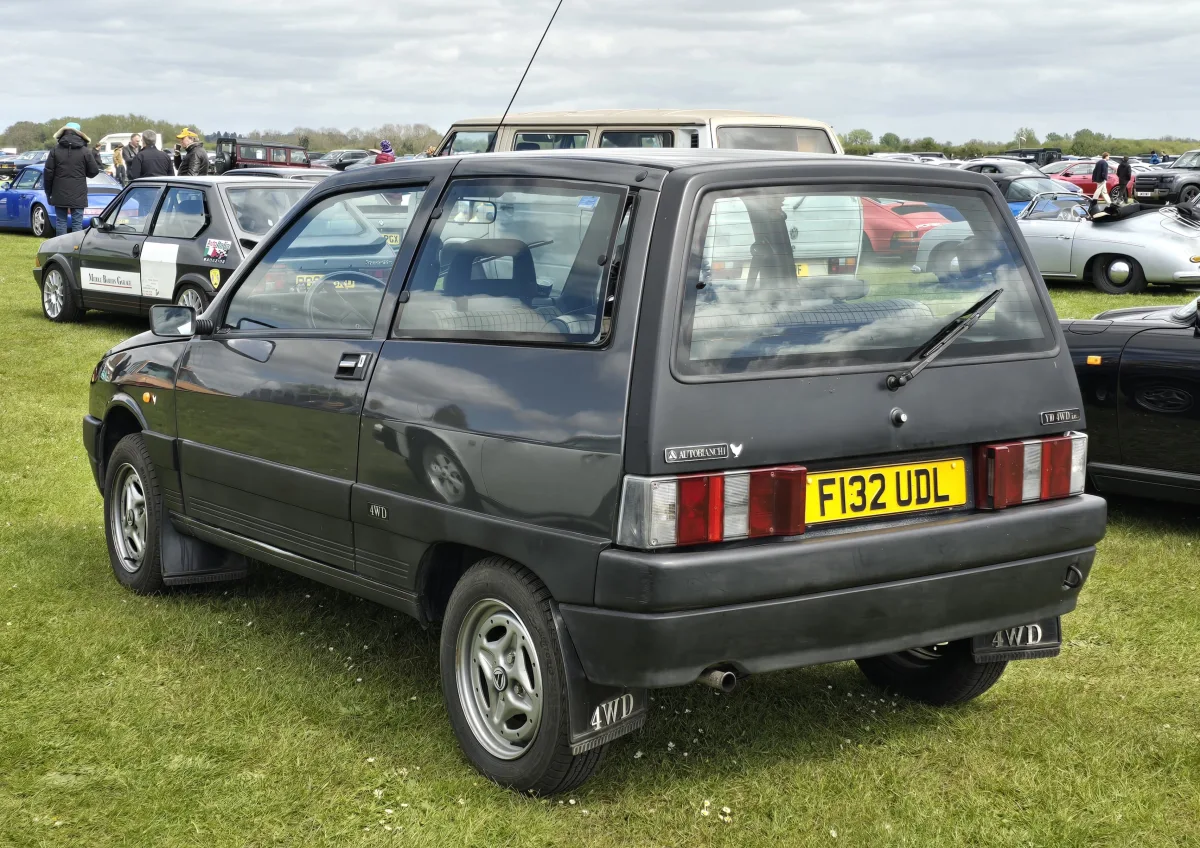
Lancia Y10: a compact luxury hatchback, engines and what to check
Lancia Y10 — a compact city hatchback produced from 1985–1995, initially sold in Italy as the Autobianchi Y10. We look at the engines, Turbo and 4WD versions, and what to check when buying this rare car.






Y10 in brief
The Y10 was designed as a more luxurious small city car for buyers needing a compact yet well-equipped vehicle. It features a three-door hatchback body and a distinctive, angular rear end.
In Italy, the Y10 was sold under the Autobianchi name, while in other European countries it was marketed as a Lancia. It was replaced by the Lancia Ypsilon in 1996. Today, it's a rare retro car, with condition being the main factor in pricing.
Versions and differences
The Y10 was offered with various engines and trim levels, most commonly named Fire, LX, Turbo, and 4WD. The more luxurious versions stood out with better interior finishes and more features, despite the car's small size.
One of the most interesting variants is the Y10 4WD with four-wheel drive, and the Turbo — a sporty version with a turbocharger. Both variants are now sought after by retro car enthusiasts.
Engines and gearboxes
The Y10 engines are small petrol units (around 1.0–1.1 L 'Fire' series), while the Turbo version has a 1.0 L engine with a turbocharger and around 85 HP. Check specific details in the car's documentation.
Transmission — usually a 5-speed manual, with some versions offering a semi-automatic option. Most cars come with front-wheel drive; 4WD versions have all-wheel drive.
What to check when buying a used Y10
The most important thing is to check the body for corrosion: look at the sills, arches, door bottoms, floors, and the rear section. Also, inspect the engine (oil leaks, timing belt), electrical components, and suspension.
In turbo and 4WD versions, additionally check the turbocharger and all-wheel drive differentials, as repairs can be costly. Some parts are hard to find, so consult with a mechanic before buying.


Trim levels
Names and equipment vary by market and year; we list the most common trims found in Europe.
Y10 Fire
1985–1995A more basic version with the small "Fire" engine.
- Approximately a 1.0–1.1-litre petrol engine
- Front-wheel drive
- Often — 5-speed manual gearbox
Y10 LX
1985–1995A more luxurious version with better equipment.
- Better interior trim
- Often — electrically operated windows
- Petrol engine
Y10 Turbo
1985–1989Sporty version with turbocharger.
- 1.0-litre engine with turbocharger, around 85 hp
- Front-wheel drive
- Sportier looks
Y10 4WD
1986–1995Version with four-wheel drive.
- Four-wheel drive
- Petrol engine
- Often — better equipment
Y10 version comparison
| Fire | LX | Turbo | 4WD | |
|---|---|---|---|---|
| Who it's for | For the everyday city car | For those wanting more kit | For enthusiasts of sporty driving | For those wanting four-wheel drive |
| Engine | Around 1.0–1.1-litre petrol | Around 1.0–1.1-litre petrol | 1.0-litre turbo, around 85 hp | Petrol |
| Gearbox | Front-wheel drive | Front-wheel drive | Front-wheel drive | Four-wheel drive |
| Price in the used market (relatively) | Budget | Budget | Mid-range | Mid-range |
Most buyers will be happy with a well-maintained Y10 Fire or LX. Turbo and 4WD are for collectors and enthusiasts of rare cars.
Pros
- A compact, city-friendly car
- A distinctive and recognizable design
- Turbo and 4WD are rare and interesting options
- More luxurious trim than many small cars of the time
Cons
- Body rust in older models
- What's on offer in Lithuania
- Modest power and boot space
Frequently asked questions
Is the Y10 and Autobianchi Y10 the same?
Yes, in Italy the Y10 was initially sold under the Autobianchi name, in other countries as a Lancia.
Does the Y10 have four-wheel drive?
Yes, a Y10 4WD version with four-wheel drive was offered.
What replaced the Lancia Y10?
In 1996 it was replaced by the Lancia Ypsilon.
Updated 2026-10-19 · Trim levels and equipment vary by market and model year — check the equipment of the specific car. · Translated automatically


