 English
 Lietuvių
 Latviešu
 Eesti
 Polski
 Русский
 Українська
 Deutsch
 Nederlands
 Čeština
 Slovenčina
 Svenska
 Norsk
 Dansk
 Suomi


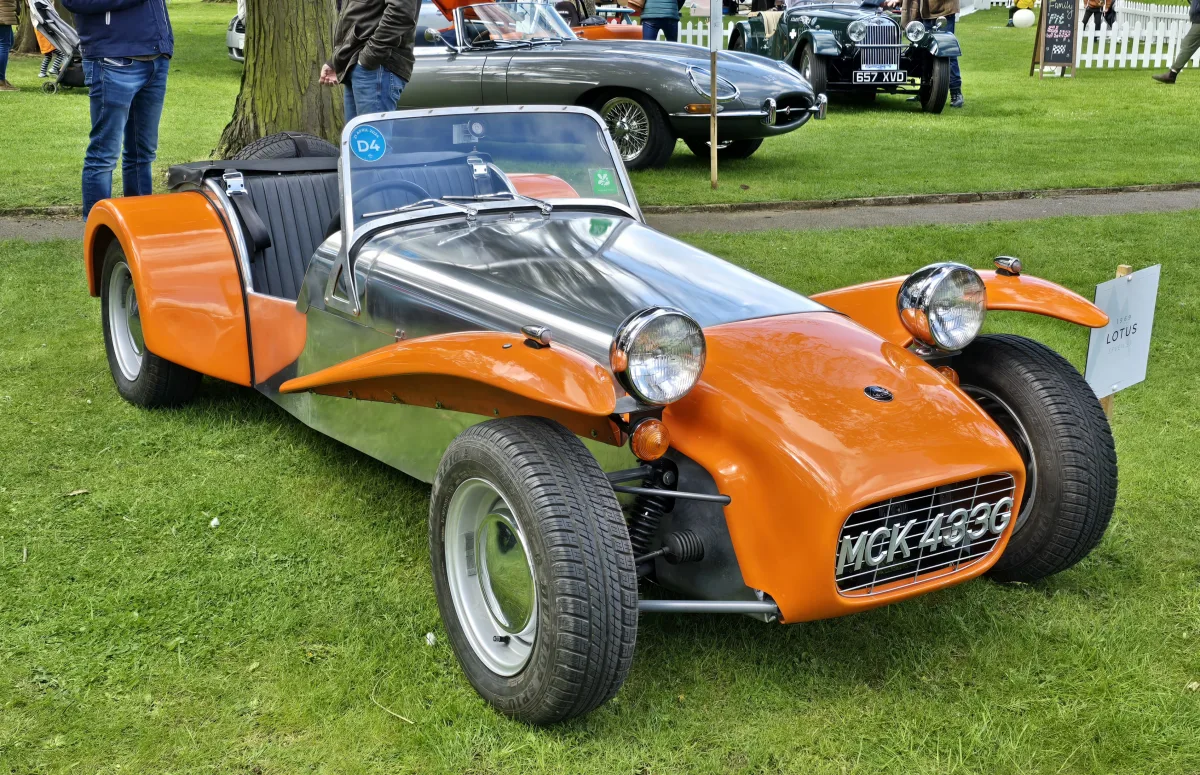
Lotus Seven: a lightweight roadster, generations and what to know when buying used
Lotus Seven — Colin Chapman's minimalist two-seater roadster, introduced in 1957. We review the differences between the original Lotus-produced series, typical engines, and what to check if you're looking for such a rare car or its replica in Lithuania.






Seven in brief
The Lotus Seven is an extremely lightweight, open two-seater sports car with a tubular frame and minimal equipment. Its concept is simple: low weight, direct steering, and a sufficiently powerful engine. Therefore, the Seven is valued for its driving feel, not comfort.
The original Lotus Seven was produced until 1972, after which another British company took over the model's production rights, and cars of this type and their replicas are still being made today. In Lithuania, original Lotus Sevens are a rare find, often being collector's items or imported examples.
Which series to choose
The original Lotus Seven appeared in several series: Series 1 (from 1957), Series 2 (from 1960), Series 3 (from 1968), and Series 4 (from 1970). The first series are the simplest and most highly regarded by collectors.
The Series 4 differs most from the earlier ones: it had a fibreglass body and a slightly roomier, more comfortable interior, making it more convenient for the driver, but it looked less pure-blooded. When buying, first ensure the car is a genuine Lotus, not a replica or a home-built variant, as this significantly affects its value.
Engines and gearboxes
Lotus Seven engines vary by series. Small-displacement four-cylinder Ford engines were used, and in some versions, engines from other manufacturers, including Lotus and Ford's twin-cam engine. Always verify the exact engine version via the car's documents and numbers.
The gearbox is manual, with rear-wheel drive. Due to its very low weight, even modest engines provide lively acceleration.
What to check when buying a used Seven
The most important thing is the frame condition and authenticity: check if the tubes are not deformed, repaired, or affected by corrosion, and if the frame number matches the documents. At the same time, inspect the aluminium and fibreglass body panels for cracks and previous repairs.
Check the engine, gearbox, rear axle, and suspension, as well as whether the car has proper registration documents. Some examples were rebuilt or assembled from parts, so carefully review the history, repair records, and seek expert opinions.


Trim levels
Names and equipment vary by market and year; we list the versions most commonly found in Europe.
1 serija
From 1957The first, simplest, and most highly valued series by collectors.
- Very light, minimalist construction
- Often a small-displacement Ford engine
- Aluminium body panels
2 serija
From 1960A further development of the first series construction.
- A similar minimalist design
- Often — Ford four-cylinder engines
- Fibreglass body panels
3 serija
from 1968Later series, which offered more powerful engines.
- Often — Ford engines
- In Super Seven versions — a twin-cam engine
- Open two-seater cabin
4 serija
from 1970Redesigned body and a slightly more comfortable cabin.
- Fibreglass body
- More space inside
- A different look to previous series
Comparing Lotus Seven series
| 1 serija | 2 serija | 3 serija | 4 serija | |
|---|---|---|---|---|
| Who it's for | For collectors | Driving enthusiasts | Lovers of sporty driving | Those who need a bit more comfort |
| Body | Aluminium | Aluminium and glass-reinforced plastic | Aluminium and glass-reinforced plastic | Glass-reinforced plastic |
| Commonly found engines | Small-capacity petrol | Small-capacity petrol | Petrol, some with dual overhead camshafts | Petrol |
| Price in the used market (relatively) | €€€ | €€€ | €€€ | €€ |
The Lotus Seven is for those who value the driving experience over comfort. Before buying, ensure the chassis is authentic and that the paperwork is in order—especially if the example is being sold as an original.
Pros
- Very light and direct steering
- Simple mechanics that can be serviced independently
- Iconic design, prized by collectors
- Plenty of driving enjoyment even with a low-power engine
Cons
- No roof, protection from the elements, or comfort
- Very few original examples, many replicas
- Chassis and document authenticity is hard to assess without a specialist
Frequently asked questions
Is the Lotus Seven suitable for daily use?
Practically not: the car is open-top, noisy, and has minimal equipment. It's perfect for weekend and leisure driving in good weather.
What's the difference between the Lotus Seven and the Caterham Seven?
The Lotus Seven was produced by the original manufacturer until 1972, after which Caterham took over production. They look similar, but they are different manufacturers.
How to spot a genuine Lotus Seven?
Check the chassis number, documents, and car history, and best of all—consult an expert on this model. There are many replicas and home-built variants.
Updated 2026-10-19 · Trim levels and equipment vary by market and model year — check the equipment of the specific car. · Translated automatically


