 English
 Lietuvių
 Latviešu
 Eesti
 Polski
 Русский
 Українська
 Deutsch
 Nederlands
 Čeština
 Slovenčina
 Svenska
 Norsk
 Dansk
 Suomi


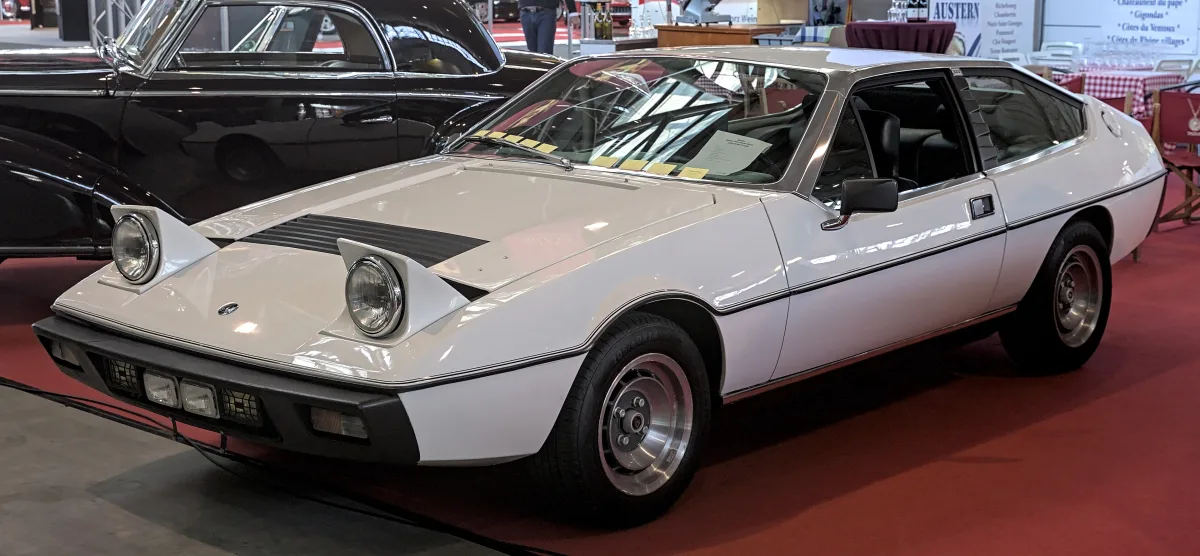
Lotus Eclat: 1975–1982 sporty coupé and buying advice
The Lotus Eclat is a British sports coupé with a fibreglass body and a 'fastback' silhouette, produced from 1975 until the early 1980s. We explain how the Eclat differs from the Elite, which engines it was fitted with, and what to check before buying this classic car.






Eclat in brief
The Eclat debuted in 1975 as a more affordable and practical Lotus coupé, based on the Elite platform. It's a two-plus-two sports car with a fibreglass body and a steel central chassis — classic Lotus construction.
The Eclat is mostly seen at collector and classic car events. It's very rare in Lithuania, so each example needs to be evaluated individually.
Eclat vs Elite — what's the difference
The Eclat and Elite share a common base, but the Elite has a wider, hatchback-style rear end, while the Eclat features a sloping 'fastback' style with a different rear. The Eclat was considered the simpler, more affordable option.
Later, the model was updated: in the 1980s, versions with a larger engine appeared, and later the Excel, which is a distant successor to the Eclat and featured an improved suspension and interior.
Engine and gearbox
The Eclat came with Lotus's four-cylinder 2.0-litre petrol engine, with later versions around 2.2 litres. Power is roughly 160hp (a bit less in earlier versions), depending on the year and model.
Gearbox — manual, five-speed, an automatic was also offered. Rear-wheel drive. The engine has its quirks and requires specialists familiar with Lotus construction for maintenance.
What to check when buying a used Eclat
Most importantly, check the steel central chassis — it can rust severely, and repairs are expensive and complex. Also, inspect the glass-fibre body for cracks, previous repairs, and paint quality.
Check the engine condition: oil pressure, cooling system, cylinder head gasket (these engines' issue — overheating). Test the clutch and gearbox, brakes, and suspension.
Parts need to be sourced from specialists and clubs; repairs can be costly. Ask for documents, service history, and proof of restoration, and if possible, bring in a Lotus-savvy mechanic.


Versions
Eclat version names and years vary by source, so we list the main variants.
Eclat (ankstyvoji)
1975–1980Early versions with a 2.0-litre engine.
- Often — a 2.0-litre four-cylinder engine
- Glass-fibre fastback body
- Five-speed manual gearbox
Eclat 2,2
From 1980With a larger 2.2-litre engine.
- Larger engine capacity
- Refined ride and interior
- Often — more comfort features
Excel
1982–1992A distant follower of the Eclat with updated tech.
- Updated ride and cabin
- Often — improved mechanics
- Often — sought after by collectors
Comparing versions
| Eclat (ankstyvoji) | Eclat 2,2 | Excel | |
|---|---|---|---|
| Who it suits | For classic car enthusiasts | For spirited driving | For a more reliable classic |
| Engine | 2.0 l | 2.2 l | About 2.2 l |
| Body | Glass-fibre coupe | Glass-fibre coupe | Glass-fibre coupe |
| Price in the used market (relatively) | Mid-range | Mid-range | High-end |
For most buyers, the best choice is the 2.2 l Eclat, which boasts more advanced technology. The Excel is worth considering for those seeking a more comfortable and reliable classic.
Pros
- Distinctive British classic
- The glass-fibre body doesn't rust
- Lively driving and good handling
- More practical than most 2+2 sports classics
Cons
- The steel frame rusts
- Unique mechanics, requires specialists
- Parts supply is limited
Frequently asked questions
Is the Eclat the same as the Elite?
They share a common base, but the Eclat has a sleek fastback rear, while the Elite is a hatchback.
Is the Eclat rusty?
The glass-fibre body doesn't rust, but the steel frame can corrode, so it's essential to check it.
Is the Eclat suitable for daily driving?
Rarely. It's a classic sports coupe, better suited to pleasure and events than everyday use.
Updated 2026-10-21 · Trim levels and equipment vary by market and model year — check the equipment of the specific car. · Translated automatically


