 English
 Lietuvių
 Latviešu
 Eesti
 Polski
 Русский
 Українська
 Deutsch
 Nederlands
 Čeština
 Slovenčina
 Svenska
 Norsk
 Dansk
 Suomi


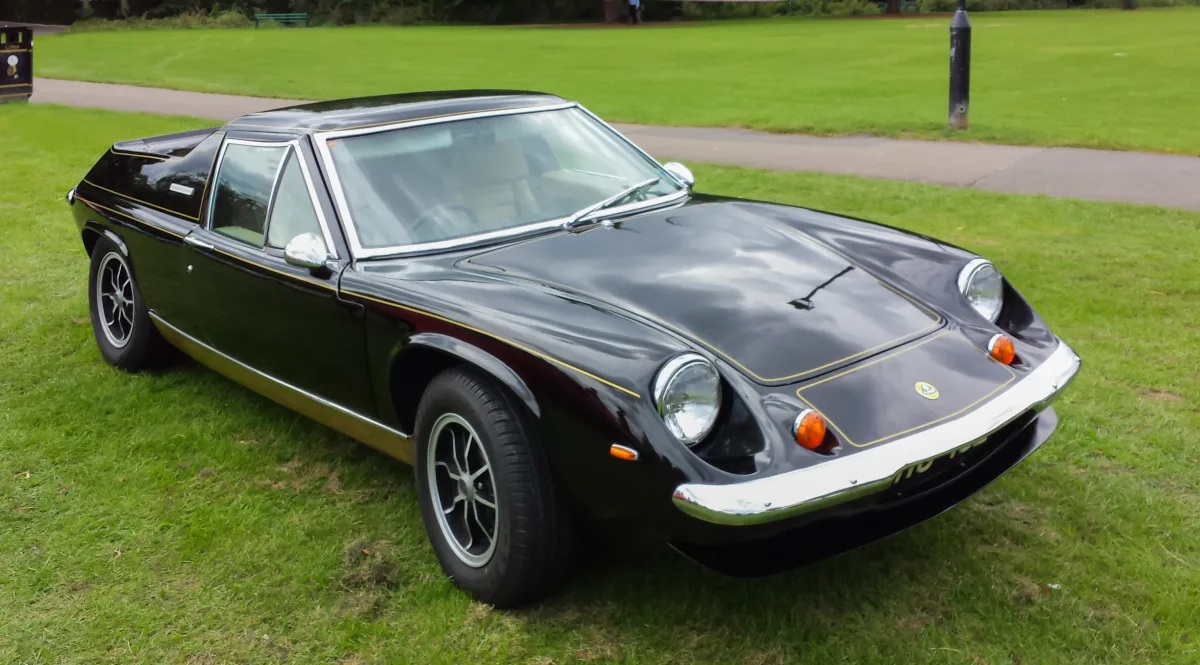
Lotus Europa (1966–1975): classic mid-engine coupe
Lotus Europa — the British sports coupe with an engine behind the driver's back, produced from 1966 to 1975. In this article, we review the main series, the technology, and what to check if you're considering buying this classic car.






Europa in brief
The Europa was one of the first affordable production cars with a mid-engine layout. Its plastic body is mounted on a central steel frame, making the car very light and low.
Thanks to its shape and lightness, it's considered a driver's car: precise in corners but with a cramped interior and limited rear visibility. It's a typical collector's sports car, not a practical daily driver.
Series — what's the difference
The first series (S1) debuted in 1966 and had a Renault engine. The body was glued to the frame, making it harder to repair.
The second series (S2), starting in 1968, featured a more comfortable, removable body. Later came the Twin Cam version with the Lotus-Ford Twin Cam engine, and in 1972, the Special with black and gold paintwork (JPS).
Engines and gearboxes
Early Europas used an approximately 1.5-litre Renault engine, while later models had the Lotus-Ford 1.6-litre Twin Cam engine, which provided significantly more power (around 105 hp, and about 126 hp in the Special version).
The gearbox is a manual unit sourced from Renault. The engine and gearbox are mounted together behind the seats, driving the rear wheels.
What to check if you happen to be buying one
The most important thing is the central steel frame: rust or old repairs here are a serious issue. Check the glass-fibre body for dents, cracks, and poorly executed repairs.
The engine and gearbox are best assessed by a specialist, as the Lotus-Ford Twin Cam is sensitive to maintenance. Listen for noises and check for oil leaks.
Ensure the car has its documents and the correct series designation: S1, S2, Twin Cam, or Special. This information greatly affects the value and parts search.


Trim levels
Names and equipment vary by market and year; we list the versions most commonly found in Europe.
Europa S1
1966–1968The first series with a Renault engine.
- Renault engine, around 1.5 litres
- Body glued to the frame
- Basic interior
Europa S2
1968–1971More comfortable series with a removable body.
- Removable body
- Wind-up windows
- A much more practical interior than the S1
Twin Cam ir Special
1971–1975The more powerful series with the Lotus-Ford 1.6 l Twin Cam engine.
- Lotus-Ford Twin Cam engine
- Often — a wide range of paint colours
- Special editions often feature black and gold paintwork
Comparing the series
| S1 | S2 | Twin Cam / Special | |
|---|---|---|---|
| Who it's for | Enthusiasts seeking history | The more practical classic Lotus | For sharper driving |
| Engine | Renault, around 1.5 l | Renault, around 1.5 l | Lotus-Ford 1.6 l Twin Cam |
| Body | Bonded to the chassis | Depreciates | Depreciates |
| Price in the used market (relatively) | €€ | €€ | €€€ |
For most collectors, the best balance is the S2 or Twin Cam. The S1 appeals more for its historical value, while the Special stands out for its distinctive design and power.
Pros
- Very light and low
- Distinctive, recognizable design
- Precise, engaging driving feel
- Collector's value
Cons
- Poor rear visibility
- Early series repairs are complex
- Finding suitable parts and specialists
Frequently asked questions
How many series did the Europa have?
Three are most commonly distinguished: S1, S2, and Twin Cam with the Special version.
Is the Europa suitable for daily use?
No, this is a collector's and fun car. The interior is cramped, and maintenance requires a specialist.
Why is it important to check the frame?
Due to the steel central frame, to which all the technology is attached. Its rust or repair is one of the biggest risks.
Updated 2026-10-19 · Trim levels and equipment vary by market and model year — check the equipment of the specific car. · Translated automatically


