 English
 Lietuvių
 Latviešu
 Eesti
 Polski
 Русский
 Українська
 Deutsch
 Nederlands
 Čeština
 Slovenčina
 Svenska
 Norsk
 Dansk
 Suomi


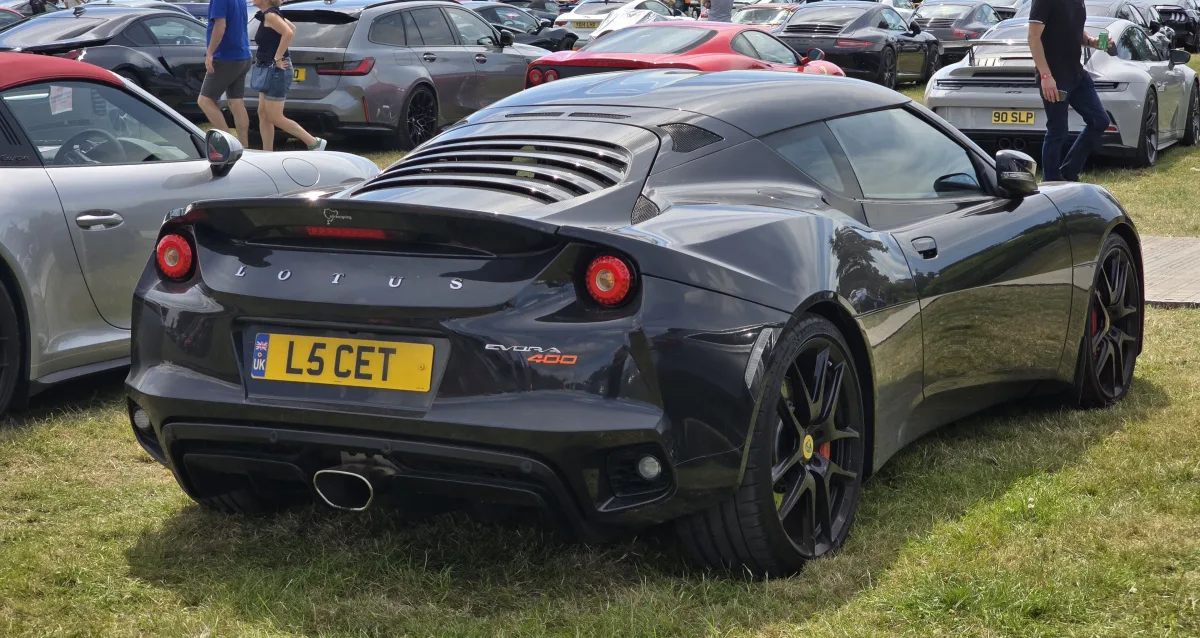
Lotus Evora: a mid-engined sports car and what to know when buying
The Lotus Evora is a mid-engined sports car powered by a Toyota V6, produced from 2009 to 2021. In this article, we review the versions, engines, and things to check before buying a used Evora.






The Evora in brief
The Evora is a Lotus model designed to be a more practical everyday sports car. Thanks to its mid-engine layout and lightweight aluminium construction, it offers precise handling and excellent balance. This car is slightly roomier than the Elise or Exige, making it suitable for longer journeys.
The Evora is offered with two seats or two small rear seats (2+2), and its driven wheels are at the rear.
Versions and updates
The first version was the naturally aspirated Evora, and in 2010, the more powerful Evora S with a supercharger was introduced. Later, the model was updated several times: Evora 400 (2015), Evora Sport 410, GT410, and GT430.
Newer versions come with a more powerful engine and an updated interior, while earlier models are usually cheaper.
Engines and transmissions
All Evora versions use the Toyota 3.5-litre V6 engine. The naturally aspirated version had around 280 hp, the Evora S around 350 hp, the Evora 400 around 400 hp, and the GT430 around 430 hp.
The transmission is a 6-speed manual, with some versions also offering an automatic. The manual gearbox is often praised as more suitable for enthusiasts.
What to check when buying a used Evora
Thoroughly check the service history. The Lotus service network is small, so it's important that work is carried out by qualified specialists and documented.
Inspect the body panels and paintwork, as repair marks can indicate an accident. Check the suspension, brakes, and wheels, as they wear out faster than in regular cars.
Test the clutch and gear shifting, and in the cabin, check if all the electronics are working. Some cabin details can be expensive or hard to find.


Trim levels
Names and equipment vary by market and year; we list the versions most commonly found in Europe.
Evora
2009–2015The first, naturally aspirated version.
- 3.5-litre V6, around 280 hp
- Often — 2+2 seating arrangement
- Aluminium construction
Evora S
From 2010More powerful version with a supercharger.
- 3.5-litre supercharged V6, around 350 hp
- Sportier suspension setup
- Often — larger wheels
Evora 400
From 2015Refreshed version with an even more powerful engine.
- Around 400 hp engine
- Updated interior and body details
- Manual or automatic transmission
Evora GT430
From 2018The most powerful and sporty Evora.
- Around 430 hp engine
- Enhanced aerodynamics and lighter details
- Produced in limited quantities
Comparison of versions
| Evora | Evora S | Evora 400 | GT430 | |
|---|---|---|---|---|
| Power (approximately) | Around 280 hp | Around 350 hp | Around 400 hp | About the 430 AG |
| Who it's for | For balanced driving | For dynamic driving | For those seeking a more modern variant | For enthusiasts and track days |
| Price in the used market (relatively) | Mid-range | Mid-range | High-end | High-end |
For most buyers, the Evora S or Evora 400 will do the trick. The GT430 is worth considering if you're after something rarer and more sporty.
Pros
- Precise and balanced handling
- Reliable Toyota V6 technology
- More practical than many rivals
- Distinctive looks
Cons
- Limited service network
- Some parts are expensive and hard to find
- High step when getting in
Frequently asked questions
What engine does the Lotus Evora have?
All generations use the Toyota 3.5-litre V6, with power ranging from around 280 to around 430 hp.
Does the Evora have rear seats?
Some cars are offered as 2+2 with small rear seats, but these are really only suitable for luggage or kids.
Which Evora is the best?
For most buyers, the Evora S or Evora 400 is the way to go, but for enthusiasts, it's the GT430.
Updated 2026-10-19 · Trim levels and equipment vary by market and model year — check the equipment of the specific car. · Translated automatically


