 English
 Lietuvių
 Latviešu
 Eesti
 Polski
 Русский
 Українська
 Deutsch
 Nederlands
 Čeština
 Slovenčina
 Svenska
 Norsk
 Dansk
 Suomi


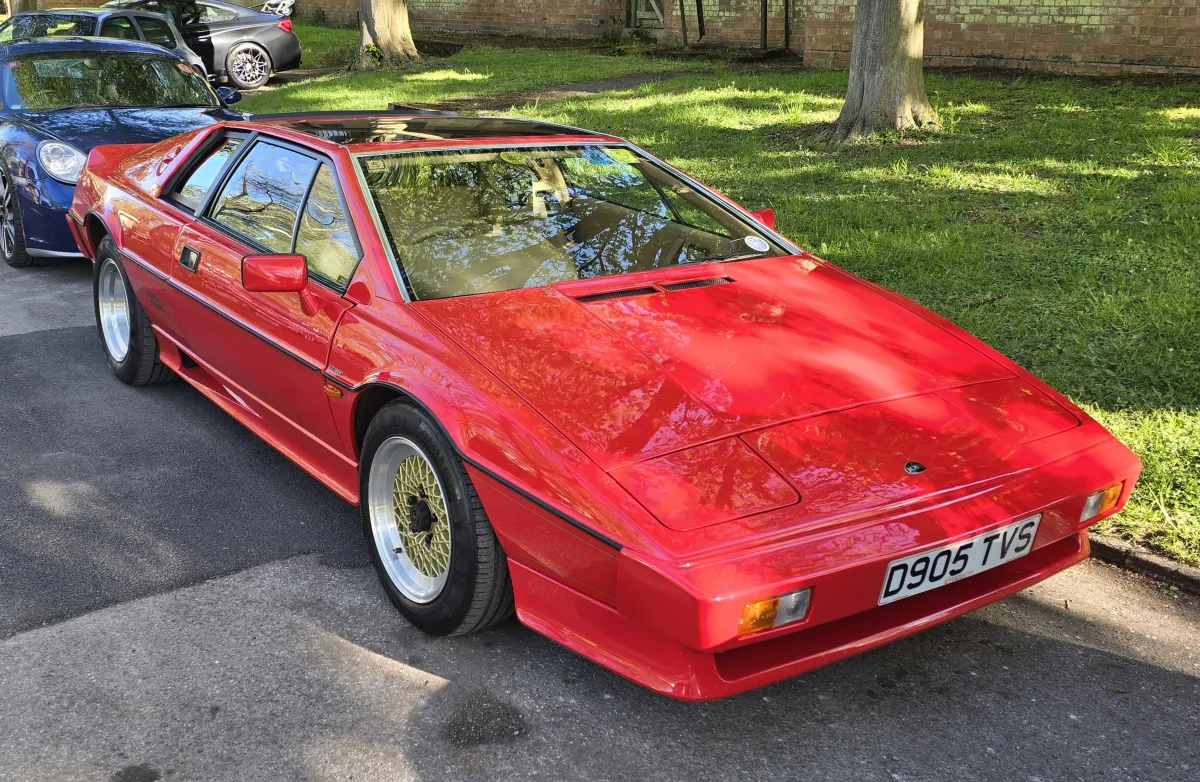
Lotus Esprit: generations, engines and what to know when buying used
The Lotus Esprit is a sports coupe with a mid-engine layout, produced from 1976 to 2004 and famous from movies. We discuss the differences between generations, the engines used, and what to check before buying.






Esprit in brief
The Esprit was Lotus's flagship for nearly thirty years. The first body was designed by Giugiaro, and its angular, low-slung shape became an iconic symbol. The car features a mid-engine layout and rear-wheel drive.
The Esprit is prized for its driving feel, rarity, and history. It's not a daily driver: the cabin is cramped, visibility is limited, and maintenance requires a specialist.
Which generation to choose
Early cars (1976–1987) have an angular body and a four-cylinder engine. They are simpler and more classic but require the most attention due to their age.
In 1987, the Esprit received a smoother, updated body, and in the 1990s, more powerful versions appeared. From 1996, a V8 version was also offered. Most buyers will prefer the later, more refined versions, while classic enthusiasts will choose the earlier ones.
Engines and transmissions
The Esprit featured a four-cylinder Lotus engine—around 2.0 L in early cars, later around 2.2 L, and turbo versions with a turbocharger. Later came the 3.5 L V8 twin-turbo engine.
The transmission is manual, with five or six speeds. Drive is to the rear wheels.
What to check when buying a used Esprit
Check the service history and whether essential work has been carried out, such as engine overhauls and timing belt replacements. Early car engine repairs are expensive and require a specialist.
Inspect the glass-fibre body for cracks, poor repairs and the steel chassis for corrosion. Repairing this chassis can be very expensive, so it's particularly important that it's in good condition.
Check the turbocharger, cooling system, oil leaks and electrical equipment, as these are common issues with Lotus cars. Before buying, use a Lotus specialist.


Trim levels
Names and equipment vary by market and year; we list the most commonly found versions and trims in Europe.
Esprit (pirmoji karta)
1976–1987The early Giugiaro-designed Esprit.
- Wedge-shaped body
- Four-cylinder engine
- Basic interior
Esprit Turbo
1980–1987The first turbocharged version.
- Turbocharged engine
- Often — aerodynamic details
- Sportier driving
Esprit (atnaujinta)
1987–1996A rounder, refreshed body.
- Redesigned body style
- Often — more powerful engines
- Better interior
Esprit V8
1996–2004Version with 3.5-litre V8 engine.
- 3.5-litre V8 twin-turbo
- More modern tech
- Often — a more luxurious interior
Generation comparison
| Pirmoji karta | Turbo | Atnaujinta | V8 | |
|---|---|---|---|---|
| Who it suits | Classic car enthusiasts | Turbo fans | Enhanced classics | Top-tier versions |
| Engine | Around 2.0–2.2 L | Around 2.2 L turbo | Around 2.2 L turbo | 3.5 L V8 biturbo |
| Price in the used market (relatively) | Mid-range | Mid-range | Mid-range | High-end |
Most buyers will prefer the refreshed generation, as it's more refined. The V8 version is the most powerful, but also the most expensive.
Pros
- Distinctive design and cinematic history
- Excellent driving experience
- Various versions — from classic to V8
- Collector's value
Cons
- Expensive maintenance and specific parts
- Cramped interior and limited visibility
- Specialist-level repairs required
Frequently asked questions
Who designed the Esprit?
The first body was designed by Italian designer Giugiaro.
Does the Esprit have a V8 engine?
Yes, from 1996 a version with a 3.5-litre V8 twin-turbo engine was offered.
Is the Esprit suitable for daily driving?
Rarely. It's more of a weekend or collector's car due to its low-slung interior and complex maintenance.
Updated 2026-10-19 · Trim levels and equipment vary by market and model year — check the equipment of the specific car. · Translated automatically


