 English
 Lietuvių
 Latviešu
 Eesti
 Polski
 Русский
 Українська
 Deutsch
 Nederlands
 Čeština
 Slovenčina
 Svenska
 Norsk
 Dansk
 Suomi


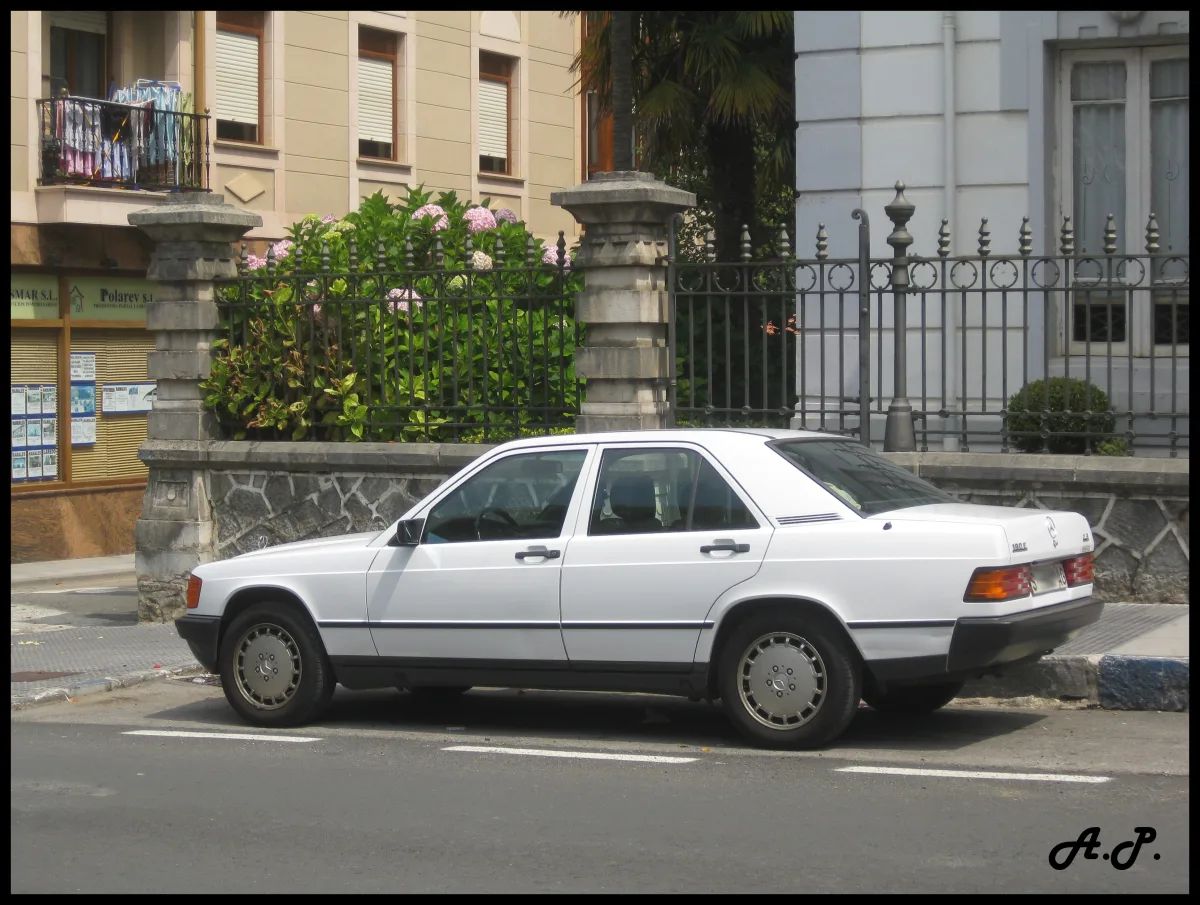
Mercedes-Benz 190 (W201): the 'Baby Benz', engines and what to check
Mercedes-Benz 190 (W201) — the compact Mercedes sedan, produced from 1982 to 1993 and known as the 'Baby Benz'. We look at the engines, trims and what's crucial to check before buying one of these cars.






190 in brief
The W201 was the first compact Mercedes-Benz, designed to show that a luxury car could be smaller. It stands out with a sturdy build, high-quality materials and modern solutions for its time, such as a multi-link rear suspension.
Today, this is already a classic car. Many have served for years, and those in excellent condition become collector's items.
Which trim to choose
During production, the 190 was updated — around 1988, side trim strips and subtle body changes appeared. Later models usually come with better equipment.
Sporty trims, like the 190 E 2.3-16 and 2.5-16, are rare and expensive. Most cars are standard 190 E and 190 D, which are practical and fairly affordable.
Engines and gearboxes
Petrol engine options range from 1.8 to 2.6 litres, including the 2.0 and 2.3-litre 16-valve versions. Diesels come in 2.0, 2.2 and 2.5 litres, with the 2.5 turbo being the most powerful.
Gearboxes are 4 or 5-speed manual, or 4-speed automatic. Diesel 190 D models are known for their durability but are slower.
What to check when buying a 190
The biggest risk is corrosion. Thoroughly inspect the sills, wheel arches, boot lid, rear window, and pillars. Repairs can be costly.
Check the engine: oil leaks, timing belt condition, fuel system, and electrical installation. Older cars often have missing or replaced parts.
Ask for documents and check the VIN. For classic cars, it's important to know the provenance and originality.


Trim levels
Names and equipment vary by market and year; we list the most commonly found versions.
190 D
all yearsDiesel variant, known for its durability.
- Diesel engine
- Basic trim
- Often comes with a manual gearbox
190 E
all yearsThe most common petrol variant.
- Petrol engine with fuel injection
- Often fitted with 14–15-inch wheels
- Often comes with a manual or automatic gearbox
190 E 2.6
from 1985A more powerful six-cylinder petrol option.
- Six-cylinder engine
- Often — automatic transmission
- Often — more luxurious equipment
190 E 2.3-16
from 1983Sporty sixteen-valve version (rarer).
- Sporty engine
- Unique aerodynamic bodywork
- Sporty suspension
Comparison of versions
| 190 D | 190 E | 190 E 2.3-16 | |
|---|---|---|---|
| Who it suits | For the more economical classic variant | For the everyday classic car | For collectors |
| Fuel | Diesel | Petrol | Petrol |
| Most common gearboxes | 14–15 inches | 14–15 inches | 15–16 inches |
| Trim | Base | Often more luxurious | Sport |
| Relative price in the used market | € | €€ | €€€ |
For most buyers, the best choice is a well-maintained 190 E or 190 D with a clear history. Sport versions are only worth considering for collectors.
Pros
- Robust, reliable construction
- Classic design and prestige
- Quite affordable parts for standard versions
- Comfortable drive
Cons
- Risk of corrosion
- Issues with old technology and electrical faults
- May require a lot of attention and maintenance
Frequently asked questions
Can the 190 be a daily driver?
Yes, if it's in good condition, but an older car needs more upkeep. For most people, it's suitable as a second or weekend car.
Why is the 190 called the 'Baby Benz'?
Because it was the smallest Mercedes-Benz model of its time, but with all the quality and prestige of the brand.
What is the risk of corrosion?
High, especially in the wheel arches and boot lid. Inspect the body thoroughly before buying.
Updated 2026-10-17 · Trim levels and equipment vary by market and model year — check the equipment of the specific car. · Translated automatically


