 English
 Lietuvių
 Latviešu
 Eesti
 Polski
 Русский
 Українська
 Deutsch
 Nederlands
 Čeština
 Slovenčina
 Svenska
 Norsk
 Dansk
 Suomi


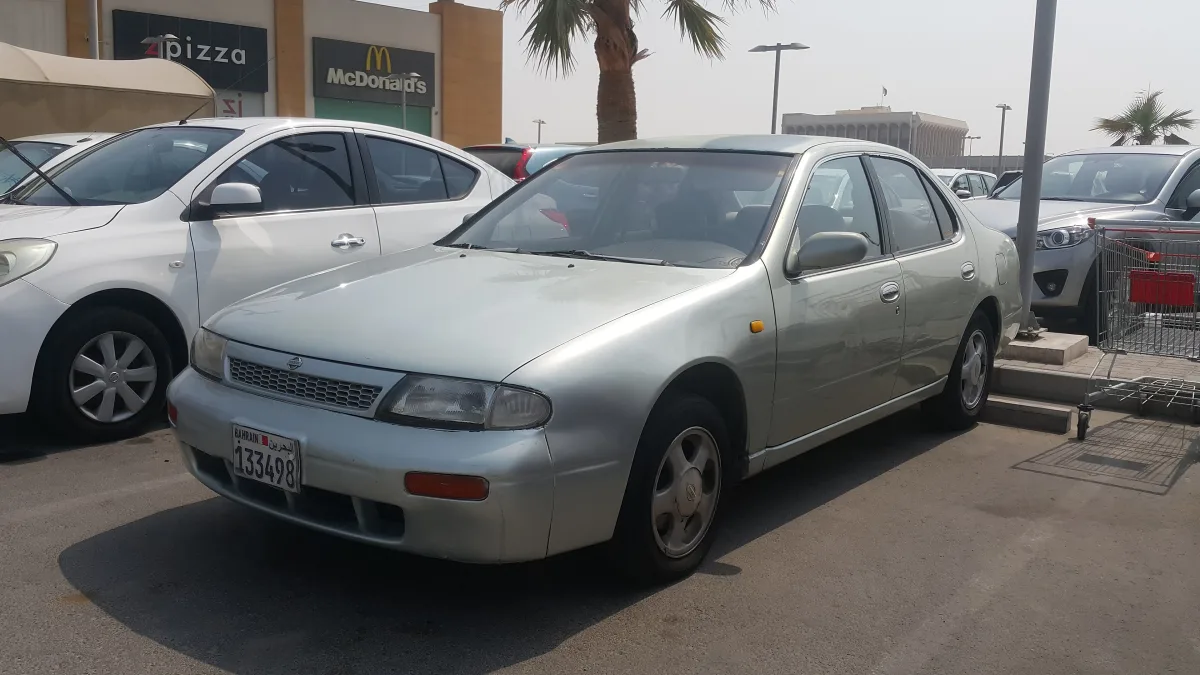
Nissan Bluebird: generations, engines and what to know when buying used
The Nissan Bluebird is a mid-size family car that has been in production for over four decades, from the mid-1950s to 2001. In this article, we look at how the model evolved, what engines it came with, and what to check when buying a used Bluebird.






Bluebird in brief
The Bluebird was one of Nissan's most important models. It was produced in several generations, with the 1980s and early 1990s models being the most popular in Europe. It was later replaced in European sales by the Primera.
Some Bluebirds were also built in the UK, at Nissan's Sunderland plant, which has been operational since 1986.
Which generation to choose
Older models are classics for enthusiasts, but parts for these can be hard to find. For buyers looking at a used Bluebird, the 910, T12, U12, and U13 generations are usually the most relevant.
The T12 and U12 generations were widely sold in Europe, so you're more likely to find used cars with European titles and paperwork. The U13 and U14 generations were mainly sold in Asia and other markets, so they're rarer in Europe and often privately imported.
Engines and gearboxes
A range of petrol engines were offered, roughly from 1.6 to 2.0 litres, and some markets also got diesels. Specific versions and power outputs varied by generation and market, so check the car's documents when buying.
Transmission — manual or automatic. Front-wheel drive is typical for most models in this line, although earlier Bluebirds had rear-wheel drive.
What to check when buying a used Bluebird
First, inspect the body: cars of this era can be affected by rust spots, especially in the wheel arches and boot area. Look for repainted sections and signs of repair.
Test the engine both cold and warm, paying attention to leaks, unusual noises, and transmission operation. Check for signs of heavy use typical of an older car.
Parts for newer generations may be harder to find, especially if the car was imported from Asia. Check the availability of parts before deciding to buy.


Trim levels
Bluebird trim levels varied greatly by market and generation, so here we outline the generations.
910 karta
around 1979–1986The classic generation with rear-wheel drive.
- Boxy body style
- Often — simple mechanics
- Often — more basic equipment
T12 ir U12
Mid-1980sGenerations widely sold across Europe.
- Front-wheel drive
- Often — European market documents
- Built in Sunderland
U13
around 1991–1995Newer generation, mostly for Asian markets.
- Modern styling for its time
- Often imported privately
- Wider range of engines
U14
around 1996–2001The final Bluebird generation.
- Newer design
- Often Asian market cars
- Often — more equipment
Comparing generations
| 910 | T12 / U12 | U13 | U14 | |
|---|---|---|---|---|
| Who it suits | For enthusiasts | For daily driving | A practical option | For a newer car |
| Parts availability | Heavier | Average | Heavier | Heavier |
| Price in the used market (relatively) | Budget-friendly | Budget-friendly | Budget-friendly | Mid-range |
Most buyers will find the best-condition T12 or U12 with a known history to be the most suitable. Newer generations are interesting, but parts can be harder to find.
Pros
- Reliable and straightforward technology
- Spacious interior
- Plenty of variants and generations
- Often affordable
Cons
- Rust in older models
- Searching for parts for newer generations
- Hard-to-find examples in good condition
Frequently asked questions
Is the Bluebird still available?
No. Production ended in 2001, and in Europe, the Bluebird was replaced by the Primera.
Which Bluebird generation was the most popular in Europe?
Mostly the T12 and U12 generations, which were officially sold.
Was the Bluebird manufactured in Europe?
Yes, some Bluebirds were produced at Nissan's Sunderland plant in England.
Updated 2026-10-21 · Trim levels and equipment vary by market and model year — check the equipment of the specific car. · Translated automatically


