 English
 Lietuvių
 Latviešu
 Eesti
 Polski
 Русский
 Українська
 Deutsch
 Nederlands
 Čeština
 Slovenčina
 Svenska
 Norsk
 Dansk
 Suomi


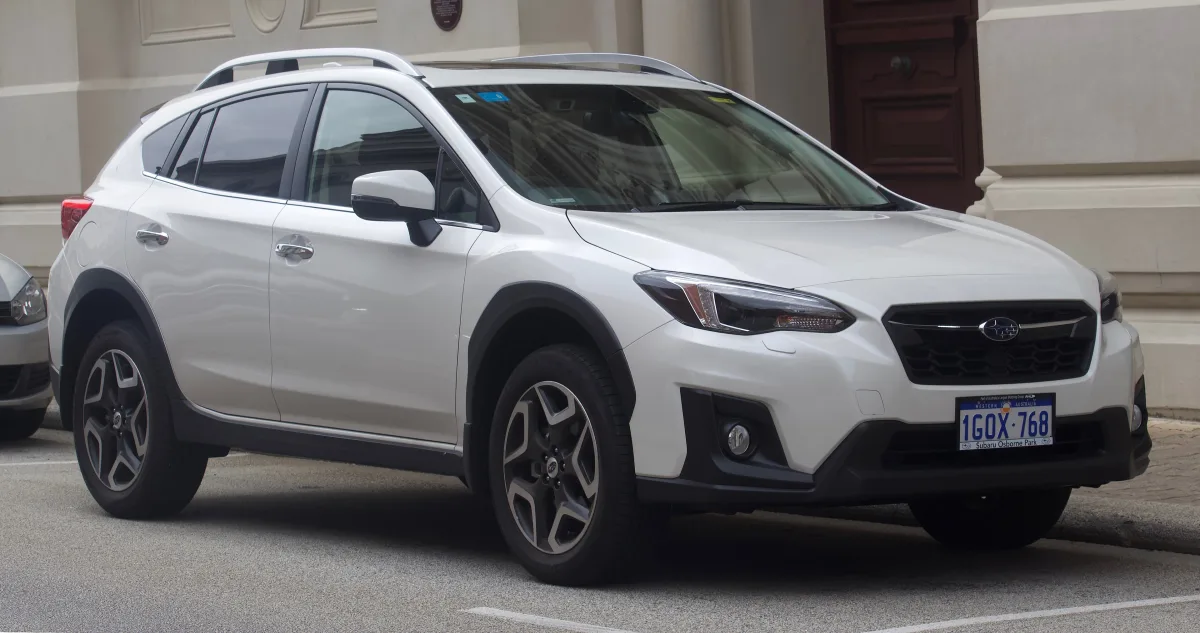
Subaru XV: GP and GT generations, engines and trims
The Subaru XV is a compact SUV with permanent all-wheel drive and high ground clearance, produced from 2011 to 2023. In the used market, you'll find two generations — GP and GT. We'll look at what sets them apart, which engines and gearboxes are most popular, and what to check before buying.






XV in brief
The XV is based on the Subaru Impreza: it's a raised hatchback with plastic guards around the wheel arches and sills. Ground clearance is around 22 cm, and all XVs sold in Europe come with permanent symmetrical all-wheel drive (Symmetrical AWD) and a horizontally opposed (boxer) engine.
In Lithuanian conditions, the XV is valued for its robust grip in winter, good off-road capability, and the fact that, despite being an SUV, it drives like a regular hatchback. On the downside, the boot is small, and fuel consumption for petrol engines is often higher than that of similarly sized front-wheel-drive competitors.
Later, the XV was replaced by the Subaru Crosstrek, so in the used market, you'll typically choose between the two XV generations.
GP and GT — what's the difference
The first generation (GP, 2011–2017) was built on the previous Impreza platform. It features petrol and diesel engines, a manual gearbox, or the Lineartronic CVT. This is the most affordable way to get an XV, but the interior is more basic, and sound insulation is poorer.
Second generation (GT, 2017–2023) built on the new Subaru Global Platform: the body is stiffer, the ride smoother and more comfortable, and the safety features significantly more modern. In Europe, it often comes with the EyeSight safety system featuring a stereo camera, X-Mode drive mode, and only petrol engines with a CVT. From 2019–2020, a mild hybrid e-Boxer version was also offered.
If safety and comfort are paramount, go for the GT generation. The GP is worth seeking if your budget is tight or if you want a diesel engine or a manual gearbox — these aren't available in the second generation.
Engines and gearboxes
In the GP generation, you'll commonly find the 1.6i (around 114 hp) and 2.0i (around 150 hp) petrol engines, along with the 2.0D boxer diesel (around 147 hp). Petrol engines are paired with a manual gearbox or Lineartronic CVT, while the diesel is usually only available with a 6-speed manual.
The GT generation retains the 1.6i (around 114 hp) and 2.0i (around 156 hp) petrol engines, all with the Lineartronic CVT. The mild hybrid e-Boxer features a 2.0-litre petrol engine (around 150 hp) and a small electric motor, which mainly assists with starting and slow driving; it can run purely on electric power for only very short periods.
The 1.6i engine is adequate for city driving, but it struggles with a full car or out of town. For daily use, the 2.0i or e-Boxer is usually recommended.
What to check when buying a used XV
Lineartronic CVT should operate smoothly: juddering, shuddering or vibration could indicate an expensive repair. Ask if the CVT fluid has been changed and test-drive the car for more than just a few minutes.
Some early FB-series petrol engines were known for increased oil consumption, so ask how often the oil needs topping up. For the 2.0D diesel, check the diesel particulate filter (DPF), turbo and dual-mass flywheel.
All-wheel drive is important, so all four tyres should be the same size and similarly worn — mismatched tyres can damage the transmission over time. If the car has EyeSight, ensure the system is working flawlessly and that the front camera was recalibrated after a windscreen replacement. Also, inspect the underbody for signs of off-road driving.


Trim levels
Subaru trim levels and equipment vary greatly by country and year; we list those commonly found in Europe (e.g., Germany).
Trend
GP, GTBase trim with all XV tech, but less comfort equipment.
- Permanent all-wheel drive
- Air conditioning and a basic audio system
- Often — 17-inch alloy wheels
Active
GP, GTA popular choice for more daily comfort at a modest price difference.
- Often — automatic climate control
- Often — heated front seats
- Often — rear-view camera
Comfort
GP, GTWell-equipped version for those who drive a lot.
- Often — a larger screen multimedia system with navigation
- Often — keyless entry and start
- Often — LED headlights
Exclusive
GP, GTTop-spec trim with plush interior
- Often — leather interior
- Often — electrically adjustable driver's seat
- Often — electrically opening sunroof
Comparison of GT generation trims
| Trend | Active | Comfort | Exclusive | |
|---|---|---|---|---|
| Who it's for | For the tightest budgets | For daily driving | For high-mileage drivers | For comfort seekers |
| Common options | 17-inch | 17-inch | 2017-2018 model year | 2018 model year |
| Interior | Upholstery | Upholstery, often heated seats | More comfort features | Often leather |
| Engine | Mostly 1.6i | 1.6i, 2.0i | 2.0i, e-Boxer | 2.0i, e-Boxer |
| Price in the used market (relatively) | Budget | Mid-range | Mid-range | Premium |
Most buyers will be best suited to the Active or Comfort with the 2.0i or e-Boxer engine. The Trend with the 1.6i is worth considering mainly for city driving.
Pros
- Permanent all-wheel drive in all versions
- High ground clearance — suitable for off-roading and winter
- Second time around — modern EyeSight safety system
- Drives like a regular compact car
Cons
- Higher fuel consumption than front-wheel-drive competitors
- Small boot
- The GT doesn't come with a diesel engine or manual transmission
Frequently asked questions
Is the Subaru XV suitable for off-roading and winter?
Yes — it's one of the toughest XV sides. Permanent all-wheel drive and around 22 cm of ground clearance allow for confident driving on rough roads and snowy conditions, although the XV isn't a true off-roader, so it struggles in deep snow.
How does the Subaru XV differ from the Impreza?
The XV is a lifted Impreza version: the tech and interior are very similar, but the XV has higher ground clearance, plastic body protection, and a slightly different suspension. Both models in Europe usually come with all-wheel drive.
Is it worth buying the XV with the Lineartronic CVT?
Yes, if the CVT operates smoothly and has a service history. It's convenient in the city and on highways, but when you stomp on the accelerator, the engine revs higher for longer — make sure to test drive it to see if you like the feel.
Is the XV e-Boxer a true hybrid?
This is a mild hybrid: the electric motor mainly assists the petrol engine when starting and driving slowly, so fuel consumption in the city is slightly lower. It can't be charged from the mains, and it can only run on electric power for a very short distance.
Updated 2026-10-09 · Trim levels and equipment vary by market and model year — check the equipment of the specific car. · Translated automatically


