 English
 Lietuvių
 Latviešu
 Eesti
 Polski
 Русский
 Українська
 Deutsch
 Nederlands
 Čeština
 Slovenčina
 Svenska
 Norsk
 Dansk
 Suomi


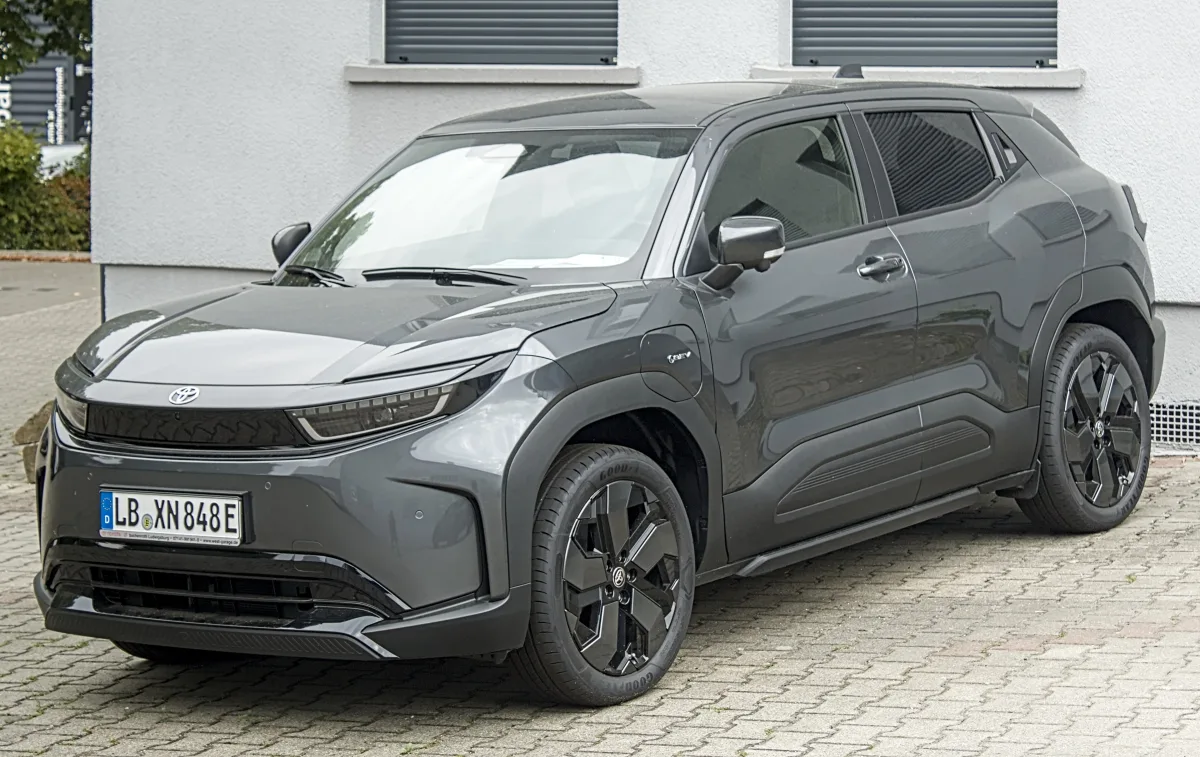
Toyota Urban Cruiser: electric version, batteries and charging
Toyota Urban Cruiser — from 2025, a compact electric SUV will be sold in Europe, developed jointly with Suzuki. The same name was used for a small petrol and diesel crossover sold between 2009 and 2014. We'll look at both, focusing mainly on the electric car's batteries, charging, and what to check when buying.






Urban Cruiser in brief
The electric Urban Cruiser is developed jointly with Suzuki and is technically a twin of the Suzuki e Vitara — they mainly differ in styling details and trim levels. The car is manufactured in India and is around 4.3 m long, making it slightly larger than the Toyota Yaris Cross.
The Urban Cruiser uses lithium iron phosphate (LFP) batteries. These are usually long-lasting and better tolerate frequent charging to 100%, but they charge more slowly in cold weather than other types of batteries.
Electric and previous Urban Cruiser — what's the difference
The previous Urban Cruiser (2009–2014) was a small, raised hatchback with a 1.33 petrol engine and a 1.4 D-4D diesel engine; the diesel was also available with four-wheel drive. There aren't many of these in Lithuania, and most have high mileage, so the key points are the technical condition and rust.
The new electric Urban Cruiser is a completely different car: larger, with a modern interior, large screens, and plenty of driver-assistance systems. Since it's new, used examples in the market are often 1-year-old cars, frequently demonstrators.
Batteries, drivetrain and charging
The electric Urban Cruiser is offered with two battery options: around 49 kWh with front-wheel drive (around 144 hp) and around 61 kWh — with front-wheel drive (around 174 hp) or with two motors and all-wheel drive (around 184 hp).
According to the manufacturer's (WLTP) data, the larger battery front-wheel drive version covers around 400 km, the all-wheel drive version slightly less, and the smaller battery version noticeably less. In winter, you often need to count on around 20–30% less range than in summer, and even more when driving short distances.
The Urban Cruiser charges via a CCS2 connector with alternating current and at fast-charging stations. The maximum fast-charging power is lower than that of larger electric vehicles, and the cold LFP battery charges even slower, so it's worth considering this for longer journeys in winter.
What to check when buying a used Urban Cruiser
For the electric vehicle, request a battery condition (SoH) report from Toyota service or a diagnostic specialist and find out the conditions for the manufacturer's battery warranty and whether the car has been serviced at an official service center. Check if the software has been updated and if the multimedia, cameras, and assist systems are working.
Test charging with alternating current and at a fast-charging station, and ensure that the charging cable is included. Verify from the documents which battery and drivetrain the car has, as the versions are almost indistinguishable from the outside.
Check the body and undercarriage of the earlier Urban Cruiser (2009–2014) for rust, inspect the suspension, brakes, and service history; for the diesel — ensure the engine runs smoothly and doesn't smoke, and for the all-wheel-drive versions — check that the transmission operates without any unusual noises.


Versions
Trim names and equipment vary by market and year; we list the most commonly found Urban Cruiser versions in Europe.
49 kWh
From 2025Electric version with a smaller battery.
- Front-wheel drive, around 144 hp
- The shortest driving range
- Best suited for city driving
61 kWh
From 2025The most popular choice — a larger battery.
- Front-wheel drive, around 174 hp
- Around 400 km according to WLTP
- Suitable for inter-city trips as well
61 kWh AWD
From 2025Two engines and all-wheel drive.
- Around 184 hp
- Better grip on slippery surfaces
- A slightly lower mileage
Ankstesnis Urban Cruiser
2009–2014 model yearsA compact petrol or diesel crossover.
- 1.33 petrol or 1.4 D-4D diesel engine
- Diesel with four-wheel drive
- Limited availability in Lithuania
Comparison of electric Urban Cruiser versions
| 49 kWh | 61 kWh | 61 kWh AWD | |
|---|---|---|---|
| Who it's for | City driving | And longer journeys | Winter and slippery roads |
| Front-wheel drive | Front-wheel drive | Front-wheel drive | All-wheel drive |
| Mileage (relatively) | Smallest | Largest | Large |
| Price in the used market (relatively) | € | €€ | €€€ |
For most buyers, the 61 kWh front-wheel-drive version is the most practical, as it offers the longest range. AWD is worth considering if you often drive on slippery or rough roads, while the 49 kWh is ideal for city driving.
Pros
- Compact and city-friendly
- Long-lasting LFP battery
- All-wheel drive option available
- Modern interior with plenty of driver assistance features
Cons
- Used supply is still very limited
- Faster charging capability
- Battery charges more slowly in cold weather
Frequently asked questions
How does the Toyota Urban Cruiser differ from the Suzuki e Vitara?
Technically, it's the same car, developed jointly with Suzuki. They differ in styling details, trim levels, warranty conditions, and service networks, so it's worth comparing both.
How far does the electric Urban Cruiser travel in winter?
In cold weather, you often need to count on about 20–30% less range than in summer. The version with the larger battery typically manages around 250–300 km in winter, while the smaller one manages considerably less; speed and temperature play a big role.
Is it worth buying an older Urban Cruiser (2009–2014)?
It is, if you're looking for a small and simple car, and the specific example is in good condition and has a clear history. The selection is small, so it often makes sense to compare it with other small crossovers from those years.
Updated 2026-10-10 · Trim levels and equipment vary by market and model year — check the equipment of the specific car. · Translated automatically


