 English
 Lietuvių
 Latviešu
 Eesti
 Polski
 Русский
 Українська
 Deutsch
 Nederlands
 Čeština
 Slovenčina
 Svenska
 Norsk
 Dansk
 Suomi


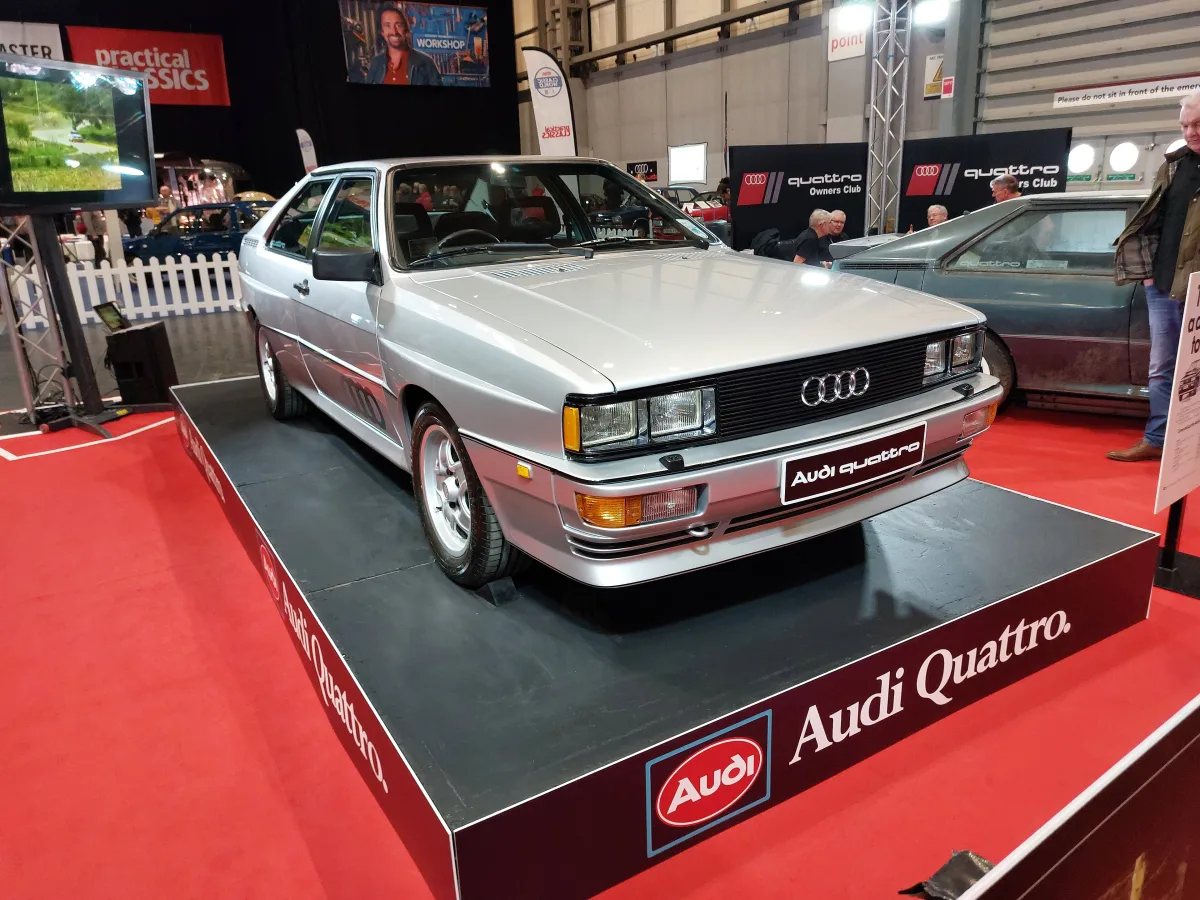
Audi Quattro: features, engine and what to know before buying
The Audi Quattro, produced from 1980 to 1991, was a coupé with a five-cylinder turbocharged engine and permanent all-wheel drive that revolutionised the world of rally and road cars. In this article, we look at the versions, technology, and what you need to know to buy this classic car.






Quattro in brief
The Audi Quattro was unveiled at the 1980 Geneva Motor Show. It was one of the first production sports cars with permanent all-wheel drive and the model that gave Audi its 'quattro' technology.
The car became a rally icon: its technology helped Audi win World Rally Championship titles. Over its eleven-year production run, around eleven thousand units were made, making it a highly sought-after classic today.
Versions and generations
The Quattro had just one generation, but the model evolved throughout its production. Early versions have a simpler interior and a 10-valve engine, while the later version, introduced in 1989, features a 20-valve engine.
Special mention goes to the Sport Quattro — a shorter-wheelbase, more powerful, and very rare 1984 model built for homologation. These cars are extremely expensive and highly coveted by collectors.
Engine and gearbox
The Quattro is powered by a five-cylinder turbocharged petrol engine with a capacity of around 2.1–2.2 litres. Early versions produce around 200 hp, the later 20-valve around 220 hp, and the Sport Quattro significantly more.
Transmission — permanent four-wheel drive, gearbox — 5-speed manual. No automatic gearbox offered for this car.
What to check when buying a Quattro
Rust — the biggest issue: inspect the floors, sills, wheel arches and front end. The condition of the turbocharger, differential and four-wheel drive components is also crucial. Ask if major repairs have been carried out and what documents confirm this.
Find out if the car is original: later model parts, wheels and interior may have been changed. It's worth consulting an Audi classic specialist who can check the body and technical details.


Trim levels
Names and equipment vary by market and year; we list the most commonly found trims in Europe.
Quattro (ankstyva)
1980–1989The first version with a 10-valve turbocharged five-cylinder engine.
- Around 200 HP
- Permanent four-wheel drive
- 5-speed manual gearbox
Quattro 20V
1989–1991Later version with a 20-valve engine and more power.
- Around 220 HP
- Updated engine
- Often — better interior trim
Sport Quattro
1984–1985Shorter, very rare and powerful homologation version
- Shorter wheelbase
- Much more powerful engine
- Extremely limited production run
Comparing Quattro versions
| Quattro (ankstyva) | Quattro 20V | Sport Quattro | |
|---|---|---|---|
| Who it's for | For classic enthusiasts | For the most modern versions | For collectors |
| Engine | 2.1-litre, 10-valve, turbocharged | 2.2-litre, 20-valve, turbocharged | More powerful five-cylinder turbo |
| Power (approx) | 200 AG | 220 AG | Much better |
| Gearbox | All wheels | All wheels | All wheels |
| Price in the used market (relatively) | €€ | €€ | €€€ |
For most buyers, the most realistic choice is an early Quattro or a later 20V. The Sport Quattro is for collectors only.
Pros
- Legendary rally history and a striking image
- Permanent four-wheel drive
- Characteristic sound of the five-cylinder engine
- Classic collectible value
Cons
- Rust and age-related issues
- Some parts are expensive and hard to find
- A bargain, especially in good condition
Frequently asked questions
What does 'quattro' mean?
It's Audi's name for four-wheel drive. The Audi Quattro was one of the first production sports cars to feature permanent four-wheel drive.
How much power does the Audi Quattro have?
Early versions had around 200 hp, later 20-valve models around 220 hp. The Sport Quattro had significantly more.
Is the Audi Quattro suitable for daily use?
Bargains: this is a classic car that requires meticulous maintenance. Most owners use it sparingly, for pleasure.
Updated 2026-10-19 · Trim levels and equipment vary by market and model year — check the equipment of the specific car. · Translated automatically


