 English
 Lietuvių
 Latviešu
 Eesti
 Polski
 Русский
 Українська
 Deutsch
 Nederlands
 Čeština
 Slovenčina
 Svenska
 Norsk
 Dansk
 Suomi


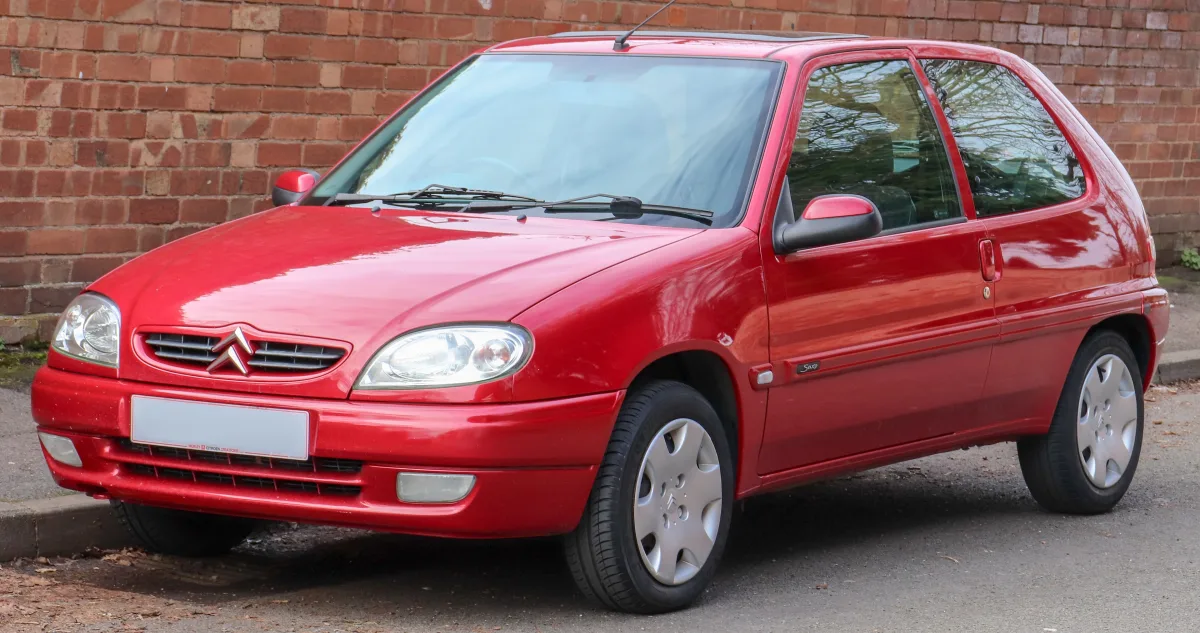
Citroën Saxo: city car, engines and trims
Citroën Saxo (1996–2004) — a compact, lightweight, and affordable city car, with sporty VTS and VTR versions that still have their fans. We look at the engines, trims, and what to check when buying a used Saxo.






Saxo in brief
The Saxo was Citroën's smallest model, developed alongside the Peugeot 106. It was offered in three- and five-door hatchback bodies, is lightweight, economical to run, and perfect for daily city driving.
During its production run, the car was updated: from 1999 it received a new front end, interior, and equipment. The Saxo remained popular among young drivers and tuning enthusiasts, especially the sporty versions.
Which version to choose
Early cars (1996–1999) have simpler equipment and the original front end, while the updated models (from 1999) feature a more modern interior and newer equipment. In some markets, the updated version is considered better equipped.
For most buyers, the basic SX or VSX with 1.1 or 1.4 engine will do. The sporty VTR and VTS are for enthusiasts, but are often modified or poorly maintained, so they require special attention.
Engines and gearboxes
Petrol engines include the 1.0, 1.1, and 1.4 (around 50–75 hp), plus the 1.6 in sporty versions: VTR (around 90 hp) and VTS 16-valve (around 120 hp). The basic engines are economical, while the VTS is quite powerful.
The diesel 1.5 D (around 57 hp) is economical but very slow. It's only suitable for relaxed driving.
Gearbox — usually manual, some cars have an automatic.
What to check when buying a used Saxo
Inspect the body and sills for rust, check the electrical equipment and lighting. Minor electrical faults are common in older Saxos.
Check the timing belt change history, clutch, and suspension. In the case of sporty VTR and VTS models, thoroughly investigate whether the car has been modified or used for racing.
Listen to see if the engine runs smoothly, without smoke or unusual noises. Ask for all documents and service history.


Trim levels
Names and equipment vary by market and year; we list the most commonly found names in Europe.
SX
1996–2004 model yearsBase trim with standard equipment.
- Often — steel wheels
- Often — basic interior trim
- Standard audio system
VSX
1996–2004 model yearsMid-range trim with more comfort.
- Often — power steering
- Often — electric windows
- Often — central locking
VTR
1996–2004 model yearsA sportier version with a more powerful engine.
- Around 90 HP 1.6 engine
- Often — lightweight alloy wheels
- Often — sport seats
VTS
1996–2004 model yearsThe sportiest version with a 16-valve engine.
- Around 120 HP 1.6 16V engine
- Often — sporty alloy wheels
- Sporty interior trim
Trim comparison
| SX | VSX | VTR | VTS | |
|---|---|---|---|---|
| Who it's for | A budget-friendly city car | For everyday use | For a sporty style | For enthusiasts |
| Most common searches | Petrol | Petrol or diesel | Diesel | Diesel |
| Interior | Basic | Better trim | Sporty | Sporty |
| Engine | 1.0–1.1 | 1.1–1.4, 1.5 D | 1.6, around 90 hp | 1.6 16V, around 120 hp |
| Price in the used market (relatively) | € | € | € | €€ |
Most buyers will be happy with an SX or VSX with a 1.1 or 1.4 engine, provided the car has been well-maintained. Opt for a VTR or VTS only if you know it hasn't been modified or poorly maintained.
Pros
- Light, compact and cheap to run
- Simple technology and easy to fix
- Sporty versions with a punchy engine
- Affordable in the used market
Cons
- Old car, rust and electrical gremlins
- Sporty versions often modified or poorly maintained
- Basic safety and comfort levels
Frequently asked questions
Is the Citroën Saxo reliable?
The Saxo's technology is simple, and its reliability depends on its service history. It's an old car, so expect minor issues.
What's the difference between VTR and VTS?
The VTS has a more powerful 16-valve 1.6 engine (around 120hp), while the VTR has a simpler 1.6 (around 90hp). The VTS is sportier but pricier and more often modified.
Which Saxo engine is best for daily driving?
Most will be fine with a 1.1 or 1.4 petrol for simplicity and economy. Diesel is economical but very slow.
Updated 2026-10-19 · Trim levels and equipment vary by market and model year — check the equipment of the specific car. · Translated automatically


