 English
 Lietuvių
 Latviešu
 Eesti
 Polski
 Русский
 Українська
 Deutsch
 Nederlands
 Čeština
 Slovenčina
 Svenska
 Norsk
 Dansk
 Suomi


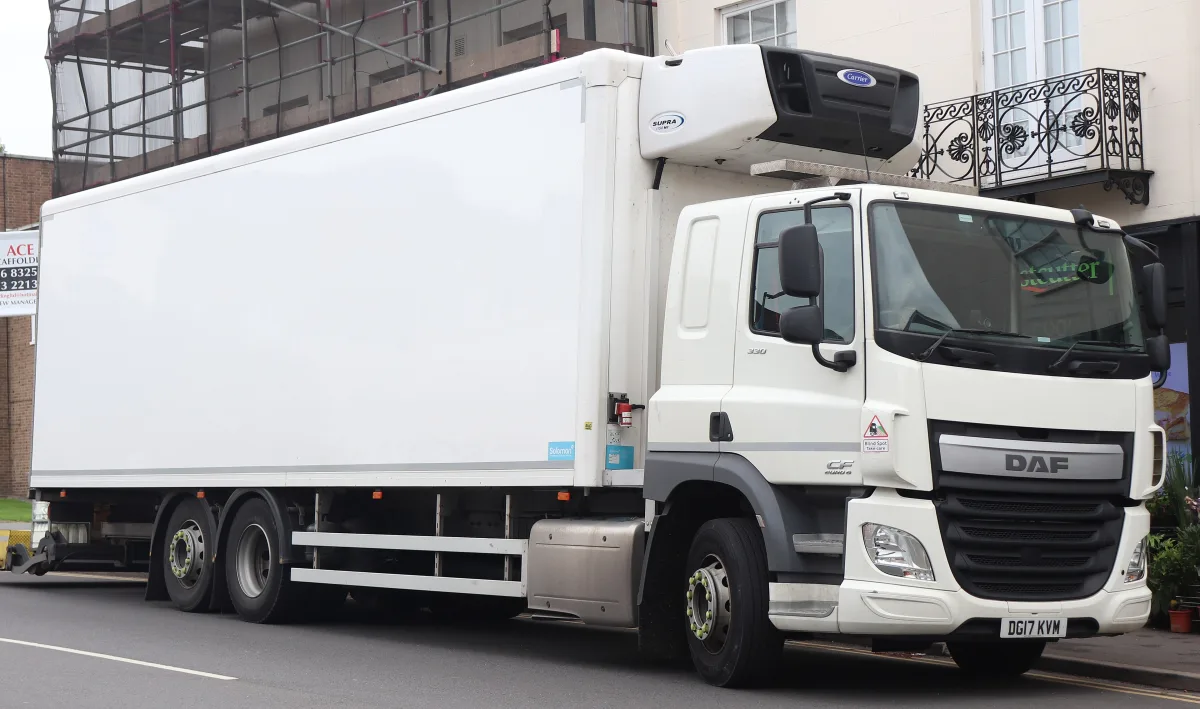
DAF CF: CF85 and Euro 6 CF, engines, cabins and axle configurations
The DAF CF is a versatile truck used both as a tractor unit and as a rigid chassis for refrigerated units, tippers or concrete mixers. We look at how the CF65, CF75, CF85 and Euro 6 CF differ, which engines and cabs are most commonly found, and what to check when buying a used CF.






CF in brief
The CF sits between the lighter LF and the long-haul XF in the DAF model range. In the used market, you'll most often find CF65, CF75 and CF85 models, produced roughly until 2013, and the Euro 6 CF, which has been in production since 2013 and was updated in 2017. In recent years, the CF has been gradually replaced by the newer DAF XD and XDC.
The CF comes as a tractor unit (FT), a rigid truck with a chassis designed for construction and haulage, and a tipper version. Axle configurations range from 4x2 to 8x4, so the CF is often seen as a refrigerated unit, tipper truck, tipping trailer, concrete mixer or crane truck.
How CF65, CF75, CF85 and Euro 6 CF differ
The CF65 and CF75 are most commonly found as distribution trucks for urban and regional use, while the more powerful CF85 is typically used as a tractor unit, tipping trailer or concrete mixer. These vehicles are simpler and more affordable, but most have clocked up plenty of miles, so the condition of the frame, engine and gearbox is crucial.
Euro 6 CF has different cabins, an improved interior, and more modern engines. 2017 model year updates brought more efficient MX-11 and MX-13 engines and a newer gearbox lineup. The CF Construction variant features a stronger steel bumper, larger clearance, and guards, while CF tractors are often seen in regional and lighter international haulage.
Engines and gearboxes
CF65 and CF75 came with smaller six-cylinder PACCAR engines (CF75 — around 9.2 litres), while the CF85 had a 12.9-litre PACCAR MX engine (early CF85s — around 12.6 litres). The most powerful CF85s deliver around 460–510 hp.
Euro 6 CF is most commonly found with a 10.8-litre MX-11 or 12.9-litre MX-13 engine; popular versions offer around 400–480 hp. Exhaust gases are cleaned via EGR, a particulate filter, and SCR with AdBlue.
Gearboxes are manual or automated ZF AS-Tronic, and from 2017, ZF TraXon. Some trucks feature a ZF Intarder retarder. Construction variants often come with differential locks, reduction axles, and a power take-off (PTO) for attachments.
What to check when buying a used CF
First, find out how the truck was used: a tractor for international runs will show different wear than a rigid for site work. Inspect the chassis of construction variants carefully — look for cracks, weld points, and deformations, check the axles, spring mounts, and crane hydraulics.
Compare them with engine hours — city and construction trucks often work with an empty load, so engine hours here are just as important as mileage. Check the clutch and gearbox, retarder (if present), tachograph check documents, and service history.
In Euro 6 vehicles, ensure that the particulate filter and AdBlue system are operational, and there are no warning lights on the dashboard. Trucks with many short trips and empty runs are more likely to have a clogged DPF. Avoid vehicles with the emissions control system turned off or modified with an emulator.


Cabins and trims
The range of cabins and trims varies by year, model, and order; we list the most commonly found in Europe.
Day Cab
All generationsShort cab without a sleeper — ideal for city, regional, and construction work.
- Longer chassis for flatbeds
- Lighter weight
- Often — self-loaders, concrete mixers, distribution trucks
Sleeper Cab
All generationsCab with sleeper and standard roof.
- Sleeper behind the seats
- Suitable for regional trips with overnight stays
- Often — tractors and refrigerators
Space Cab
Mostly CF85 and Euro 6 CFHigh-roof cab for long-haul trips.
- Higher roof and more space for cargo
- Often — two sleeping berths
- Mostly — flatbeds
CF Construction
Euro 6 CFVersion tailored for construction with tougher equipment.
- Steel bumper and larger approach angle
- Often — 6x4 or 8x4 wheel configuration
- Often — self-loading or concrete mixer chassis
CF vilkikas (FT)
All generationsLighter alternative to the XF for regional and international hauls.
- Mostly 4x2 wheel configuration
- Lower weight — more payload
- Often — Space Cab or Sleeper Cab cab
Comparison of Euro 6 CF versions
| Day Cab | Sleeper Cab | Space Cab | CF Construction | |
|---|---|---|---|---|
| Who it's for | City and regional driving | For regional trips with overnight stays | For long-distance trips | For construction and off-road use |
| Cab | Without a sleeper | With a sleeper | High roof, sleeper | Mostly Day Cab |
| Wheel configuration (most common) | 4x2, 6x2 | 4x2, 6x2 | 4x2 | 6x4, 8x4 |
| Price in the used market (relatively) | Budget | Mid-range | Mid-range | €€€ |
For distribution and regional work, a Day Cab or Sleeper Cab is usually sufficient, but for longer hauls, a Space Cab is worth considering. For construction, the CF Construction with a 6x4 or 8x4 wheel configuration and a clear maintenance history is ideal.
Pros
- A very wide range of versions and wheel configurations
- Lighter than the XF – more useful payload
- Economical PACCAR engines
- Plenty of spare parts and service options
Cons
- Work trucks, especially construction trucks, often get quite beaten up
- Earlier cab than the XF for long-haul journeys
- Repairing Euro 6 emission systems is expensive
Frequently asked questions
How does the DAF CF differ from the XF?
The CF cab is lower and narrower, and the truck itself is lighter and more versatile: it suits both a tractor unit and a construction or distribution lorry. The XF is primarily designed for long-haul journeys, so its cab is more spacious and comfortable for living in for several days.
Which CF is suitable for a tipper?
Often, the CF85 or Euro 6 CF Construction with a 6x4 or 8x4 wheel configuration is chosen. It's important that the truck and bridges are suitable for heavy work, and the tipper's hydraulics and chassis are in good condition.
Is it worth buying a CF65 or CF75?
Yes, if you need a distribution truck for the city or region and the vehicle is in good condition. However, these versions are quite old, so thoroughly check the chassis, engine, and superstructure, and for international routes, it's usually more sensible to choose an Euro 6 CF.
Updated 2026-10-09 · Trim levels and equipment vary by market and model year — check the equipment of the specific car. · Translated automatically


