 English
 Lietuvių
 Latviešu
 Eesti
 Polski
 Русский
 Українська
 Deutsch
 Nederlands
 Čeština
 Slovenčina
 Svenska
 Norsk
 Dansk
 Suomi


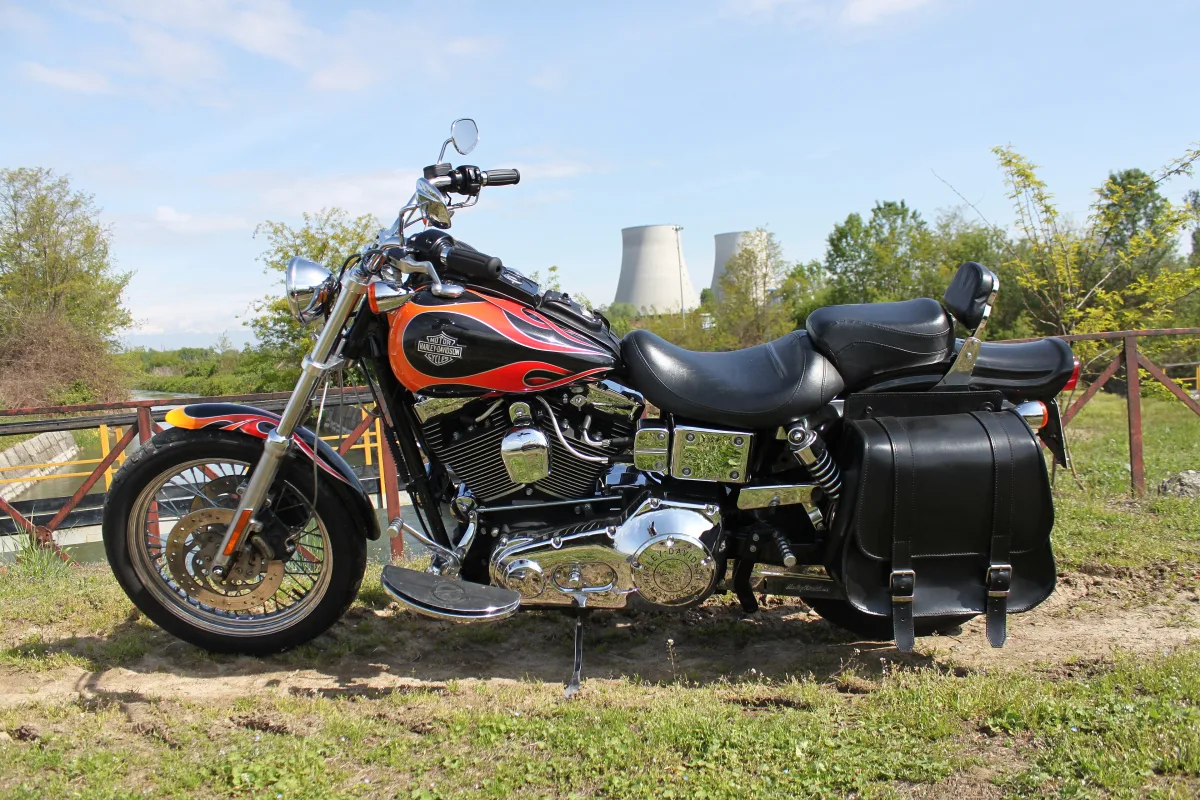
Harley-Davidson Dyna: 1991–2017 model range, engine and what to check
Harley-Davidson Dyna — the cruiser family with a rubber-mounted engine, produced from 1991 to 2017. We look at its models, engines and what to check when buying used.






Dyna in brief
Dyna is one of the most popular Harley-Davidson families. It debuted in 1991 and stands out because the engine is mounted on rubber supports in the frame, reducing vibrations compared to older models. The frame is lightweight, and the handling is quite responsive.
The Dyna family includes several models — Super Glide, Street Bob, Low Rider, Fat Bob, Wide Glide and others. They often differ in design, controls and equipment.
Generations — what's the difference
Early Dyna models (1991–1998) feature the 'Evolution' engine. From 1999 onwards, the 'Twin Cam' engine was used, which over time was increased in size — 88, 96, and in later models, 103 cubic inches.
From 2006, the gearbox became a 6-speed, making later models more comfortable on the highway. The Dyna family was discontinued in 2018, with its models replaced by the new Softail generation.
Engine and gearbox
Engine — a V-twin 'Twin Cam'. It's robust, offers strong low-end torque, and vibrations are significantly reduced compared to older Harley-Davidsons.
Gearbox — 5-speed (in older models) or 6-speed manual, with final drive to the rear wheel via a belt.
What to check when buying a used Dyna
Check the timing chain tensioners on the Twin Cam engine – these are considered the weak spot on earlier models. Ask about the service history and whether the tensioners have been replaced.
Inspect the frame, suspension, brakes, and wheels. Many Dynas have been modified (exhaust system, exhausts, seats), so check that these match the documentation.
Test the clutch, gearbox, and vibration. Check the electrical installation, battery, and for any oil leaks.


Trim levels
Names and equipment vary by market and year; we list the versions most commonly found in Europe.
Dyna (Evolution)
1991–1998Early Dynas with the Evolution engine.
- Simpler technology
- Classic design
- Less modern equipment
Dyna (Twin Cam 88)
1999–2006The first generation of Twin Cam.
- 88 cubic inch engine
- Mostly a 5-speed gearbox
- You’ll need to check the timing chain tensioners
Dyna (Twin Cam 96/103)
2007–2017Later generations with larger engines.
- 96 or 103 cubic centimetre engine
- 6-speed gearbox
- More modern equipment
Comparison of generations
| Evolution | Twin Cam 88 | Twin Cam 96/103 | |
|---|---|---|---|
| Who it suits | For classic enthusiasts | For the budget-conscious buyer | For daily driving and road trips |
| Gearbox | 5-speed | Mostly 5-speed | 6-speed |
| Price in the used market (relatively) | € | €€ | €€ |
Most buyers will prefer later 'Twin Cam' Dynas with a clear history; earlier models are best for those who value classic style.
Pros
- Less vibration than in older Harley-Davidsons
- A wide range of models and parts to choose from
- Strong pull from low revs
- Lots of customisation options
Cons
- Early 'Twin Cam' engines have issues with distributor caps
- Plenty of modified examples
- Wind protection is limited for longer journeys
Frequently asked questions
How does the Dyna differ from the Softail?
The Dyna has a rubber-mounted engine and visible rear shocks, while the Softail has hidden shocks and a stiffer frame.
What are the Dyna models?
The most common are the Super Glide, Street Bob, Low Rider, Fat Bob and Wide Glide; they differ in design and controls.
Is the Dyna suitable for a beginner?
It's heavy but has a low seating position, so it suits many; beginners should take care.
Updated 2026-10-21 · Trim levels and equipment vary by market and model year — check the equipment of the specific car. · Translated automatically


