 English
 Lietuvių
 Latviešu
 Eesti
 Polski
 Русский
 Українська
 Deutsch
 Nederlands
 Čeština
 Slovenčina
 Svenska
 Norsk
 Dansk
 Suomi


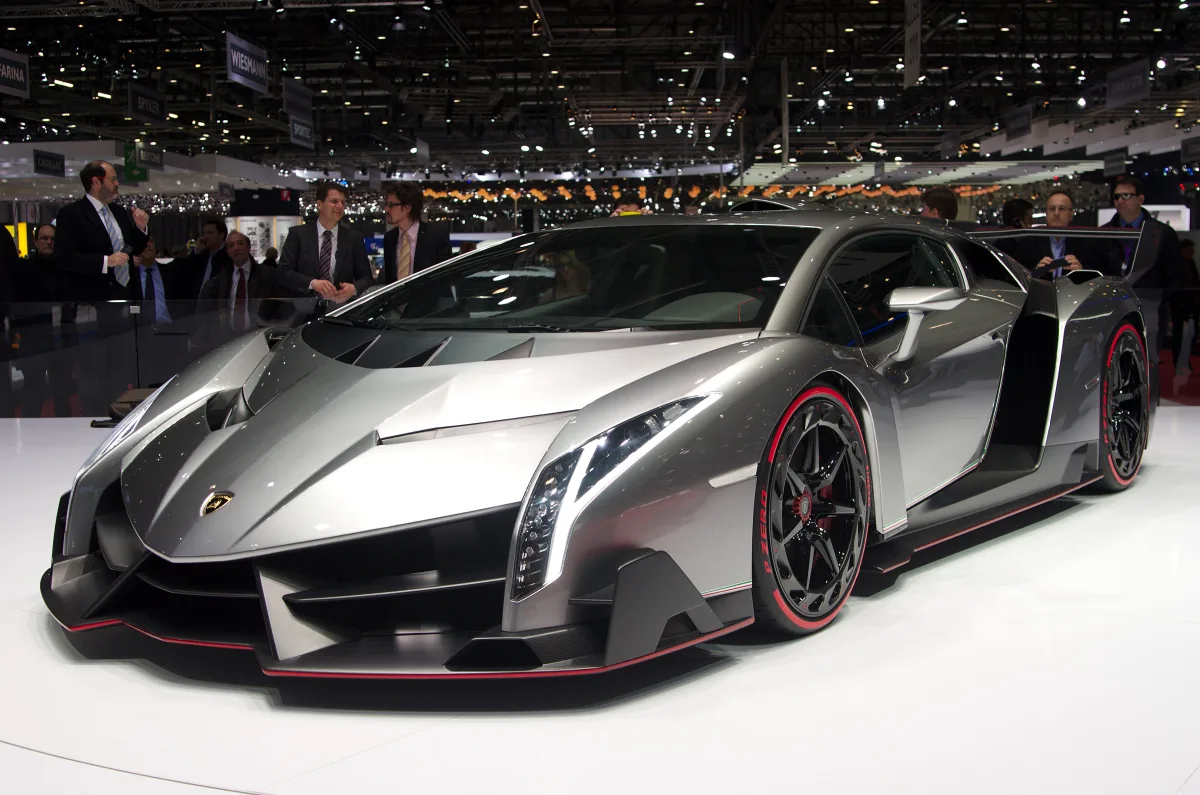
Lamborghini Veneno: features, engine and what to know about this incredibly rare model
The Lamborghini Veneno is a limited-edition supercar introduced in 2013, based on the Aventador and produced in a handful of units. We look at the technology, versions, and what you need to know about this collectible model.






Veneno in brief
The Veneno was unveiled at the 2013 Geneva Motor Show to celebrate Lamborghini's 50th anniversary. The design is extremely aggressive, with aerodynamics inspired by racing prototypes. The name, like many Lamborghinis, comes from the name of a fighting bull.
Only a very small number of cars were produced: three coupes, followed by the open-top Veneno Roadster. As a result, the car was never sold in the conventional way—it's purely a collector's item.
How the Veneno differs from the Aventador
Technically, the Veneno is based on the Aventador: it shares the same basic structure, carbon fiber monocoque, V12 engine, and all-wheel drive. The differences lie in the body design, aerodynamics, and increased engine power.
The Veneno is much lighter and more aggressive, with a body almost entirely made from carbon fiber. As a result, the driving character is significantly sharper than the Aventador's.
Engine and transmission
The Veneno is powered by a 6.5-litre V12 petrol engine producing around 750 hp. The car has all-wheel drive and accelerates from 0 to 100 km/h in approximately 2.9 seconds.
The transmission is a 7-speed robotized ISR with paddle shifters. The claimed top speed is around 355 km/h.
What to know if you're considering buying a Veneno
The Veneno is rarely sold and usually through private deals or specialist auctions. The key is documentation proving it's a genuine limited-edition car, and a full history.
Before buying, an independent Lamborghini specialist inspection is essential: check the engine, ISR box, and gearbox, carbon fibre parts, and other systems' condition. Parts and maintenance are extremely expensive.


Trim levels
Names and equipment vary by market and year; we list the most common trims found in Europe.
Aventador LP700-4
Base modelThe technical foundation on which the Veneno is built.
- 6.5-litre V12, around 700 hp
- All-wheel drive
- Carbon fibre monocoque
Veneno
2013–2014Ultra-limited series coupé with maximum power.
- Around 750 hp
- Optimised aerodynamics
- Very limited production run
Veneno Roadster
2014Open edition, produced in a very limited run.
- Convertible body
- The same V12 technology
- Even rarer than the coupé
Veneno vs Aventador comparison
| Aventador LP700-4 | Veneno | Veneno Roadster | |
|---|---|---|---|
| Who it's for | For collectors and drivers | For collectors | For collectors |
| Engine | 6.5-litre V12 | 6.5-litre V12 | 6.5-litre V12 |
| Power (approx.) | 700 hp | 750 hp | 750 hp |
| Gearbox | All wheels | All wheels | All wheels |
| Price in the used market (relatively) | €€€ | €€€ | €€€ |
The Aventador is a more accessible model from the same base. The Veneno is a collector's choice due to its rarity.
Pros
- Very rare, aggressive design
- Powerful V12 engine
- Carbon fibre construction
- High collectible value
Cons
- Practically unavailable in the market
- Very expensive maintenance and parts
- The robotised ISR gearbox requires attention
Frequently asked questions
How many Venenos were made?
A very small number — just three coupes, with a few Roadster examples following. Exact numbers vary slightly depending on the source.
Is the Veneno the same as the Aventador?
The technology is very similar, as it was created on the Aventador base, but the Veneno has a unique design, more power and a much more limited production run.
What is the Veneno's engine power?
The 750 AG is powered by a 6.5-litre V12 petrol engine.
Updated 2026-10-19 · Trim levels and equipment vary by market and model year — check the equipment of the specific car. · Translated automatically


