 English
 Lietuvių
 Latviešu
 Eesti
 Polski
 Русский
 Українська
 Deutsch
 Nederlands
 Čeština
 Slovenčina
 Svenska
 Norsk
 Dansk
 Suomi


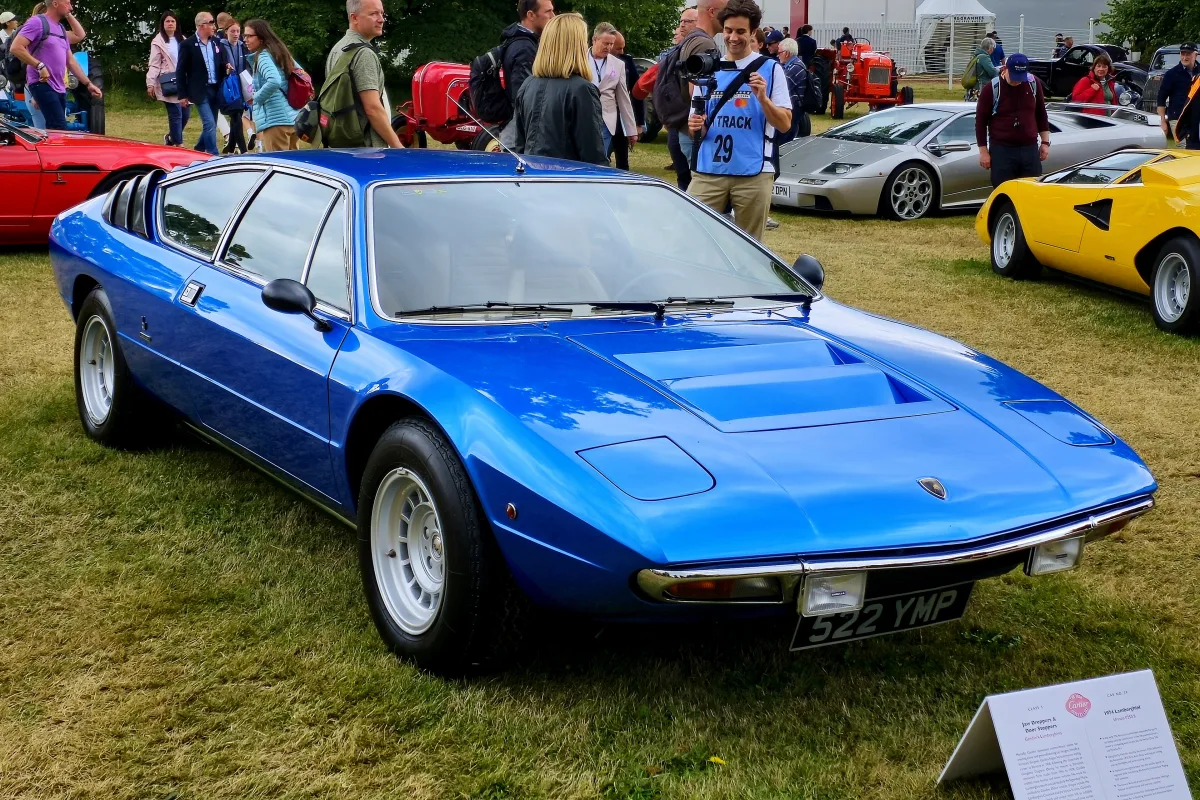
Lamborghini Urraco: P200, P250 and P300 versions
The Lamborghini Urraco is a 2+2 coupe from the 1970s with a mid-rear V8 engine, designed for a smaller clientele than the Miura. We're looking at the P200, P250 and P300 versions, their engines, and what to check when evaluating such a rare collectible car.






Urraco in brief
The Urraco was introduced in 1970 and began production in 1972. It was a smaller, more affordable Lamborghini aimed at competing with the Ferrari Dino and Porsche 911. The body was designed by Marcello Gandini of Bertone.
The car features two main front seats and two small rear ones, with a V8 engine mounted behind the driver but transversely. Today, the Urraco is considered a rare and intriguing collectible model, with around 800 units produced in total.
Versions and differences
The first version was the P250 (2.5-litre V8), followed by the P300 (3.0-litre V8) and the P200 (2.0-litre V8) for tax reasons in Italy. The main differences between the versions lie in the engine capacity and power.
Externally, all versions look similar, but later models have some equipment and body detail changes. The choice largely comes down to engine size, condition, and provenance documents.
Engines and gearbox
The Urraco has V8 petrol engines: the P200 with a 2.0-litre, the P250 with a 2.5-litre, and the P300 with a 3.0-litre unit. Power ranges from around 180 to over 250 bhp, depending on the version; check specific car documents for exact figures.
The gearbox is a 5-speed manual. Drive is to the rear wheels; the engine is mounted transversely, behind the seats.
What to check when evaluating an Urraco
The most important thing is authenticity and documentation: body, engine, and chassis numbers, history, and restoration work. Due to its rarity, the price heavily depends on originality, so the inspection should be carried out by a Lamborghini classic specialist.
Inspect the body for rust, the engine (distribution mechanism condition), electrical equipment, and suspension. Some parts are hard to find or made to order.


Trim levels
Names and equipment vary by market and year; we list the most commonly found trim levels in Europe.
Urraco P250
1972–1976The first series version with a 2.5-litre V8.
- 2.5-litre V8
- 5-speed manual gearbox
- 2+2 seating
Urraco P200
In the second half of the 1970sA smaller-displacement version for the Italian market.
- 2.0-litre V8
- 5-speed manual gearbox
- Designed to reduce taxes for Italy
Urraco P300
1974–1979The most powerful version with the 3.0-litre V8.
- 3.0-litre V8
- 5-speed manual gearbox
- The most sought-after version
Comparison of Urraco versions
| P200 | P250 | P300 | |
|---|---|---|---|
| Who it's for | For collectors seeking rare versions | For most classic car enthusiasts | For those wanting the most powerful version |
| Engine | 2.0-litre V8 | 2.5-litre V8 | 3.0-litre V8 |
| Gearbox | 5-speed manual | 5-speed manual | 5-speed manual |
| Price in the used market (relatively) | €€€ | €€€ | €€€€ |
For most buyers, a well-maintained P250 with a clear history will do nicely. The P300 is the most powerful, while the P200 is a rare version intended for the Italian market.
Pros
- A rare Lamborghini with Bertone styling
- V8 engine and sporty handling
- Collector's item
- 2+2 seating
Cons
- Very limited supply and high price
- Hard to find parts and specialists
- Expensive restoration
Frequently asked questions
Who designed the Lamborghini Urraco?
The body was designed by Bertone designer Marcello Gandini.
What sets the P200, P250, and P300 apart?
First off, engine sizes: the P200 has a 2.0-litre, the P250 a 2.5-litre, and the P300 a 3.0-litre V8.
How many Urraco models were produced?
Around 800 cars were made in total.
Updated 2026-10-19 · Trim levels and equipment vary by market and model year — check the equipment of the specific car. · Translated automatically


