 English
 Lietuvių
 Latviešu
 Eesti
 Polski
 Русский
 Українська
 Deutsch
 Nederlands
 Čeština
 Slovenčina
 Svenska
 Norsk
 Dansk
 Suomi


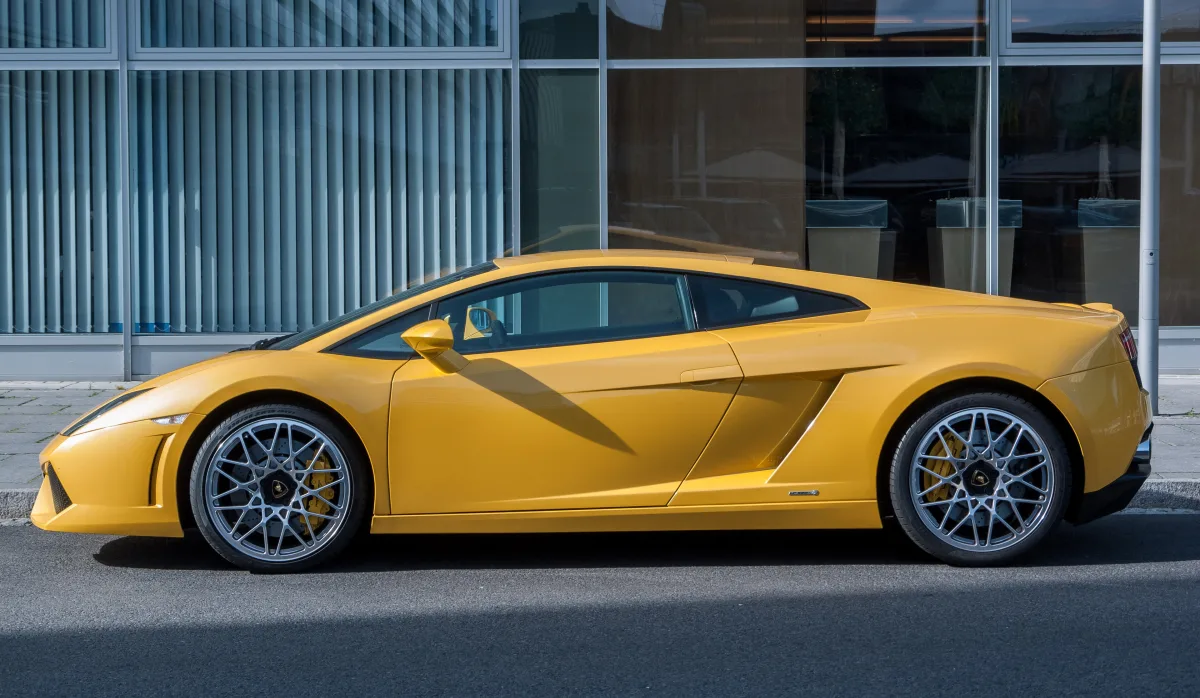
Lamborghini Gallardo: generations, V10 engine and what to know before buying
The Lamborghini Gallardo is a two-door V10 supercar produced between 2003 and 2013, becoming the most successful Lamborghini model of its time. In this article, we'll look at the generations, engines, transmissions, and what to check when buying a used Gallardo.






Gallardo in brief
The Gallardo was created by Lamborghini after it was acquired by the Audi group. It's a more compact and daily-drivable model compared to the flagship, featuring a central V10 engine and permanent all-wheel drive. Body styles include the coupe and the open-top Spyder.
Over a decade, around a dozen thousand units were produced, making it one of the most commonly encountered used Lamborghinis. A wider selection means more choice in terms of generation, colour, and trim, but the price still depends on the specific example's condition and history.
Which generation to choose
The first series (2003–2008) featured a 5.0-litre V10 engine with around 500 hp. This era includes special variants like the lighter Superleggera. It's a more affordable entry point to the Gallardo, but the equipment and interior materials are somewhat basic.
The refreshed LP560-4 (from 2008) received a 5.2-litre engine with direct injection, around 560 hp, a revised exterior, and a more modern interior. Later models like the LP550-2 with rear-wheel drive and the LP570-4 Superleggera are more driver-focused, hence more desirable to collectors.
Engines and transmissions
All Gallardo generations come with a rear-mounted V10 petrol engine. The first series features a 5.0-litre unit, while later models have a 5.2-litre engine. Power output varies by model, roughly ranging from 500 to 570 hp.
Transmission options include a 6-speed manual or the robotised e-gear with paddle shifters. The manual gearbox is praised for its driving feel and simpler maintenance, while the e-gear clutch is a wear item, making its condition crucial when buying.
What to check when buying a used Gallardo
A full service history from a specialist workshop is essential. For cars with e-gear, request information on clutch wear — replacement is one of the major running costs. Check that gear changes are smooth and there are no error messages.
Inspect the body for signs of previous accidents, damage to the lower front bumpers (common when parking) and interior wear. Test the retractable roof on open Spyder versions a few times. Before purchasing, consider hiring a specialist familiar with this model.


Trim levels
Names and equipment vary by market and year; we list the most common trims found in Europe.
Gallardo (5,0)
2003–2008The first series with a 5.0-litre V10 and all-wheel drive.
- 5.0-litre V10, around 500 hp
- 6-speed manual or e-gear transmission
- Often a coupé, sometimes a Spyder
Gallardo Spyder
2005–2013Open body with an electrically retractable fabric roof.
- The same V10 as the coupé
- Often — e-gear box
- Engine noise is more audible in the cabin
Superleggera
2007–2013A lighter, sportier version with more carbon fibre.
- More powerful engine than the base version
- Carbon fibre details on the exterior and in the cabin
- Often — sport seats
LP560-4
2008–2013Updated version with a 5.2-litre engine and a newer design.
- 5.2-litre V10, around 560 hp
- Redesigned front, rear and cabin
- Manual or e-gear box
LP550-2
2009–2013Rear-wheel drive only — lighter and more agile handling.
- Rear-wheel drive
- Around 550 AG
- Often — special colour and trim series
LP570-4 Superleggera
2010–2013The most powerful and lightest Gallardo variant with all-wheel drive.
- Around 570 AG
- Lots of carbon fibre details
- Sport-tuned suspension
Comparison of Gallardo variants
| Gallardo (5,0) | LP560-4 | LP550-2 | LP570-4 Superleggera | |
|---|---|---|---|---|
| Who it's for | The most affordable entry point into the model | The most versatile choice | For those seeking driving thrills | For enthusiasts and collectors |
| Engine | 5.0-litre V10 | 5.2-litre V10 | 5.2-litre V10 | 5.2-litre V10 |
| Power (approx.) | 500 AG | 560 AG | 550 AG | 570 AG |
| Gearbox | All-wheel drive | All-wheel drive | Rear-wheel drive | All-wheel drive |
| Price in the used market (relatively) | €€€ | €€€ | €€€ | €€€ |
For most buyers, the smartest choice is the LP560-4, as it comes with a more modern engine and interior. If you're after a cheaper entry point, it's worth considering the earlier series, while driving enthusiasts will find the LP550-2 the closest match.
Pros
- Striking design and V10 sound
- A daily-driven supercar with all-wheel drive
- Wide range of versions
- Audi engineering, well-known for specialist services
Cons
- Maintenance and parts are expensive
- The robotized e-gear box is a wear item
- Poor rear visibility and a low front end
Frequently asked questions
Which Gallardo version is best in the used market?
For many, the LP560-4 is the pick — it has a more modern engine and interior. If price is key, an early-series car can also be a good choice, but you'll need to thoroughly check its condition and service history.
Is it worth choosing a manual gearbox?
Many enthusiasts opt for it due to the driving feel, and maintenance is simpler than with e-gear. There are fewer manual Gallardos, so finding one might take time.
Is the Gallardo suitable for daily use?
Yes, it's far more practical than older Lamborghinis: it has four-wheel drive and a more comfortable interior. However, you'll need to factor in high maintenance costs and a small ground clearance.
Updated 2026-10-19 · Trim levels and equipment vary by market and model year — check the equipment of the specific car. · Translated automatically


