 English
 Lietuvių
 Latviešu
 Eesti
 Polski
 Русский
 Українська
 Deutsch
 Nederlands
 Čeština
 Slovenčina
 Svenska
 Norsk
 Dansk
 Suomi


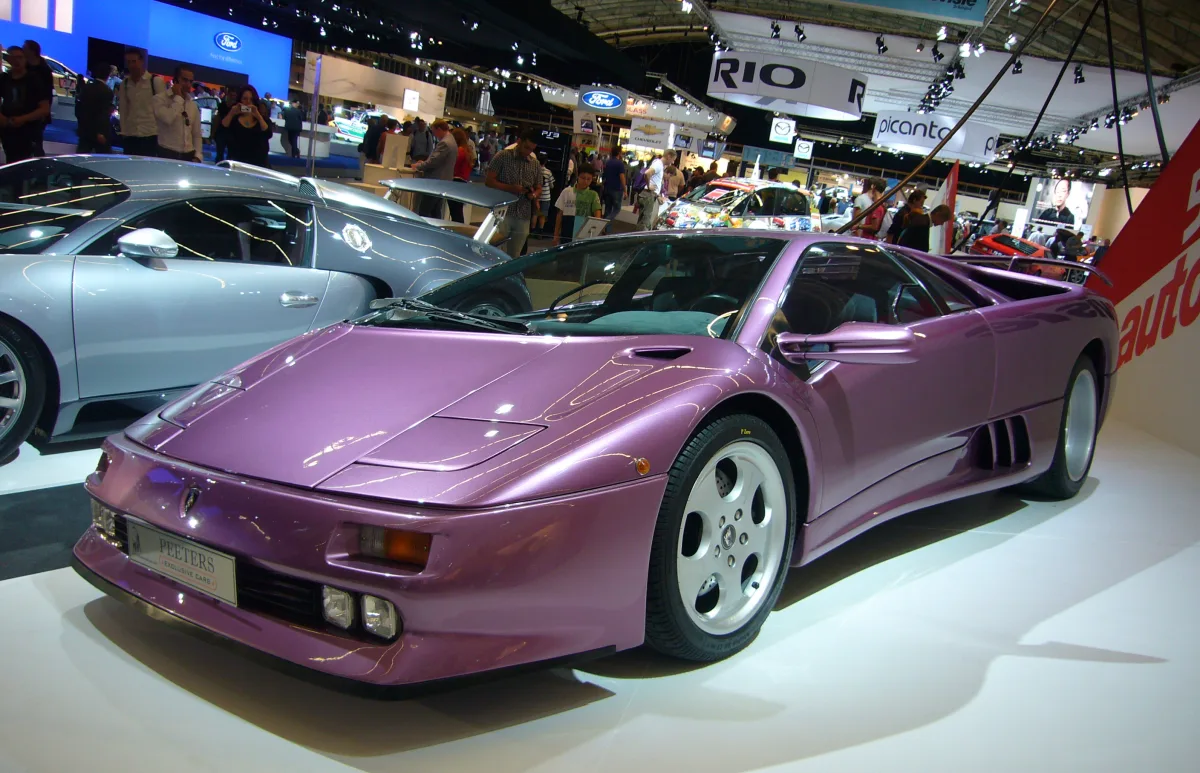
Lamborghini Diablo: generations, V12 engine and what to know before buying
The Lamborghini Diablo is a V12 supercar produced from 1990 to 2001, succeeding the Countach and being one of the most iconic symbols of the 1990s. In this article, we'll look at the generations, engines, and what to check before buying a used Diablo.






Diablo in brief
The Diablo was introduced in 1990 as the successor to the Countach and became the fastest Lamborghini of its time. The body design came from Marcello Gandini, later slightly modified by Chrysler, which briefly owned Lamborghini.
Over its eleven-year production run, around three thousand units were made. This is a collectible car whose value has appreciated over time, making it more of an investment in history and rarity than a daily driver.
Generations and trims
The first Diablos came with rear-wheel drive and a 5.7-litre V12 engine. In 1993, the VT version arrived with an all-wheel-drive system distributing torque to the front wheels; later came the SV, Roadster, and other trims.
From 1998, Lamborghini was owned by Audi, and in 1999, the model was refreshed: it received a 6.0-litre engine, exposed front headlights, and a more modern interior. These later versions are generally considered better equipped, while the earlier ones are seen as more 'pure'.
Engines and transmissions
The original Diablo engine is a 5.7-litre V12 petrol unit, producing around 490 bhp. Later, more powerful variants were introduced, and the 6.0-litre versions boast around 550 bhp or more.
The gearbox is manual only, no automatic option. Pay attention to the clutch condition and ease of gear shifting: a car that's hard to drive or tow makes you think about an expensive repair.
What to check when buying a Diablo
A full service history and documents proving authenticity are essential — especially important for rare or special editions. Check the engine and gearbox condition, clutch, belts, and system ages, as well as the overall electrical system operation.
Inspect the body and interior for previous repairs, paint differences, and corrosion. Use a specialist familiar with early-generation Lamborghinis.


Trim levels
Names and equipment vary by market and year; we list the most commonly found trim levels in Europe.
Diablo
1990–1993The first version, rear-wheel drive.
- 5.7-litre V12, around 490 hp
- 5-speed manual gearbox
- Often — pop-up headlights
Diablo VT
From 1993The first all-wheel drive version.
- Limited-slip differential between axles
- Better grip in the wet
- The same 5.7-litre V12 core technology
Diablo SV
From 1995A sportier rear-wheel-drive version
- A sharper, sportier look
- More power than the base model
- Often — a rear wing
Diablo Roadster / VT Roadster
From the mid-1990sConvertible versions with a removable roof
- Removable roof
- Often — with all-wheel drive (AWD)
- Lower ride height
Diablo 6.0 / 6.0 VT
1999–2001Updated version with a 6.0-litre engine and fixed headlights
- 6.0-litre V12, around 550 hp
- New headlights and a more modern interior
- Four-wheel drive
Comparing Diablo versions
| Diablo | VT | SV | 6.0 VT | |
|---|---|---|---|---|
| Who it's for | For classic enthusiasts | More grip | For smooth driving | For the modern version |
| Engine | 5.7 l V12 | 5.7 l V12 | 5.7 l V12 | 6.0 l V12 |
| Transmission | Rear-wheel drive | All-wheel drive | Rear-wheel drive | All-wheel drive |
| Price in the used market (relatively) | €€€ | €€€ | €€€ | €€€ |
For many buyers, the most versatile choice is the VT for better grip. The later 6.0 version is best for those wanting a more modern interior, while the SV is for purists seeking pure driving.
Pros
- Iconic 1990s design
- The roar and feel of the V12 engine
- Collectible value and rarity
- Wide range of versions available
Cons
- Heavy clutch and high part costs
- Limited visibility and interior space
- No automatic transmission
Frequently asked questions
How does the VT differ from the standard Diablo?
The VT has all-wheel drive with a stiff clutch — more grip and safer driving in wet conditions. The standard Diablo is rear-wheel drive only.
Which Diablo should you choose?
For drivers seeking safer driving, the VT or the later 6.0 are suitable. Enthusiasts looking for pure driving will be drawn to the SV.
Is the Diablo suitable for daily use?
Practically not: the heavy clutch, limited visibility, and high maintenance costs make it suitable only for occasional, pleasure use.
Updated 2026-10-19 · Trim levels and equipment vary by market and model year — check the equipment of the specific car. · Translated automatically


