 English
 Lietuvių
 Latviešu
 Eesti
 Polski
 Русский
 Українська
 Deutsch
 Nederlands
 Čeština
 Slovenčina
 Svenska
 Norsk
 Dansk
 Suomi


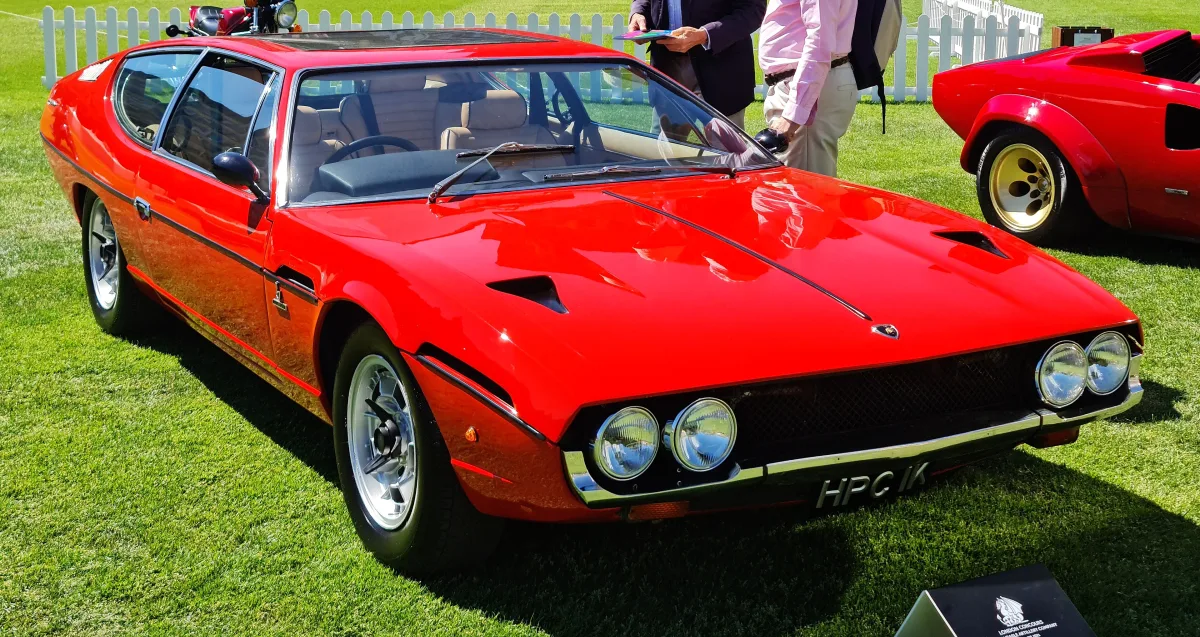
Lamborghini Espada: generations, V12 engine and what to know before buying
The Lamborghini Espada was a four-seater grand tourer with a V12 engine produced between 1968 and 1978, designed by Bertone. In this article, we look at its generations, technology, and what you need to know when buying a used Espada.






Espada in brief
The Espada was introduced as a more spacious Lamborghini — a four-seater grand tourer with a front-mounted V12 engine. Its design was penned by Marcello Gandini of Bertone, with distinctive, low and wide-set headlights and a sloping rear becoming the model's signature.
The Espada became one of Lamborghini's most successful early models — over a thousand units were produced. Today, it's valued as a collectible car, with prices depending on the generation and condition.
Which generation to choose
The first generation (Espada 400 GT, 1968–1970) features a purer design and an early interior. It's particularly sought after by collectors, with few well-preserved examples around.
The second generation (S2, 1970–1972) received an improved interior and a more powerful engine. The third (S3, 1972–1978) — the final and most refined, with an updated dashboard and some cars featuring an automatic transmission. It's often considered the most practical for daily use.
Engine and transmission
The Espada features a 3.9-litre V12 engine mounted up front. Power output varies by generation — from around 320 to around 350 hp. The engine is renowned for its beautiful sound and reliability, provided it's well-maintained.
Gearbox — five-speed manual, while some later cars had an automatic. The steering and clutch are quite heavy, so driving requires physical effort.
What to check when buying a used Espada
The main issue — rust. Inspect the sills, floor, wheel arches, and underbody. Check if the body hasn't been painted or repaired. Restoration can be very expensive.
Check the engine condition, cooling system, carburetors, and gearbox. Inspect the interior, electrical system, and brakes. Parts and specialists are hard to find, so it's worth consulting an expert in classic cars of this make.


Trim levels
Names and equipment vary by market and year; we list the most commonly found trim levels in Europe.
Espada 400 GT
1968–1970The first series with a cleaner design.
- 3.9 l V12
- Five-speed manual gearbox
- Early interior
Espada S2
1970–1972The second series with an improved interior.
- Improved interior
- More powerful engine
- Often — extra equipment
Espada S3
1972–1978The final and most refined series.
- Updated dashboard
- Many cars come with an automatic gearbox
- Often — more luxurious trim
Espada series comparison
| Espada 400 GT | Espada S2 | Espada S3 | |
|---|---|---|---|
| Who it suits | For collectors | A balanced choice | For practical use |
| Engine | 3.9 l V12 | 3.9 l V12 | 3.9 l V12 |
| Power (approx.) | 320 bhp | 350 bhp | 350 bhp |
| Gearbox | 5-speed manual | 5-speed manual | 5-speed manual or automatic |
| Price in the used market (relatively) | €€€ | €€€ | €€€ |
For most buyers, the most practical choice is a well-maintained S2 or S3. The first series is for collectors who value originality above all.
Pros
- Distinctive Gandini design
- V12 engine with a beautiful sound
- Four seats — more practical than most Lamborghinis
- Collector's value
Cons
- High prices and restoration costs
- Rust and complex maintenance
- Shortage of parts and specialists
Frequently asked questions
Who designed the Espada?
The design was created by Marcello Gandini from the Bertone studio. He became one of the most distinctive grand tourer styles of the time.
Which Espada generation is the best?
Most will find the S2 or S3 appealing due to their improvements. The S3 is considered the pinnacle, while the first series is praised for its purer design.
Is the Espada suitable for daily use?
Rarely: the car is large, handling is tricky, and maintenance is expensive. It's usually kept as a collector's item or a weekend car.
Updated 2026-10-19 · Trim levels and equipment vary by market and model year — check the equipment of the specific car. · Translated automatically


