 English
 Lietuvių
 Latviešu
 Eesti
 Polski
 Русский
 Українська
 Deutsch
 Nederlands
 Čeština
 Slovenčina
 Svenska
 Norsk
 Dansk
 Suomi


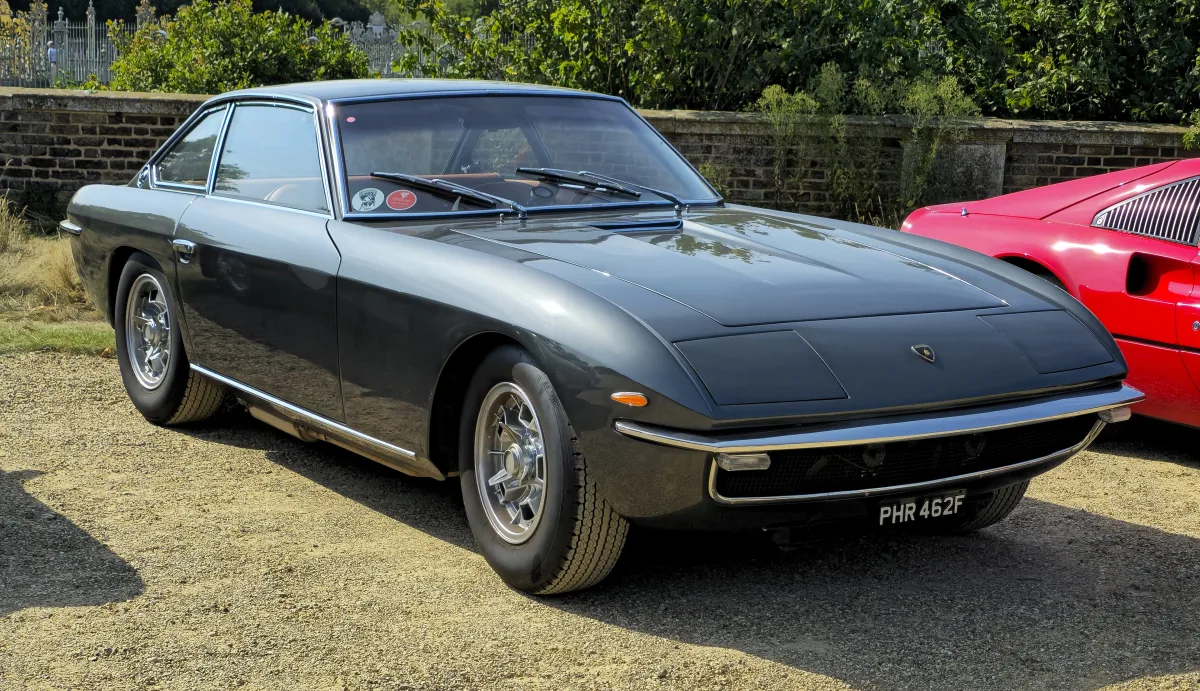
Lamborghini Islero: 400 GT successor, V12 and Islero S
Lamborghini Islero — the 1968–1970 2+2 grand tourer with a front-mounted V12, successor to the Lamborghini 400 GT. We look at the base model and the more powerful Islero S, the engine, and what to check when evaluating such a rare collectible car.






Islero in brief
The Islero debuted in 1968 as the successor to the Lamborghini 400 GT. Built on the same platform but with a new body designed and manufactured by coachbuilder Carrozzeria Marazzi, it features a front-mounted V12, rear-wheel drive, and 2+2 seating.
The Islero was slightly more understated in design compared to the famous Lamborghini Miura or Espada, making it less noticeable over time. Only around 225 units were produced, making it a very rare collectible model today.
Versions and differences
The base version is the Islero 400 GT, and in 1969, the more powerful Islero S was introduced. It featured a strengthened engine and several exterior and interior changes.
Today, the Islero S is more commonly sought after as it is more powerful and even rarer. However, both versions are extremely rare, so the deciding factor is the specific car's history and condition.
Engine and transmission
The Islero has a 4.0-litre V12 petrol engine. The base version produces around 320 hp, while the Islero S delivers around 350 hp. The transmission is a 5-speed manual with rear-wheel drive.
This is a classic Lamborghini V12 with dual overhead camshafts per cylinder bank. Its maintenance and repairs require brand specialists and can be expensive.
What to check when evaluating an Islero
The most important thing is authenticity and documentation: body, engine, and chassis numbers, provenance, and restoration work. Due to its rarity, the price heavily depends on originality, so the inspection should be carried out by a Lamborghini classic specialist.
Inspect the body for corrosion and poor repairs, the engine, gearbox, suspension, and brakes. Some parts are hard to find or made to order.


Trim levels
Names and equipment vary by market and year; we list the most commonly found trim levels in Europe.
Islero 400 GT
1968–1969 model yearsBase version with a 4.0-litre V12.
- 4.0-litre V12, around 320 HP
- 5-speed manual gearbox
- 2+2 seating
Islero S
1969–1970 model yearsMore powerful version with an uprated engine.
- 4.0-litre V12, around 350 HP
- 5-speed manual gearbox
- Updated interior
Comparing Islero generations
| Islero 400 GT | Islero S | |
|---|---|---|
| Who it's for | For collectors seeking the original version | For collectors wanting a more powerful version |
| Engine | 4.0-litre V12, around 320 HP | 4.0-litre V12, around 350 HP |
| Transmission | 5-speed manual | 5-speed manual |
| Price in the used market (relatively) | €€€€ | €€€€ |
Both versions are very rare; the choice comes down to provenance and condition. The Islero S is often sought after for its greater power.
Pros
- Classic Lamborghini V12
- A very rare collector's car
- Elegant, understated design
- Practical 2+2 layout
Cons
- Very high price and limited supply
- Expensive maintenance and restoration
- Hard-to-find parts and specialists
Frequently asked questions
How many Lamborghini Isleros were produced?
Approximately 225 cars were produced in total.
What sets the Islero S apart from the Islero?
The Islero S boasts a more powerful engine (around 350 HP, not around 320 HP) and a slightly revised exterior and interior.
Which car did the Islero replace?
The Islero succeeded the Lamborghini 400 GT.
Updated 2026-10-19 · Trim levels and equipment vary by market and model year — check the equipment of the specific car. · Translated automatically


