 English
 Lietuvių
 Latviešu
 Eesti
 Polski
 Русский
 Українська
 Deutsch
 Nederlands
 Čeština
 Slovenčina
 Svenska
 Norsk
 Dansk
 Suomi


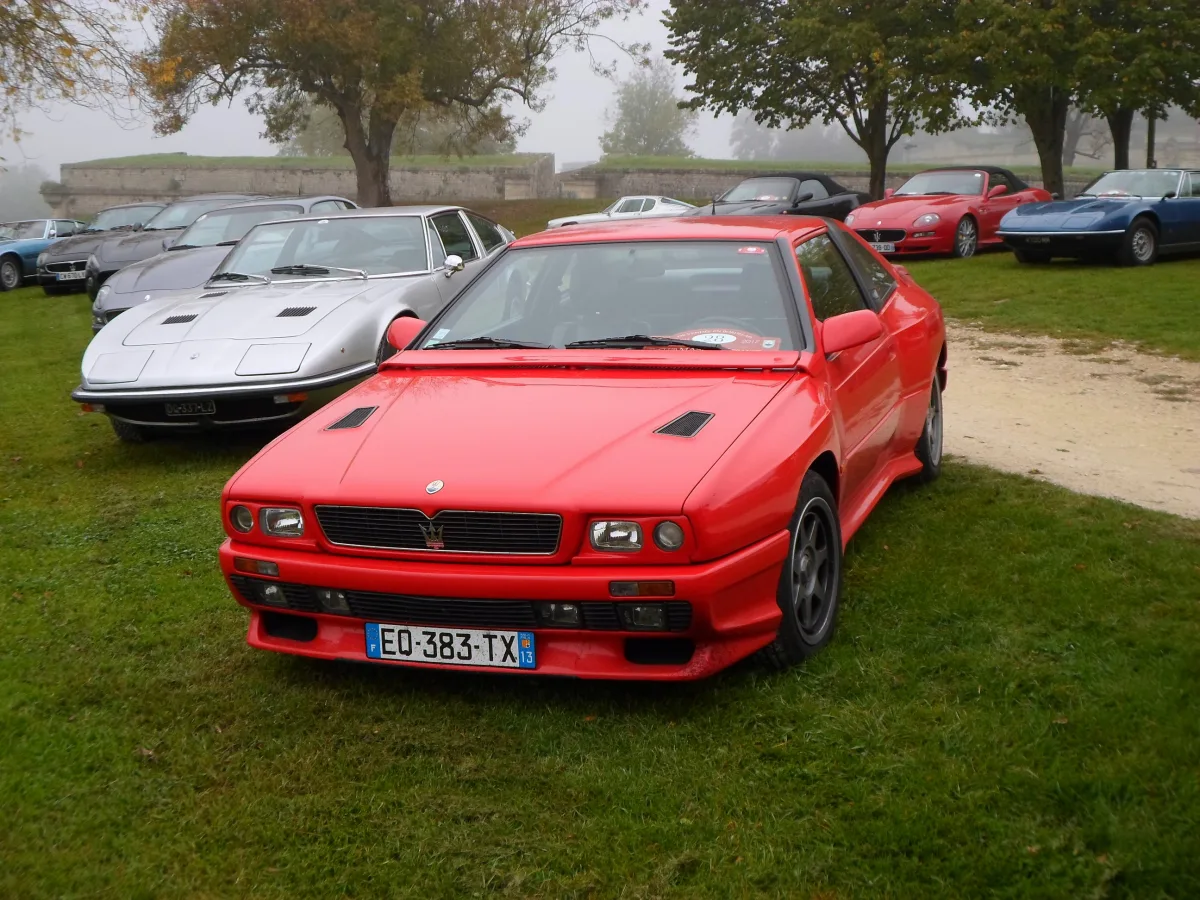
Maserati Shamal: 1990–1996 coupe, engine and what to know
Maserati Shamal — a rare two-door coupe produced from 1990–1996 with a 3.2-litre twin-turbo V8 engine and rear-wheel drive. We look at its history, technology, and what to consider when evaluating the Shamal as a collectible car.






Shamal in brief
The Shamal was one of Maserati’s standout models in the 1990s: shorter and more aggressive than the Biturbo family cars, its body was designed by Bertone. The name comes from the hot wind that blows across the Persian Gulf.
This isn’t a practical daily driver, but a fast and rare sports coupe with high prices and limited production — around 370 units were made. Because of this, it’s now valued as a collectible.
A single version
The Shamal was produced in just one version, so the choice comes down to the specific car’s condition, mileage, and history. Some cars vary depending on the market, but the essence remains the same.
For buyers, the key is service records, originality, and whether the car has been maintained by specialists who understand Maserati’s unique technology.
Engine and transmission
The Shamal uses a 3.2-litre V8 with twin turbos (around 326 hp), paired with a 6-speed manual gearbox and rear-wheel drive. This setup was unique at the time and gave the car a very lively, powerful character.
Due to the complexity and age of turbo engines, maintenance is crucial — a poorly maintained engine, turbochargers, cooling system, and electrical components can lead to significant costs.
What to check when buying a Shamal
It's well-known that Maserati cars from that era require meticulous maintenance, so look for a car with a comprehensive history that has been serviced by specialists. Have the engine, turbochargers, and cooling systems checked by a Maserati expert.
Inspect the body for rust and poorly repaired dents, check the interior leather, connectors, and electrical equipment. Also, test the gearbox and suspension — repairs can be expensive.
It's important to verify that the car is original and that the documents match the body and engine numbers. Prices fluctuate due to collectible value, so it's worth consulting an independent expert.


Trim levels
The Shamal has one main version; we list it along with the key features.
Shamal
1990–1996The sole factory version.
- 3.2-litre V8 with twin turbochargers (around 326 hp)
- 6-speed manual gearbox, rear-wheel drive
- Often comes with a leather interior and electrically adjustable suspension
Comparing Shamal buying scenarios
| Originali būklė | Kokybiškai restauruota | Reikalinga restauracija | |
|---|---|---|---|
| Who it's for | Collectors | For use and shows | Enthusiasts on a budget |
| The key points | History and originality | Restoration documents | Parts availability and cost |
| Risk | Maintenance costs | Quality of work | Significant additional expenses |
| Price in the used market (relatively) | €€€ | €€€ | €€ |
The Shamal is only worth considering after thoroughly checking the car's history and with the help of a specialist. This is a collectible car, not your average daily driver.
Pros
- A rare and collectible automobile
- Powerful V8 with twin turbochargers
- Distinctive 'Bertone' styling
- Manual gearbox and rear-wheel drive — a driver's car
Cons
- Very expensive and hard to find
- Complex technology, costly maintenance
- Parts and specialists are limited
Frequently asked questions
Why is it called Shamal?
The name comes from the hot wind that blows in the Persian Gulf — 'Maserati' traditionally named models after winds.
How many Shamals were made?
Only around 370 units were produced, making it a collectible car.
Is the Shamal suitable for daily use?
It's a fast and complex car, so it's better suited to special outings and a collection than everyday driving.
Updated 2026-10-21 · Trim levels and equipment vary by market and model year — check the equipment of the specific car. · Translated automatically


