 English
 Lietuvių
 Latviešu
 Eesti
 Polski
 Русский
 Українська
 Deutsch
 Nederlands
 Čeština
 Slovenčina
 Svenska
 Norsk
 Dansk
 Suomi


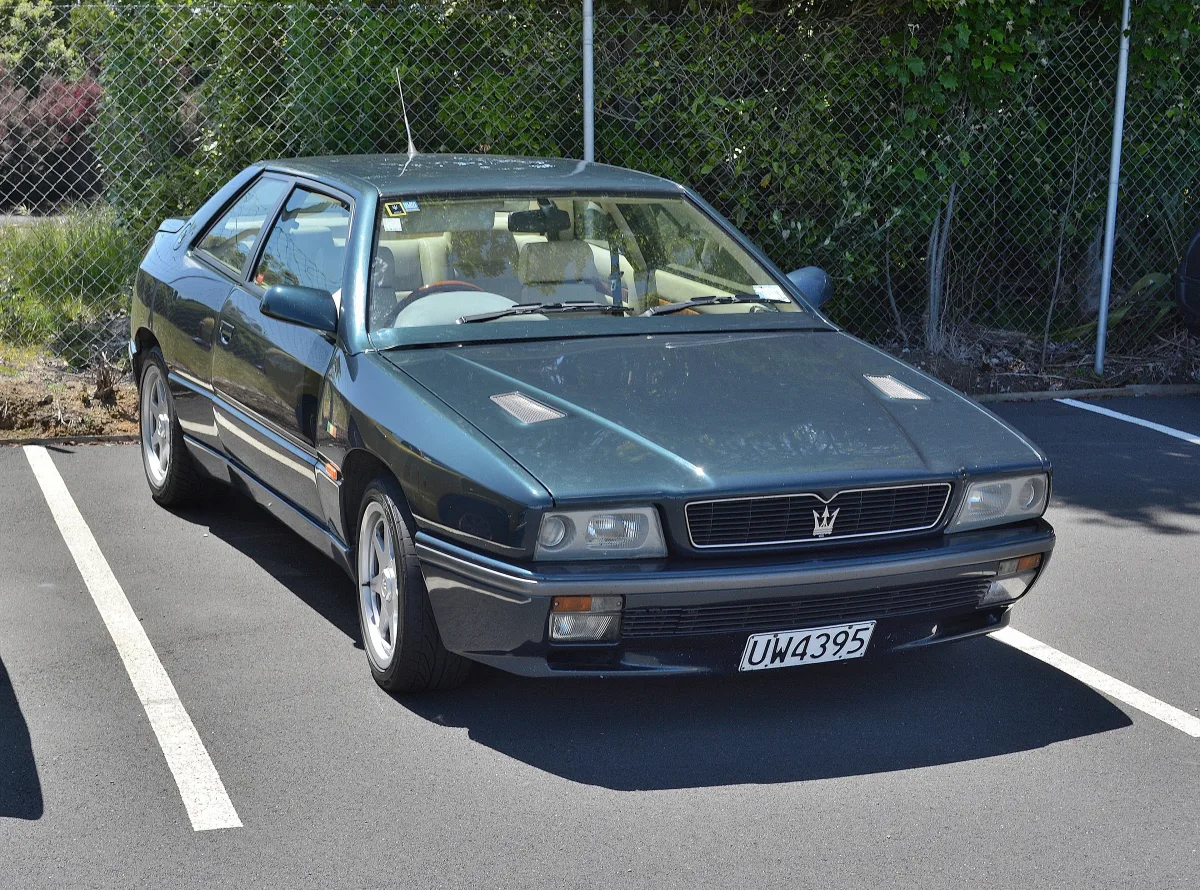
Maserati Ghibli II: engine, trims and what to know before buying
The Maserati Ghibli II is a twin-turbo V6 coupe produced between 1992 and 1998, considered one of the last of the 'old school' Maseratis. We delve into its history, engines, trims and the key points to check before buying.






Ghibli II in brief
The Ghibli II (internal code AM336) was introduced in 1992 as the evolution of the Biturbo family. Its body was designed by Marcello Gandini, and its rear-wheel drive and striking, angular styling allowed it to occupy a space between sporty coupes and luxurious GTs. The name harks back to the legendary 1960s Ghibli.
The car was produced in small numbers — around 2,300 units in total, making it a rare classic today. There are very few in Lithuania, and purchases often involve importing from abroad.
Which trim to choose
One car, but several trims. The main difference is the engine: in some markets, especially Italy, the 2.0-litre version is popular (due to taxes), while the 2.8-litre is more commonly exported. Later, sportier trims like the GT and Cup were introduced.
If you're after daily comfort, go for the 2.8-litre with an automatic gearbox. If you want a sportier feel, look at the GT or Cup, though they are rarer and more expensive. In all cases, the key is the technical condition and history.
Engines and gearboxes
The Ghibli II came with V6 twin-turbo petrol engines: a 2.0-litre (around 300 hp) and a 2.8-litre (around 280–300 hp). The Cup version boasts around 330 hp. All engine specs vary depending on the market and year.
The gearbox is a 6-speed manual, with a 4-speed automatic option available in the 2.8-litre versions. The car is rear-wheel drive, and some models feature electronically controlled suspension.
What to check when buying a used Ghibli II
The most crucial aspect is how well the car has been maintained. Check the turbocharger, oil and cooling system leaks, and the timing belt replacement history. Given the car's age, it's essential to inspect the bodywork: corrosion, especially in the lower sections, can be a significant issue.
The electrical systems and electronically controlled suspension can be a headache, and some parts are hard to find. Before buying, consult a mechanic familiar with the Maserati Biturbo family and request all service documents.


Versions
Names and equipment vary by market and year; we list the most commonly mentioned versions.
Ghibli 2.0
From 1992 onwardsThe smaller engine version, particularly popular in Italy.
- 2.0-litre twin-turbo V6
- Power around 300 hp
- Often comes with a 6-speed manual gearbox
Ghibli 2.8
From 1992 onwardsThe main export version.
- 2.8-litre twin-turbo V6
- Manual or automatic gearbox
- More comfortable driving
Ghibli GT
in later yearsA sportier and more luxurious version.
- More powerful engine
- Often — a tuned chassis
- Often — additional trim
Ghibli Cup
in later yearsAn extremely sporty and rare version, created as the basis for a racing series.
- Around 330 HP
- Sporty combination
- Very limited numbers
Comparison of Ghibli II versions
| 2.0 | 2.8 | GT | Cup | |
|---|---|---|---|---|
| Who it suits | For the Italian market | For everyday enjoyment | For a sportier drive | For collectors |
| Commonly found | 16–17 inches | 16–17 inches | 16–17 inches | 16–17 inches |
| Interior | Standard trim | Standard trim | Luxury trim | Sport |
| Engine | 2.0-litre V6 twin-turbo | 2.8-litre V6 twin-turbo | 2.8-litre V6 twin-turbo | 2.0-litre V6 twin-turbo |
| Price in the used market (relatively) | Mid-range | Mid-range | High-end | High-end |
For most buyers, the best choice is a well-maintained Ghibli 2.8. The GT and Cup are more suited to those seeking a rarer or sportier example.
Pros
- The distinctive Gandini-designed styling
- A powerful twin-turbo V6 with character
- A rare and unique automobile
- Classic Italian GT spirit
Cons
- Complex and expensive maintenance
- Spare parts can be hard to find
- Corrosion and age-related issues
Frequently asked questions
Is the Ghibli II reliable for daily use?
It's an old, technically complex car, so it's only suitable for daily use if serviced at a specialist workshop.
How does the Ghibli II differ from the 1960s Ghibli?
These are completely different cars: the 1960s Ghibli had a V8 engine and a different body, while the Ghibli II features a twin-turbo V6 and a new, angular design.
How many Ghibli IIs were produced?
Around 2,300 units in total, making it quite a rare car.
Updated 2026-10-21 · Trim levels and equipment vary by market and model year — check the equipment of the specific car. · Translated automatically


