 English
 Lietuvių
 Latviešu
 Eesti
 Polski
 Русский
 Українська
 Deutsch
 Nederlands
 Čeština
 Slovenčina
 Svenska
 Norsk
 Dansk
 Suomi


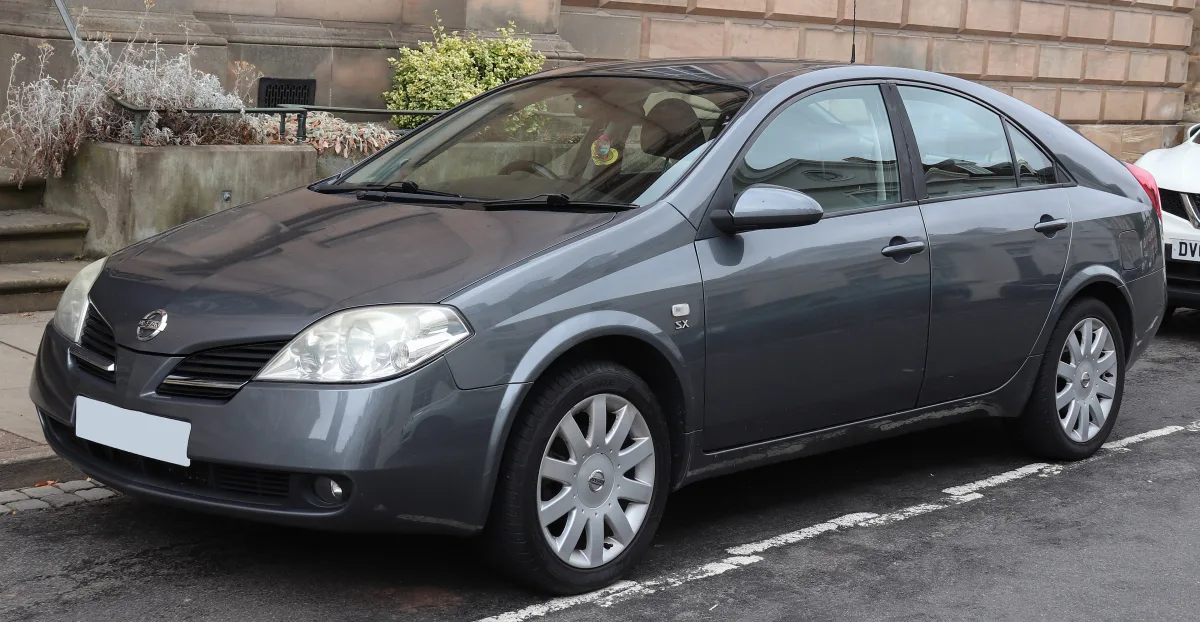
Nissan Primera: P11 and P12 generations, engines and trims
Nissan Primera — a mid-size car, sold in Europe from 1990 to 2007 and competing with the Toyota Avensis and Volkswagen Passat. Today, it's an affordable and straightforward car, with the P11 and P12 generations most commonly found in the used market. We'll look at how they differ, which engines are most popular, and what to check before buying.






Primera in brief
The Primera was produced in three generations: P10 (1990–1996), P11 (1996–2002), and P12 (2002–2007). Cars destined for Europe were mostly built at the Sunderland plant in the UK. It was offered in sedan, five-door hatchback, and estate body styles.
The Primera is praised for its robust build, good handling (especially in the P10 and P11 generations), and simple maintenance. The P11 generation made a name for itself with victories in the British Touring Car Championship (BTCC), while the P12 stood out with its futuristic design and centre console in the cabin.
P11 and P12 — what's the difference
The P11 (1996–2002) is a classically styled car with a multi-link front suspension, making it praised for its precise handling. The 1999 facelift brought new headlights, an improved interior, and a selection of new engines. These are now very old cars, so the main concerns are rust and overall condition.
P12 (2002–2007) — a larger, roomier, and more modern car: many versions come with a colour screen, and top trims feature navigation and even a rear-view camera. The design and interior fittings aren't to everyone's taste, but the cabin is practical, and the boot is spacious.
For most buyers, the P12 is the more sensible choice, as these cars are newer and better equipped. The P11 is worth considering only if you find a particularly well-maintained example.
Engines and gearboxes
P12 petrol engines come in 1.6 (around 109hp), 1.8 (around 116hp) and 2.0 (around 140hp) sizes. Diesels include the Renault-sourced 1.9 dCi (around 116–120hp) and Nissan 2.2 dCi (around 126–139hp).
The gearboxes are mostly manual (5 or 6-speed); the 2.0 petrol engine was also offered with a CVT automatic, while the 1.8 came with a conventional auto.
P11 engines typically include 1.6, 1.8 and 2.0-litre petrols, plus a 2.0-litre diesel. The sportiest version is the 2.0 GT, with around 140–150hp.
What to check when buying a used Primera
The P12 2.0 (QR20) petrol engine is known for higher oil consumption, often caused by a failing primary catalytic converter. Check the oil level and ask how much oil is needed between changes; blue smoke or uneven running is a serious warning sign.
In diesel cars, check the injectors, turbo and dual-mass flywheel. The Renault-sourced 1.9 dCi is sensitive to oil quality and change intervals, so the engine shouldn't rattle when cold or hot.
Always check the body (dents, wheel arches, underbody), suspension mounts, and brake pipes for signs of age. In P12 models, ensure the screen, air conditioning, and all in-cabin electrical gadgets are working.


Trim levels
Names and equipment vary by market and year; we list the most common P12 generation trims found in Europe and the sportiest P11 version.
Visia
P12Base trim with essential equipment.
- Often steel wheels
- Air conditioning
- Simpler sound system
Acenta
P12The most popular choice — more comfort for a modest price.
- Light-alloy wheels
- Often — automatic climate control
- Often — cruise control
Tekna
P12Top trim with the most equipment.
- Often — leather interior
- Often — navigation and rear-view camera
- Often — xenon headlights
GT
P11The sportiest P11 generation version.
- 2.0-litre petrol engine, around 140–150 hp
- Sportier suspension and bumpers
- Light-alloy wheels
Comparison of P12 generation trims
| Visia | Acenta | Tekna | |
|---|---|---|---|
| Who it's for | For the tightest budget | For daily driving | For comfort |
| Alloy wheels (most often) | 15-inch | 16-inch | 16–17-inch |
| Interior | Trim | Trim, more equipment | Often — leather |
| Price in the used market (relatively) | € | € | €€ |
For a car of this age, the spec is less important than the condition. If you're choosing, the Acenta or Tekna with the 1.8 petrol or 2.2 dCi engine are the most practical options.
Pros
- Cheap to buy
- Simple maintenance, parts are still readily available
- Spacious interior and large boot (P12)
- Sturdy chassis and good handling
Cons
- Most cars are now very old and have high mileage
- Oil consumption of the 2.0 petrol engine
- The P12 interior design isn't to everyone's taste
Frequently asked questions
Which Primera engine is the best?
The most commonly recommended engines are the straightforward 1.6 and 1.8-litre petrol units — they're simple and cheap to maintain. Diesels are more economical, but due to their age, repairs can be costly compared to the value of the car itself.
Is it worth buying a Primera with a CVT gearbox?
Only if it's working smoothly and there's evidence that its fluid has been changed. Test the acceleration and responsiveness — any hesitation, shuddering, or slipping sensation means it might need expensive repairs.
What are the differences between the Primera sedan, hatchback, and estate?
The technology and specifications are essentially the same. The hatchback has a large tailgate with a rear window, making it easy to load, while the estate is ideal for those who need maximum space for their belongings.
Updated 2026-10-09 · Trim levels and equipment vary by market and model year — check the equipment of the specific car. · Translated automatically


