 English
 Lietuvių
 Latviešu
 Eesti
 Polski
 Русский
 Українська
 Deutsch
 Nederlands
 Čeština
 Slovenčina
 Svenska
 Norsk
 Dansk
 Suomi


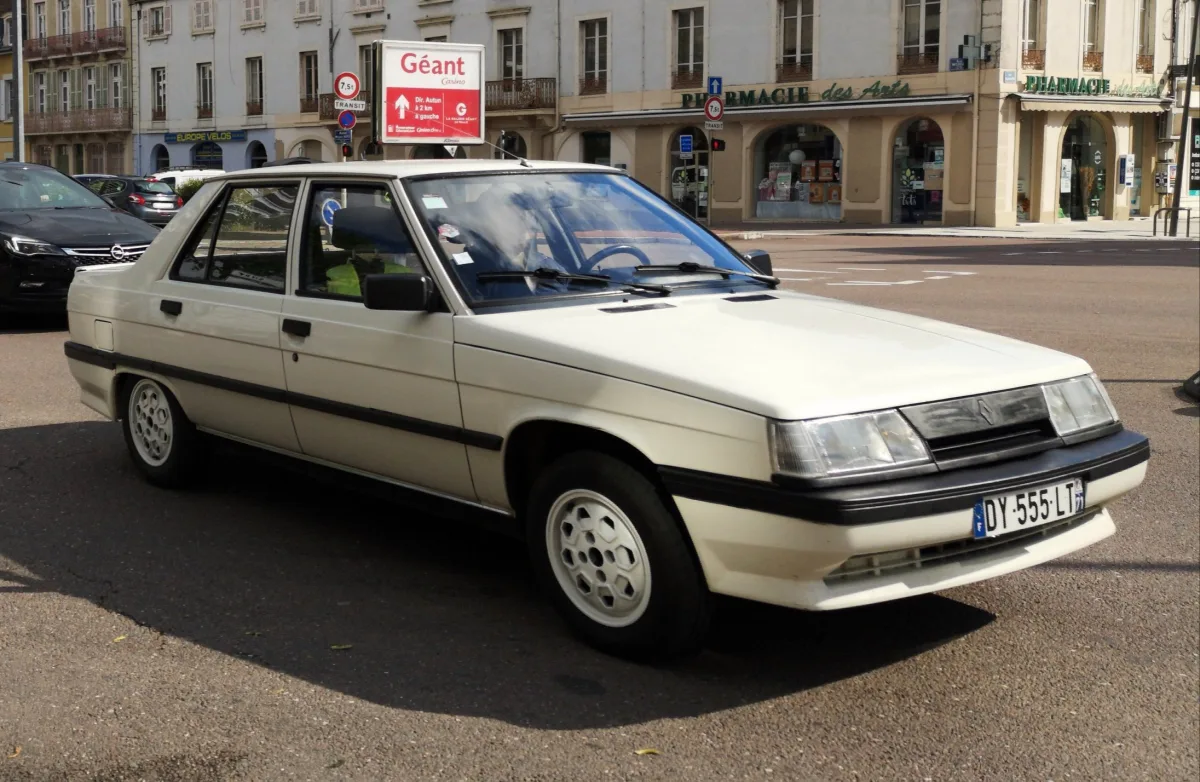
Renault 9 (1981–1989): compact French saloon
Renault 9 — a front-wheel-drive compact saloon that debuted in 1981 and became one of Renault's most popular models. In this article, we look at its history, technology, and what you need to know if you're considering buying this classic car.






Renault 9 in brief
The Renault 9 was designed as a simple, spacious, and economical family saloon. Its body is clearly divided into three sections: the engine bay, the cabin, and the boot.
The car quickly became a hit: in 1982, it was named European Car of the Year. As a result, production was extensive, and today it's a classic example of a French saloon.
Versions and updates
Midway through the 1980s, the Renault 9 was updated: the front end, interior, and some engines were revised. Cars from different years can look very different and have varying levels of equipment.
The sportier 9 Turbo version remains rare. Most daily drivers were the more modest TL, GTL, or TSE variants.
Engines and gearboxes
Renault 9 engines were small-capacity petrol units, roughly from 1.1 to 1.7 litres, plus diesel and turbo options. They're simple and well-known to mechanics.
The gearbox is manual, occasionally automatic. Thanks to its light weight, the car drives quite nimbly even with a modest engine.
What to check if you're thinking of buying one
First off — the body. French saloons from this era often rust around the wings, sills, rear arches, and boot lid.
Check the condition of the engine and gearbox, the electrical system, and the plastic interior parts — these often deteriorate over time.
Ensure that the paperwork is in order and that the car hasn't been overly modified, as originality often increases value.


Trim levels
Names and equipment vary by market and year; we list the versions most commonly found in Europe.
TL ir GTL
1981–1989Base trims with less powerful engines.
- Often — a simple cloth interior
- Often — a small-capacity petrol engine
- Basic, practical equipment
TSE ir TXE
1981–1989Higher trims with more comfort features.
- Often — electrically adjustable windows
- Often — alloy wheels
- More interior trim
Trim level comparison
| TL / GTL | TSE / TXE | |
|---|---|---|
| Who it's for | Everyday practicality | More comfortable journeys |
| Engine | Smaller capacity | Often larger |
| Interior | Basic | More lavish |
| Price in the used market (relatively) | Budget-friendly | Mid-range |
Most buyers prioritise condition over spec. TSE or TXE are worth considering if you value more lavish equipment.
Pros
- Simple and economical tech
- Spacious interior for its class
- Classic French styling
- You might still find parts and clubs
Cons
- Body rust
- Lack of safety features
- Parts search may take time
Frequently asked questions
How does the Renault 9 differ from the Renault 11?
The technology is very similar, but the 9 has a sedan body, while the 11 is a hatchback.
Was the Renault 9 the Car of the Year?
Yes, it was named European Car of the Year in 1982.
Is the Renault 9 suitable for daily use?
It might be, but it lacks modern safety features, so it's usually more of a fun car.
Updated 2026-10-19 · Trim levels and equipment vary by market and model year — check the equipment of the specific car. · Translated automatically


