 English
 Lietuvių
 Latviešu
 Eesti
 Polski
 Русский
 Українська
 Deutsch
 Nederlands
 Čeština
 Slovenčina
 Svenska
 Norsk
 Dansk
 Suomi


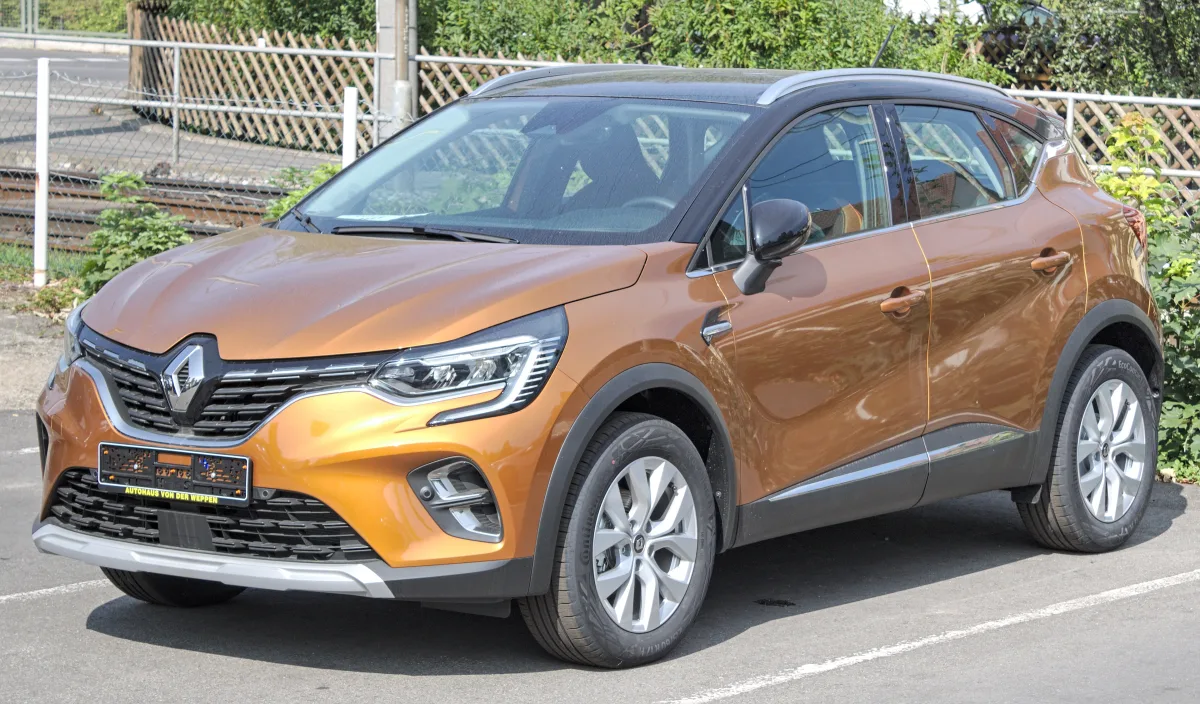
Renault Captur: 1st and 2nd generations, engines and trims
The Renault Captur is one of Europe's most popular small crossovers, built on Renault Clio technology. We look at how the 1st and 2nd generations differ, which engines and hybrid versions are available in the used market, how the trims vary, and what to check when buying.






Captur in brief
The 1st generation Captur was produced from 2013 to 2019 and was based on the 4th generation Clio. The 2nd generation, produced since 2019, is based on the 5th generation Clio technology: it's larger, more refined, and comes with hybrid versions. The 2nd generation was refreshed in 2024 with a revised front end and multimedia system.
The Captur is praised for its higher seating position, sliding rear seats that extend the boot space, and often a two-tone body. It doesn't offer four-wheel drive — the car is always front-wheel drive.
1st vs 2nd generation
The 1st generation (2013–2019) is more basic, with plenty of hard plastics inside, but it's practical: in some trims, the seat covers can be removed and washed. The 2017 facelift brought a slightly refreshed look, better trim, and LED headlights on higher trims. It's the more budget-friendly option.
The 2nd generation (from 2019) is a significant step up: the interior is more refined, there's a large vertical touchscreen, more driver assistance systems, and better sound insulation. This generation is the most popular in the used market, especially the 2020–2023 models.
If your budget allows, opt for the second generation — it's safer, quieter and more modern, with hybrid versions particularly economical in the city.
Engines and gearboxes
In the first generation, you'll commonly find 0.9 TCe (90 hp) and 1.2 TCe (around 120 hp) petrol engines, along with the 1.5 dCi diesel (90–110 hp). From 2018, the 1.2 TCe was replaced by the 1.3 TCe.
The second generation primarily features 1.0 TCe (90–100 hp, with factory-fitted LPG available) and 1.3 TCe (around 130–160 hp, later with a mild hybrid) petrol engines, the 1.5 Blue dCi diesel, the plug-in hybrid E-Tech, and the full hybrid E-Tech.
Gearboxes come in manual or dual-clutch automatic EDC. Hybrid E-Tech versions have their own unique automatic gearbox.
What to check when buying a used Captur
The first-gen 1.2 TCe engine is known for increased oil consumption — ask about oil top-ups and check if the engine smokes. The EDC gearbox should shift smoothly; any hesitation or vibration from a standstill often indicates a clutch repair is needed.
For diesel cars, check the particulate filter (DPF), and for newer Blue dCi models, the AdBlue system. For hybrid E-Tech versions, ask if all software updates have been performed.
Test the multimedia system — the screen shouldn't freeze or glitch. Check the mileage against service records and MOT history, and inspect the body for repainted parts.


Trim levels
Names and equipment vary by market and year; we list the most common trims found in Europe.
Zen
First and second generationA popular mid-range trim — a good balance of price and features.
- Air conditioning and cruise control
- Often — lightweight alloy wheels
- Often — multimedia screen with navigation
Intens
First and second generationWell-equipped version with a more distinctive look.
- Larger lightweight alloy wheels
- Often — two-tone body
- Often — automatic climate control and rear-view camera
Initiale Paris
First and second generationThe top-of-the-range trim with exclusive interior trim.
- Single-tone interior trim
- Largest wheels and exclusive details
- Often — premium sound system
Techno
Second generation, from 2022Well-equipped trim, replacing the Intens.
- Lightweight alloy wheels
- Larger multimedia screen
- Often — more driver assistance systems
esprit Alpine
Second generation after the 2024 refreshSporty-looking version without a sporty engine.
- Sporty wheels and trim details
- Sportier seats
- Often — more comfort features
Second-gen trim comparison
| Zen | Intens / Techno | Initiale Paris | esprit Alpine | |
|---|---|---|---|---|
| Who it's for | For daily driving | For those wanting more kit | For comfort and luxury | For a sporty look |
| Wheels (usually) | 16–17 inch | 17–18 col. | 18 col. | 18–19 col. |
| Interior | Base | Mid-range trim | Top-spec trim | Sport trim |
| Price in the used market (relatively) | € | €€ | €€€ | €€€ |
For most buyers, the best choice is the Intens or Techno trim with the 1.3 TCe engine or E-Tech hybrid. Zen is ideal for those on a tighter budget, while Initiale Paris caters to those seeking maximum comfort.
Pros
- Higher seating position and compact dimensions
- Sliding rear seats and spacious boot
- Economical hybrid and diesel engines
- A wide selection of used models available
Cons
- 1.2 TCe fuel economy in the first generation
- EDC gearbox repairs can be expensive
- Not all models come with four-wheel drive
Frequently asked questions
Which Captur generation is best to buy used?
For many buyers, the best choice is the second generation: it's safer, more refined, and more comfortable. The first generation is better for a smaller budget, ideally with a 0.9 TCe, 1.3 TCe, or 1.5 dCi engine and a good service history.
Is it worth buying a Captur with an EDC gearbox?
Yes, if the gearbox is working smoothly and has a service history. Test the initial movement and slow driving in traffic — any hesitation is a sign that a repair might be needed.
What's the difference between Captur E-Tech and E-Tech Plug-in?
The E-Tech full hybrid charges itself while driving and braking, so it doesn't need to be plugged into the power grid. The E-Tech Plug-in has a larger battery that can be charged from a socket and can cover short distances on electric power alone.
Does the Renault Captur have four-wheel drive?
No, the Captur is always front-wheel drive. It's suited to city and suburban roads, but it's not designed for off-roading.
Updated 2026-10-09 · Trim levels and equipment vary by market and model year — check the equipment of the specific car. · Translated automatically


