 English
 Lietuvių
 Latviešu
 Eesti
 Polski
 Русский
 Українська
 Deutsch
 Nederlands
 Čeština
 Slovenčina
 Svenska
 Norsk
 Dansk
 Suomi


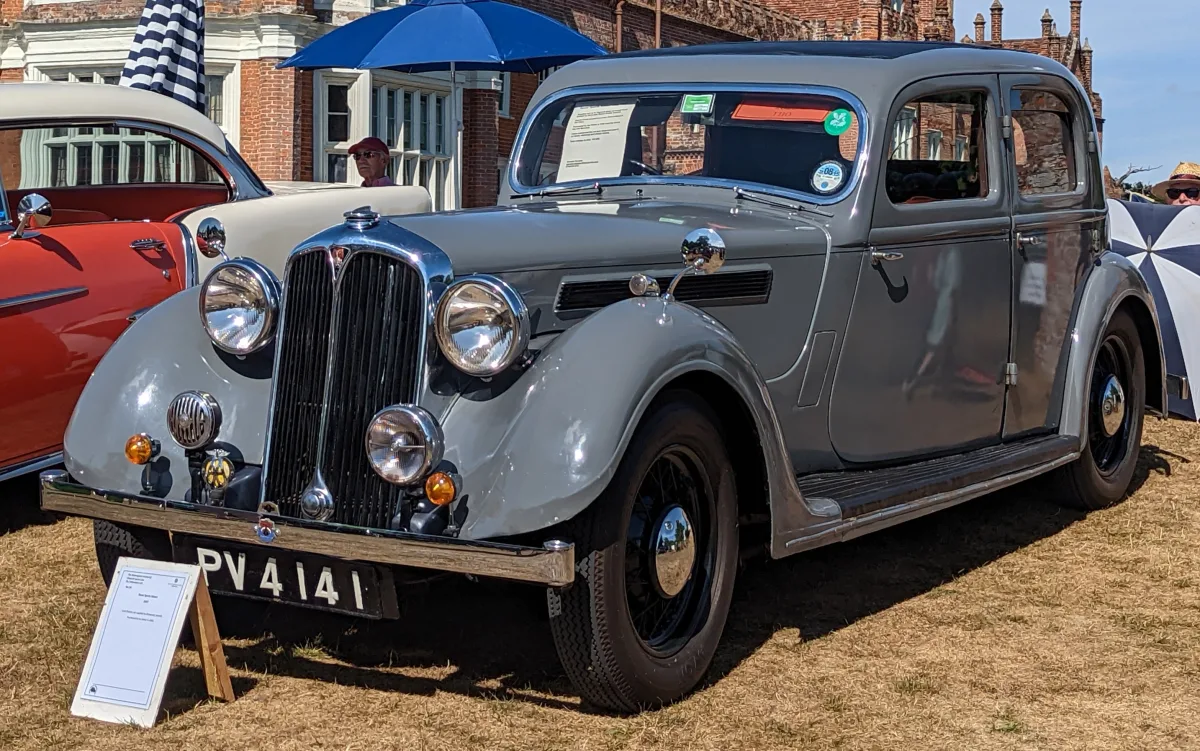
Rover 14: the classic British family car and what the collector needs to know
Rover 14 (Fourteen) is the name Rover used from 1924 to 1948 for several generations of mid-sized family cars. We look at how the various Rover 14 models differ and what to check if you're after one of these classic cars.






Rover 14 at a glance
The Rover Fourteen was a mid-sized family car built in Great Britain up to the Second World War and briefly afterwards. Civilian production halted in 1940 due to the war, but the car returned to the market in 1945 and was sold until 1948, when it was replaced by the Rover 75.
The name referred to quite different cars over the years, but all shared a high-quality, sturdy body and interior comfort that Rover was renowned for in the pre-war years.
Which era to choose
The earliest is the 14/45 (1924–1928), which was a new design with an unusual engine layout, four-wheel brakes and a four-speed gearbox. Today, it's a very rare collector's car.
More commonly found are the 1930s models with closed bodies and the post-war 1945–1948 examples, which are technically very close to the pre-war cars. When choosing, prioritise originality, documentation and body condition over specific production years.
Engine and tech
The Rover 14/45 featured a four-cylinder engine with hemispherical combustion chambers, an overhead camshaft, and four-wheel brakes. Later models had different engines, so check the technical specs against the specific car's documents.
The gearbox is manual, and the steering and brakes are simple by today's standards. A pre-war Rover demands patience and regular maintenance, but its robust construction allows for years of enjoyable driving.
What to check when buying such a car
The most important thing is the condition of the body and chassis. Pre-war Rovers may have wooden body parts, which need to be dry and not rotting, and the underside of the body should be free of rust.
Check if the engine runs smoothly, if there are no oil leaks, and if the brakes and steering work. Parts may need to be sourced through Rover clubs and specialist suppliers, so assess their availability in advance.


Trim levels
The Rover 14 was produced for many years and in several versions, so we outline the periods rather than factory trim levels below.
Rover 14/45
1924–1928An early version with advanced technology for its time.
- Four-cylinder engine with overhead camshaft
- Four-wheel brakes
- Four-speed gearbox
Prieškarinis Rover 14
1930sA mid-size family car with a closed body.
- Often — high-quality, wood-trimmed interior
- Robust body and chassis
- Simple, manual technology
Pokarinis Rover 14
1945–1948Post-war production refreshed before transitioning to the Rover 75.
- Technically akin to pre-war models
- Often — more basic trim
- Limited availability
Comparing the Rover 14 eras
| 14/45 | Prieškarinis | Pokarinis | |
|---|---|---|---|
| Who it suits | For collectors | For club members | For collectors |
| The technical essence | Four-cylinder, overhead valve | Pre-war family tech | Nearly identical technology |
| Usage | Events and Showing | Weekend Car | Weekend Car |
| Price in the Used Market (Relatively) | €€€ | €€€ | €€€ |
This is a collector's car, not a daily driver. Choose based on condition, history, and originality.
Pros
- A sturdy, high-quality pre-war construction
- An elegant classic body
- An active Rover club community
- A rare and interesting collector's item
Cons
- Very limited availability in Lithuania
- Parts need to be sourced abroad
- Requires constant maintenance and dry storage
Frequently asked questions
Can the Rover 14 be used daily?
It's not recommended: the pre-war car has basic brakes and limited safety. It's better suited for events and weekend drives.
How does the Rover 14 differ from the Rover 12?
Typically, the Fourteen came with a larger engine than the Twelve, and the names reflect the tax horsepower calculation used in Britain at the time. Check specific differences according to the car's year of manufacture.
Where to find parts?
Most often through Rover classic car clubs, specialist parts shops, and enthusiast communities. Before buying, check which parts are needed for your specific car.
Updated 2026-10-21 · Trim levels and equipment vary by market and model year — check the equipment of the specific car. · Translated automatically


