 English
 Lietuvių
 Latviešu
 Eesti
 Polski
 Русский
 Українська
 Deutsch
 Nederlands
 Čeština
 Slovenčina
 Svenska
 Norsk
 Dansk
 Suomi


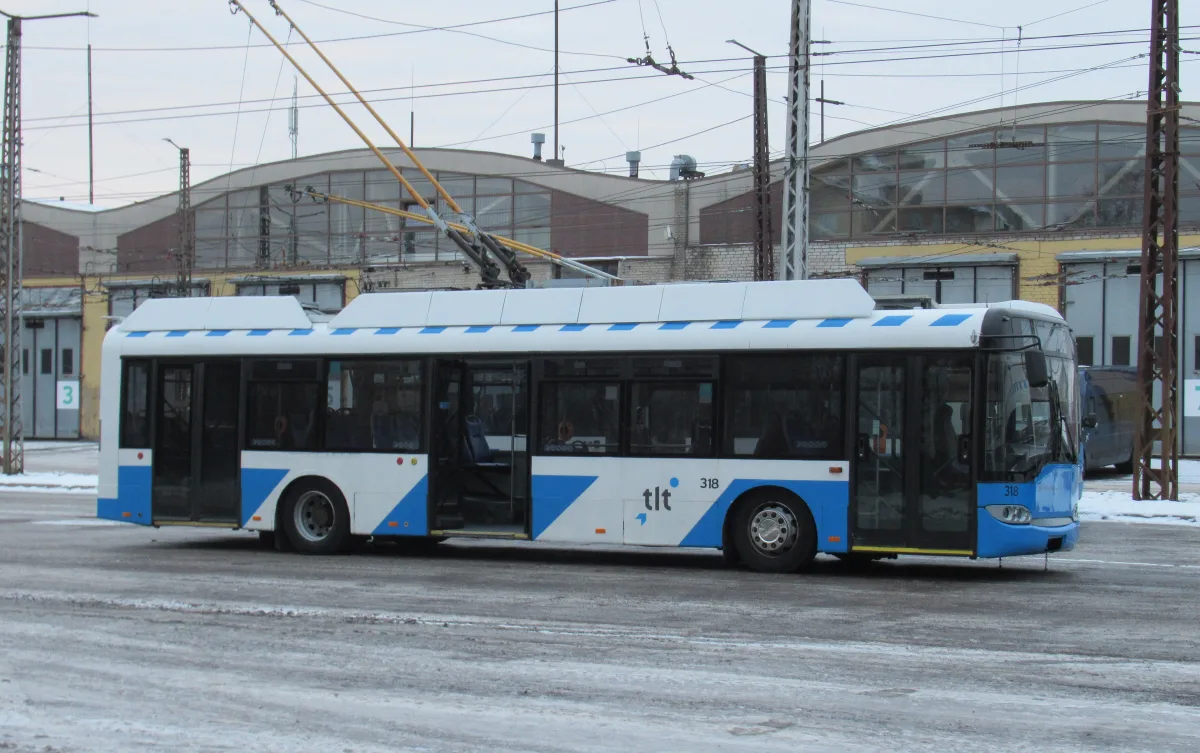
Solaris Trollino: the trolleybus, its versions and what to check
Solaris Trollino (from 2001) — the Polish manufacturer Solaris' range of trolleybuses, widely used in European cities. We look at the versions, electric equipment and what's important to check when buying used.






The Trollino in brief
The Trollino is a low-floor trolleybus that draws power from overhead wires, with some versions capable of autonomous operation using a battery. It's designed for urban public transport in cities with trolleybus infrastructure.
The Trollino is used in many European cities, including the Baltic states, such as Tallinn. In the used market, it's a specialist buy for cities or operators that already have a trolleybus network.
Versions — what's the difference?
The Trollino comes in several lengths — standard (~12 m), articulated (~18 m) and other variants. Different versions have varying capacities and door arrangements.
Electric equipment varies depending on the customer — different manufacturers' motors and control systems are used, so parts and maintenance can differ. Newer versions have a battery system allowing travel without overhead wires.
Motors and gearboxes
The Trollino is powered by an electric motor that draws energy via overhead wires. Newer versions have a battery added, allowing autonomous operation on sections without overhead wires.
There are no conventional gearboxes — power is transmitted via an electric drive. The key points are the condition of the electric system, current collectors and brakes.
What to check when buying a used Trollino
Check the electrical equipment — the engine, control system, current collectors, and high-voltage safety features. Ask for the service history and information about the previous owner.
In newer versions, ask for battery condition data. Without reliable data, battery replacement can be the biggest cost.
Inspect the body, suspension, brakes, doors, and cabin floor. Before buying, ensure your city’s network and contact voltage are suitable for this version.


Versions
Names and equipment vary by market and year; we list generally described versions, and check the exact specifications in the documents of the specific bus.
Trollino 12
from 2001Standard two-axle trolleybus.
- Low-floor interior
- Electric transmission
- Usually around 12 m in length
Trollino 18
various yearsLonger articulated trolleybus.
- Greater capacity
- Articulated joint
- Basic maintenance
Trollino su baterija
later yearsCan drive without a contact network.
- Battery pack
- Autonomous driving
- Check the battery condition
Trollino 15
various yearsMid-size version.
- More capacity than 12 m
- Less space than combined
- Different electric equipment
Comparison of versions
| 12 m | 18 m | Su baterija | |
|---|---|---|---|
| Who it suits | For standard city routes | For heavy passenger traffic | For routes with sections lacking a network |
| Gearbox | Electric | Electric | Electric + battery |
| Maintenance | Simpler | More complex | Requires battery monitoring |
| Price in the used market (relatively) | Mid-range | High-end | High-end |
The Trollino is suitable for operators who already use a trolleybus network. Before purchasing, ensure the compatibility of the electric system and, if applicable, the condition of the batteries.
Pros
- No exhaust emissions
- Quiet and smooth driving
- Low-floor interior
- A reliable, widely-used family
Cons
- Requires trolleybus infrastructure
- Repairing the electric system is specific
- Less suited to independent operators
Frequently asked questions
Can the Trollino run without overhead wires?
Newer battery-equipped versions can travel autonomously, but this depends on the specific configuration.
Who supplies the electric equipment for the Trollino?
Electric equipment is supplied by various manufacturers — this depends on the specific order, so check the exact version in the documents.
Can it be used in cities other than trolleybus networks?
Without a battery — no. Network versions require overhead wires.
Updated 2026-10-21 · Trim levels and equipment vary by market and model year — check the equipment of the specific car. · Translated automatically


