 English
 Lietuvių
 Latviešu
 Eesti
 Polski
 Русский
 Українська
 Deutsch
 Nederlands
 Čeština
 Slovenčina
 Svenska
 Norsk
 Dansk
 Suomi


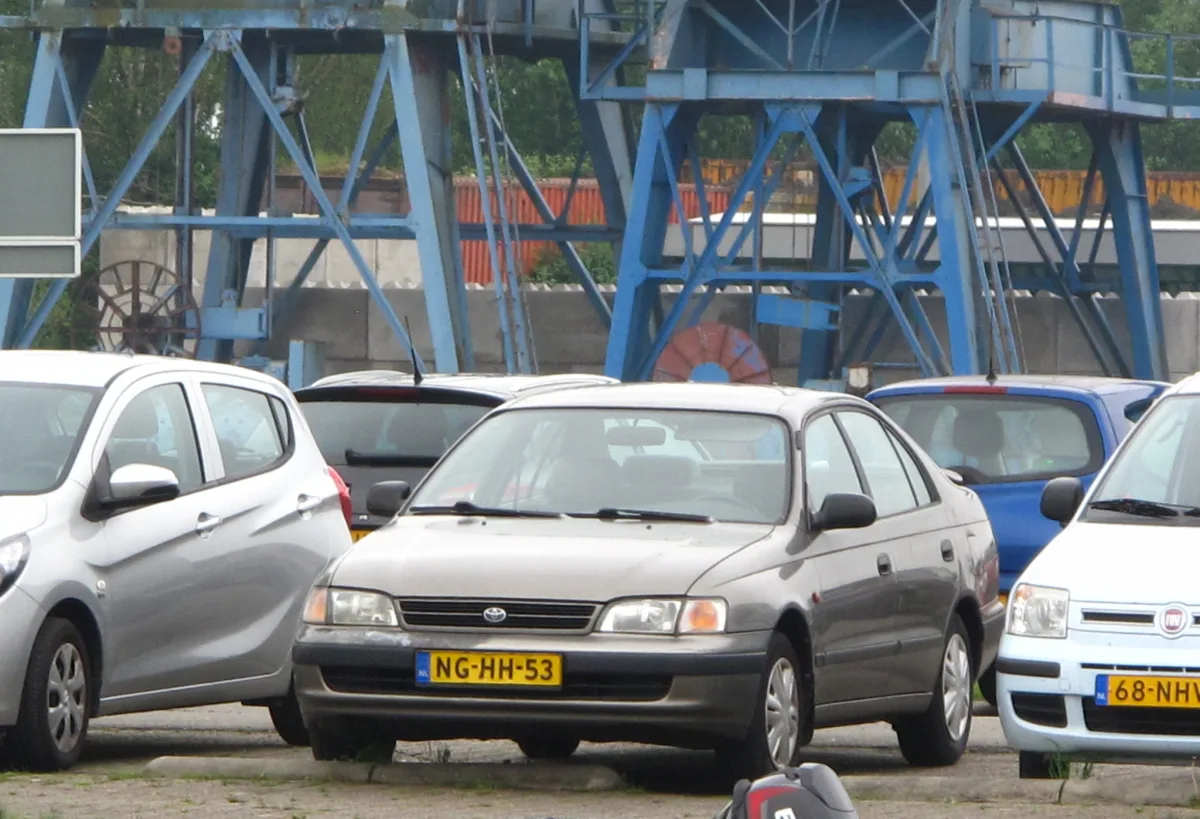
Toyota Carina: Carina II and Carina E, engines and trims
Toyota Carina — a mid-size sedan, hatchback, and estate, produced from 1970 to 2001. In Europe, the Carina II and Carina E generations are best known, so we'll focus on them: how they differ, which engines and trims are available, and what to check before buying.






Carina in brief
Carina — Toyota's mid-size model, valued for its reliability and straightforward technology. Over its long production history, the nameplate has spanned several generations, but in Europe, the Carina II (1987–1992) and Carina E (1992–1997) are the most familiar.
The Carina E was built in Great Britain and offered as a sedan, liftback (hatchback), and estate. Today, it's a simple, unpretentious old car that can serve you well for years if properly maintained.
Which one to choose
The Carina II (T170) is more basic, with classic lines and simple technology. It's an older car, and finding good-condition examples can be challenging.
The Carina E (T190) is more modern: it offers more safety features, a more comfortable interior, and better-developed engines. For most buyers, the Carina E is the more sensible choice, as there are more of them around and they generally hold up better.
Engines and gearboxes
The Carina E came with 1.6, 1.8, and 2.0-litre petrol engines, as well as a 2.0-litre diesel. Power output ranges from around 105 to 133 hp (petrol) and about 70 hp for the diesel.
Gearboxes are either a 5-speed manual or a 4-speed automatic. Both are reliable if properly maintained.
What to check when buying a used Carina
The most important thing is corrosion: check the sills, wheel arches, underbody, and boot floor. An old body, even if it looks tidy, might be rusted from the inside.
Check the service history, timing belt replacement, engine operation, and gearbox. Also, assess the suspension, brakes, and electrical equipment.


Trim levels
Names and equipment vary by market and year; we list the most commonly found Carina E trims in Europe.
XLi
Carina EBase trim with basic equipment.
- Often comes with basic alloy wheels
- Standard safety features
- Basic audio system
GLi
Carina EBetter-equipped version with more comfort.
- Often features electric windows
- Often features central locking
- More comfortable interior trim
GTi
Carina ESportier, more powerful version.
- More powerful engine
- Often — a sportier drive
- Often — a sportier look
Trim comparison
| XLi | GLi | GTi | |
|---|---|---|---|
| Who it's for | A straightforward, budget-friendly car | For everyday use | For sportier driving |
| Engine | Mostly 1.6 | 1.8 or 2.0 | More powerful petrol engine |
| Interior | Basic | More comfortable | Sportier |
| Price in the used market (relatively) | € | € | €€ |
For most buyers, the deciding factor is the condition of the body and engine, not the trim level. The GLi with a 1.8 or 2.0 engine is often a good balance of price and features.
Pros
- Often reliable and long-lasting technology
- Spacious interior and large boot (estate)
- Simple construction and affordable maintenance
- Wide range of body styles
Cons
- These cars are very old and may be rusty
- Aging electrical equipment
- Lack of modern safety features
Frequently asked questions
What's the difference between the Carina II and Carina E?
The Carina E is the newer generation (1992–1997) with a more modern interior, more safety features, and better engines. The Carina II is older and more basic.
Is the Carina reliable?
Often, Toyota is praised for its longevity. However, these are very old cars, so the condition and service history are crucial.
Which engine is the best?
For most, a 1.6 or 1.8-litre petrol engine is ideal due to its simplicity. The 2.0 is more powerful, while the diesel is more economical but slower.
Updated 2026-10-17 · Trim levels and equipment vary by market and model year — check the equipment of the specific car. · Translated automatically


