 English
 Lietuvių
 Latviešu
 Eesti
 Polski
 Русский
 Українська
 Deutsch
 Nederlands
 Čeština
 Slovenčina
 Svenska
 Norsk
 Dansk
 Suomi


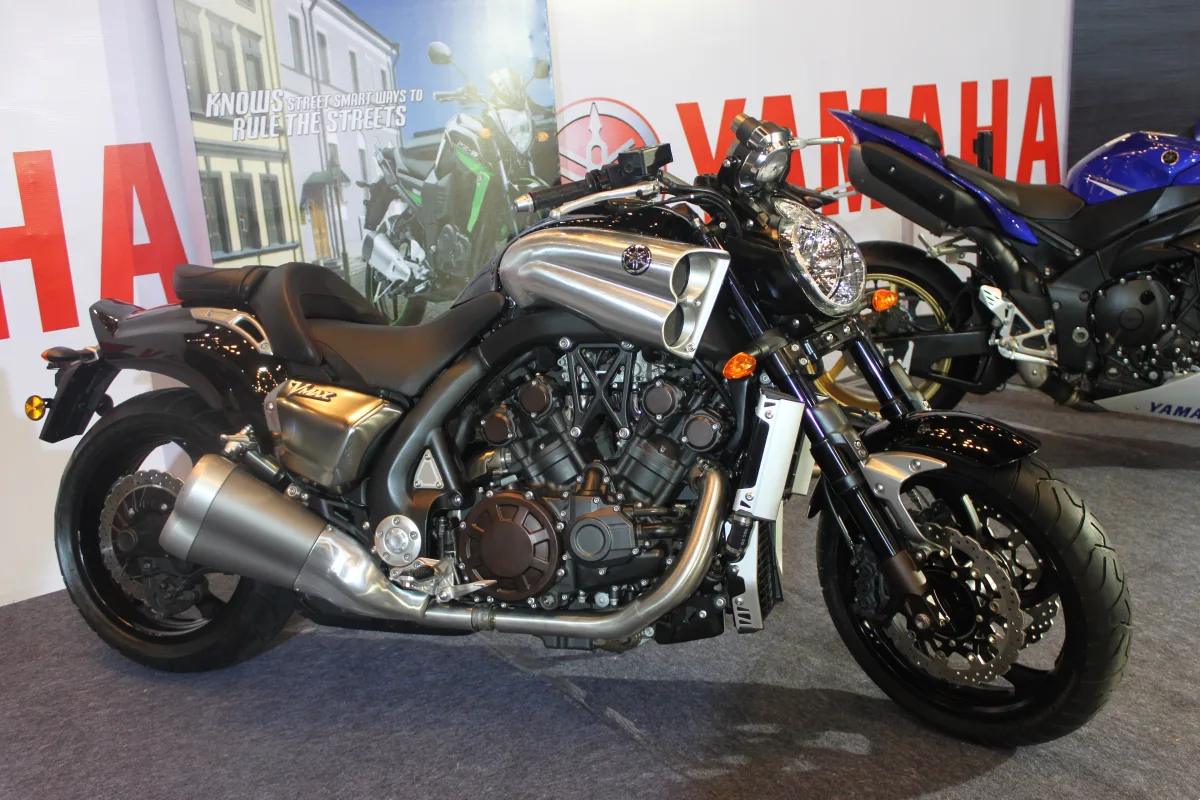
Yamaha V-Max: two generations, V4 engine and what to check when buying
The Yamaha V-Max is a powerful 'drag' style motorcycle with a V4 engine, known for its acceleration. We look at the first (1985–2007) and second (2009–2020) generations, engines, and what to check when buying used.






V-Max in brief
Since 1985, the V-Max has been one of the most striking 'drag' style motorcycles — massive, straight-line focused, and exceptionally quick to accelerate. It's more suited to straight-line riding than cornering.
Thanks to its distinctive design and character, the model has its fans, and values in the used market often hold up well, especially for well-maintained examples.
Generations — what's the difference
The first generation (1985–2007) features an 1198 cm³ V4 engine with a 'V-Boost' system that increases power at high revs. The motorcycle typically has a simpler suspension and brakes, so dynamic limits are quickly reached.
The second generation (from 2009, sold until 2020) is almost a new motorcycle: a 1679 cm³ V4 engine, aluminium frame, improved brakes, and electronics. It's pricier, but significantly more modern and better-handling.
Engine and transmission
The first generation's 1198 cm³ V4 produced around 145 hp (depending on the market and year), while the second generation's 1679 cm³ V4 offers around 200 hp. In both cases, torque is plentiful, and acceleration is brutal.
The transmission is manual, with the rear wheel driven by a driveshaft, so there's no need to worry about a chain. Due to its large size and power, the motorcycle requires an A category license and an experienced rider.
What to check when buying a used V-Max
Check the brakes, tyres and suspension: these parts wear out faster due to the power. First-generation bikes often need fork seals, shock absorbers and brake system maintenance.
Inspect for leaks, ensure the engine starts without issues and that all cylinders operate smoothly. Ask about servicing, coolant changes and chain drive oil.
Look for signs of a drop: bent forks, exhaust system, fuel tank. First-generation bikes are often modified — make sure changes are legal and documented.


Trim levels and versions
Names and equipment vary by market and year; we list the versions most commonly found in Europe.
V-Max (1 karta)
1985–2007Classic version with 1198 cm³ V4 and „V-Boost“.
- Often — a simpler running gear
- Shaft drive
- From earlier years — less electronics
V-Max (2 karta)
2009–2020New-generation V-Max with a large V4 engine.
- 1679 cm³ V4 engine
- Aluminium frame
- ABS and more modern equipment
V-Max (kolekcinė)
various yearsWell-maintained or limited-edition examples.
- Often — lower mileage
- Original parts are crucial to value
- Value depends on condition
V-Max (importas)
various yearsMotorcycles imported from other markets.
- Often — different specifications
- Check documents and odometer
- May be adapted to other market requirements
Generation comparison
| 1 karta | 2 karta | Kolekcinė | |
|---|---|---|---|
| Who it suits | For classic and 'drag' enthusiasts | For those wanting something more modern and powerful | For collectors |
| Years | 1985–2007 | 2009–2020 | Various |
| Engine | 1198 cm³ V4, around 145 hp | 1679 cm³ V4, around 200 hp | By generation |
| Price in the used market (relatively) | Mid-range | High-end | High-end |
If you're after a more modern and safer motorcycle, go for the second generation. The first generation is for collectors and those who appreciate classic old-school bikes, but it requires more attention to maintenance.
Pros
- Brilliant acceleration and torque
- Unique, recognizable design
- Shaft drive — no need to worry about a chain
- Holds its value well, especially the second generation
Cons
- Large size and limited cornering ability
- High costs for brakes, tyres, and fuel
- Condition is key for first-generation models, which come with simpler equipment
Frequently asked questions
Is the V-Max suitable for beginners?
No. The motorcycle is powerful and heavy, requiring an A category license and experience.
What are the differences between the first and second generations of the V-Max?
The second generation features a larger engine, better suspension, brakes, and more modern electronics, while the first offers a classic look and simpler technology.
Is the V-Max comfortable for long journeys?
Not particularly. The seating and wind protection are designed for shorter rides; touring motorcycles are better suited for longer journeys.
Updated 2026-10-21 · Trim levels and equipment vary by market and model year — check the equipment of the specific car. · Translated automatically


