 English
 Lietuvių
 Latviešu
 Eesti
 Polski
 Русский
 Українська
 Deutsch
 Nederlands
 Čeština
 Slovenčina
 Svenska
 Norsk
 Dansk
 Suomi


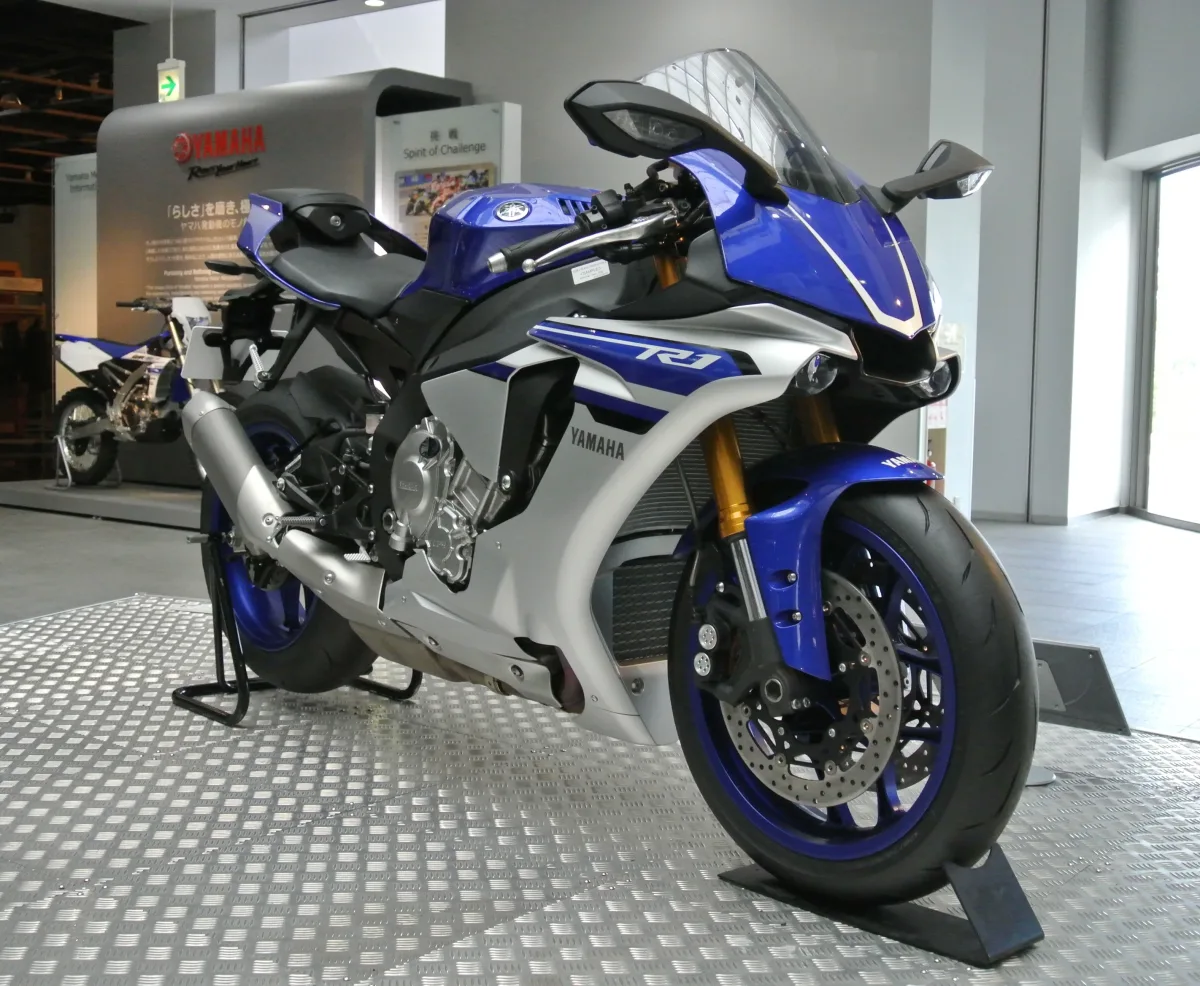
Yamaha R1: generations of the sports bike since 1998, engines and what to check
Yamaha YZF-R1 — the litre-class sports bike that has been one of the class benchmarks since 1998. We look at how the generations differ, the technology used, and what to check when buying used.






R1 in brief
The R1 debuted in 1998 and immediately set new standards for litre-class sports bikes: it was light, powerful, and compact. Since then, it has been continually updated and remains one of Yamaha’s flagship models.
This motorcycle is for experienced riders — the power, acceleration, and sporty stance demand expertise. In the used market, there are several generations to choose from, with varying conditions and prices.
Generations — how they differ
Early generations (1998–2008) feature a conventional four-cylinder engine with a classic ignition sequence. These are the most affordable R1s, but they are older and often were ridden aggressively or on the track, so condition is key.
From 2009, the R1 features a 'crossplane' engine with a unique ignition sequence that delivers a distinctive sound and pull. In 2015, a completely new generation arrived with electronic aids (IMU), and power hits around 200 hp; later updates comply with new emissions standards.
Engines and gearboxes
All generations feature a 998 cm³ four-cylinder engine, with power ranging from around 150 hp in the first generation to around 200 hp in the latest.
Gearbox — 6-speed manual, driveshaft to rear wheel — chain. Newer generations come with plenty of electronic aids: traction control, stability management and several driving modes.
What to check when buying a used R1
Sport bikes are often used on the track, so look for signs of crashes: scuffed bodywork, scratches, footpegs, and exhaust pipe. Check the frame for deformations and signs of replaced parts.
The engine should start easily and run smoothly; listen for any unusual noises. Check the chain, sprockets, brake discs and pads, fork seals and the cooling system.
Ask for the service history and check if the engine hasn't been modified or otherwise "tuned", as this can affect reliability.


Trim levels
Names and equipment vary by market and year; we list the versions most commonly found in Europe.
R1 (ankstyvieji)
1998–2008Classic four-cylinder generation.
- Simple tech with minimal electronics
- Often — the cheapest offers
- Condition needs careful checking
R1 (crossplane)
2009–2014New-type engine with unique ignition sequence.
- Different engine note
- Often ABS and traction control in later years
- Improved handling
R1
2015–2019New generation with electronic assistance.
- Electronics based on IMU
- Around 200 hp
- Modern handling
R1M
2015+Top-of-the-range version.
- Higher-class suspension
- Lighter components
- The most expensive version
Comparison of R1 generations
| Ankstyvieji | Crossplane | 2015+ | |
|---|---|---|---|
| Who it's for | For enthusiasts and budget-conscious buyers | A balanced choice | Those seeking the latest technology |
| Year | 1998–2008 | 2009–2014 | from 2015 |
| Electronics | Basic | Mid-range | Advanced |
| Price in the used market (relatively) | Budget-friendly | Mid-range | High-end |
For many buyers looking for a sporty motorcycle for daily use, the 2015 and newer generations are ideal due to their electronics. Earlier models are worth considering if price and simplicity are key.
Pros
- Distinctive power and performance
- Many options — a wide choice
- Electronics in newer versions
- A renowned and respected model
Cons
- Requires experience
- The sporty seating position can be tiring on longer journeys
- The used market is full of track-used motorcycles
Frequently asked questions
Is the R1 suitable for a beginner?
No. A litre-class sportbike is very powerful, so it's not recommended for beginners or those newly licensed.
How does the R1 differ from the R1M?
The R1M is the top-tier version with better suspension and lighter components. The engine and overall concept are similar.
Can the R1 be used daily?
It can be, but the sporty stance and firmness require some getting used to. Many R1 owners use it on weekends or at the track.
Updated 2026-10-21 · Trim levels and equipment vary by market and model year — check the equipment of the specific car. · Translated automatically


