 English
 Lietuvių
 Latviešu
 Eesti
 Polski
 Русский
 Українська
 Deutsch
 Nederlands
 Čeština
 Slovenčina
 Svenska
 Norsk
 Dansk
 Suomi


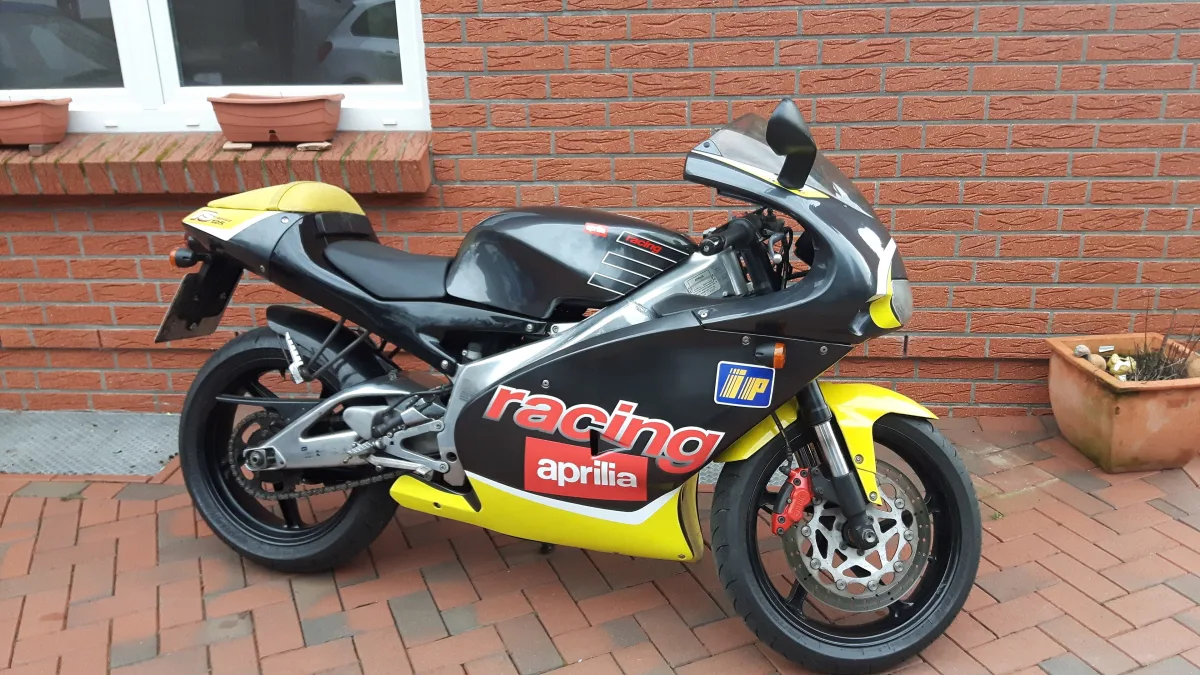
Aprilia RS 125: 2T and 4T versions and what to check when buying used
Aprilia RS 125 — the Italian 125 cm³ sports bike that's been popular among young riders since 1992. We look at the two-stroke and four-stroke versions and what to check when buying used.






RS 125 in brief
RS 125 — a 125 cm³ sports bike that borrows its styling from larger Aprilia sports bikes. It was one of the most popular A1 category sports bikes in Europe for many years.
Used market sees various generations — from the oldest two-strokes to newer four-strokes. The key is to check the condition and ensure the engine hasn't been swapped.
Versions — what's the difference
For a long time, the RS 125 came with a two-stroke 'Rotax' engine, known for its liveliness but requiring more maintenance and using oil mixed with fuel.
Later versions received a four-stroke engine, which is quieter and more eco-friendly. Two-stroke bikes are often cheaper, but their condition varies — many were ridden hard by young owners.
Engine and gearbox
Engine — liquid-cooled, 125 cm³ displacement, two-stroke or four-stroke. Power in the A1 category is limited to around 11 kW (15 hp), but some bikes might be derestricted — check the documents.
Gearbox — manual, 6-speed, final drive to the rear wheel via chain. The bike is light, but the sporty riding position might be uncomfortable for longer journeys.
What to check when buying a used RS 125
Check that the engine and power restriction match the documents. On two-stroke motorcycles, inspect the pistons and cylinders, smoke output, and proper oil supply.
Inspect the chain, sprockets, brakes, and tyres. Check for oil leaks and ensure the engine runs smoothly after a cold start.
Young drivers often leave telltale signs of a drop: scratches, dents, footrests, and handlebars. Painted or glued plastic can indicate a previous accident.


Trim levels and versions
Names and equipment vary by market and year; we list the versions most commonly found in Europe.
RS 125 (2T)
from 1992Classic two-stroke version.
- Two-stroke engine
- Vibrant, but requires more maintenance
- Often — two-stroke 'Rotax'
RS 125 (4T)
later yearsFour-stroke version.
- Four-stroke engine
- Quieter and more eco-friendly
- Lower maintenance costs
RS 125 (apribota)
various yearsRestricted to Category A1.
- Around 11 kW power
- Suitable for Category A1.
- Check the documents
RS 125 (importas)
various yearsMotorcycles imported from other markets.
- Often — different specifications
- Check the documents and condition
- May be adapted for another market
Version comparison
| 2T | 4T | Apribota | |
|---|---|---|---|
| Who it's for | For sporty driving | For more relaxed use | For Category A1 |
| Engine | 125 cm³, two-stroke | 125 cm³, four-stroke | 125 cm³, around 11 kW |
| Maintenance | More | Less | By engine |
| Price in the used market (relatively) | € | €€ | €€ |
Most buyers will prefer the 4T version for its smoother operation. Opt for the 2T if you're after that classic sporty feel and don't mind extra maintenance.
Pros
- Sporty looks and handling
- Light and lively
- Suitable for Category A1.
- Italian design
Cons
- Maintenance on 2T versions is more complex
- Often heavily used
- Limited comfort
Frequently asked questions
What category is needed for the RS 125?
This motorcycle is suited to the A1 category (up to 125 cc and around 11 kW). Check the specific rules according to your country's requirements.
How do the 2T and 4T RS 125 differ?
The 2T is more lively, but noisier and requires more maintenance. The 4T is quieter, more eco-friendly, and less demanding.
Is the RS 125 suitable for a beginner?
Yes, it's light, but the sporty seating position might be uncomfortable, and the 2T version requires more maintenance.
Updated 2026-10-21 · Trim levels and equipment vary by market and model year — check the equipment of the specific car. · Translated automatically


