 English
 Lietuvių
 Latviešu
 Eesti
 Polski
 Русский
 Українська
 Deutsch
 Nederlands
 Čeština
 Slovenčina
 Svenska
 Norsk
 Dansk
 Suomi


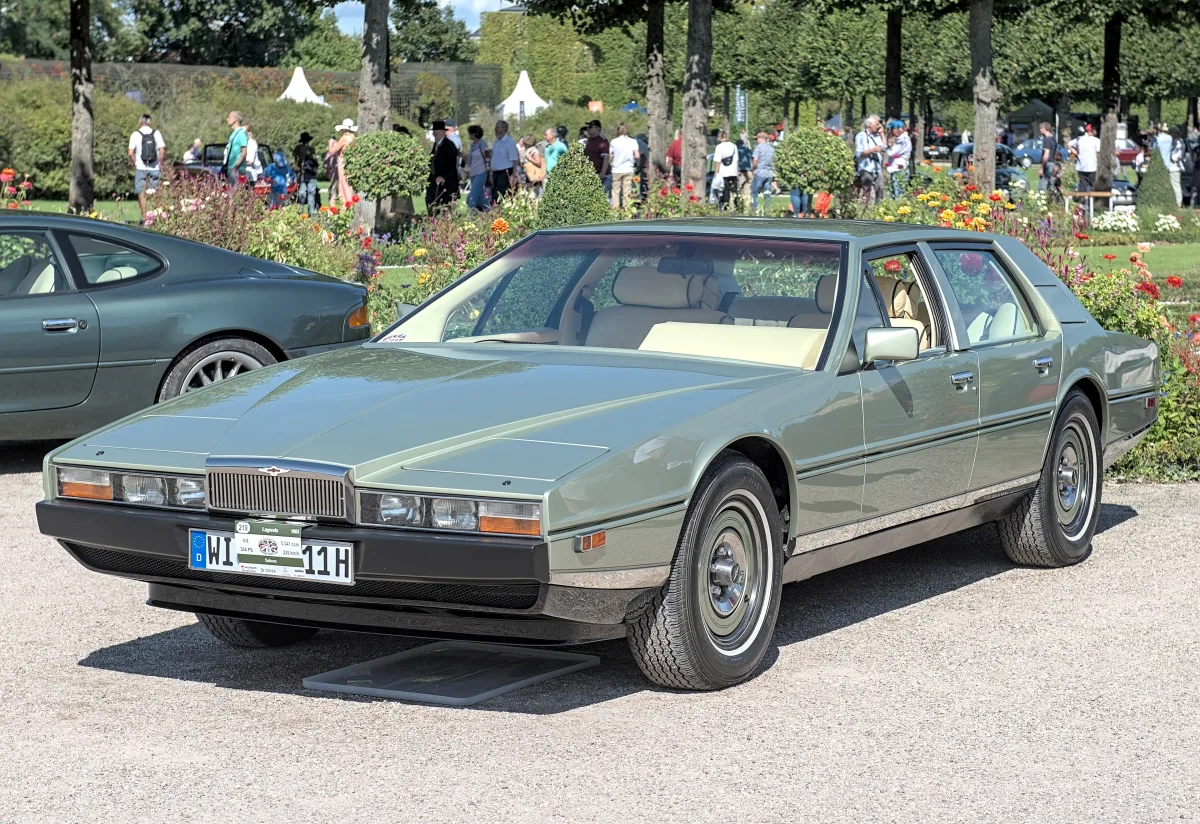
Aston Martin Lagonda: features, generations and what to know
Aston Martin Lagonda is an unusual, angular luxury saloon produced from 1976 to 1990. In this article, we look at its generations, features and things to know before buying.






Lagonda in brief
The Lagonda was an angular, 'wedge-shaped' saloon designed by William Towns. It stood out with its extreme looks and cutting-edge technology for the time, including a digital instrument cluster.
This is a rare and collectible car that enthusiasts value, but it is known for its complex and finicky electronics.
Which generation to choose
The Lagonda was produced in four generations (1–4). The Series 1 was made in very small numbers, while later series are more commonly encountered. The Series 2 (from 1979) got a digital instrument cluster, the Series 3 (1986–1987) had screens with cathode-ray tubes, and the Series 4 (1987–1990) featured a new body design.
The choice depends on your preferences, but the most important thing is the car's condition and whether the electronics work.
Engine and transmission
All Lagondas have the Aston Martin 5.3-litre V8 petrol engine. It is renowned for its power and distinctive sound, but requires meticulous maintenance.
The transmission is automatic, with power sent to the rear wheels.
What to check when buying a used Lagonda
It's particularly important to check the electronics — the digital instrument cluster and touch-sensitive controls. Finding and repairing old electronic parts can be very expensive.
Check the engine, cooling system, and gearbox, as well as the body for rust. Ensure there's a service history.
Before buying, it's worth hiring a specialist familiar with classic Aston Martins.


Trim levels
Names and equipment vary by market and year; we list the versions most commonly found in Europe.
Lagonda Serija 1
1976–1979The first series, produced in very limited numbers.
- A wedge-shaped 'hatchback' body
- 5.3-litre V8 engine
- A rare model
Lagonda Serija 2
From 1979It received a digital dashboard.
- Digital dashboard electronics
- 5.3-litre V8 engine
- The most commonly encountered series
Lagonda Serija 3
1986–1987With cathode-ray tube displays.
- Electronic dash with screens
- 5.3-litre V8 engine
- Rarer series
Lagonda Serija 4
1987–1990With a new body design.
- New body design
- 5.3-litre V8 engine
- The final production series
Series comparison
| Serija 1 | Serija 2 | Serija 3 | Serija 4 | |
|---|---|---|---|---|
| Who it's for | For collectors | For enthusiasts | For electronics buffs | For collectors |
| Engine | 5.3 l V8 | 5.3 l V8 | 5.3 l V8 | 5.3 l V8 |
| Price in the used market (relatively) | €€€ | €€€ | €€€ | €€€ |
The Lagonda is perfect for collectors seeking a unique automobile. The key is working electronics and a comprehensive history.
Pros
- A unique, unforgettable design
- A powerful V8 engine
- A luxurious interior
- A rare collector's car
Cons
- Complex and finicky electronics
- Very expensive maintenance
- Limited parts availability
Frequently asked questions
Who designed the Lagonda?
The design was created by William Towns.
What engine does the Lagonda have?
A 5.3-litre V8 petrol engine.
Why is the Lagonda famous?
For its unusual angular design and complex digital electronics.
Updated 2026-10-19 · Trim levels and equipment vary by market and model year — check the equipment of the specific car. · Translated automatically


